



Victorian Earthenware Base
These Victorian earthenware base pieces bring lively animal figures and table lamps into a room, offering the distinct charm of nineteenth-century Staffordshire pottery.
Victorian Earthenware Base
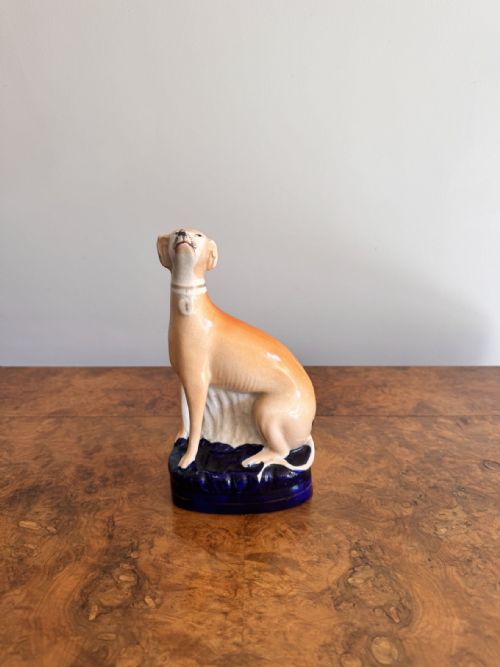
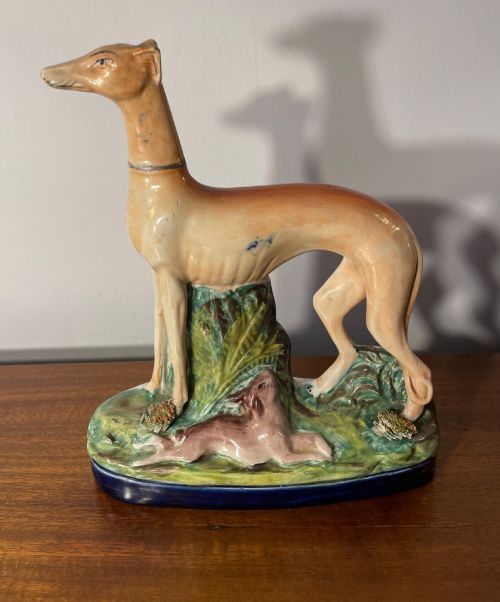
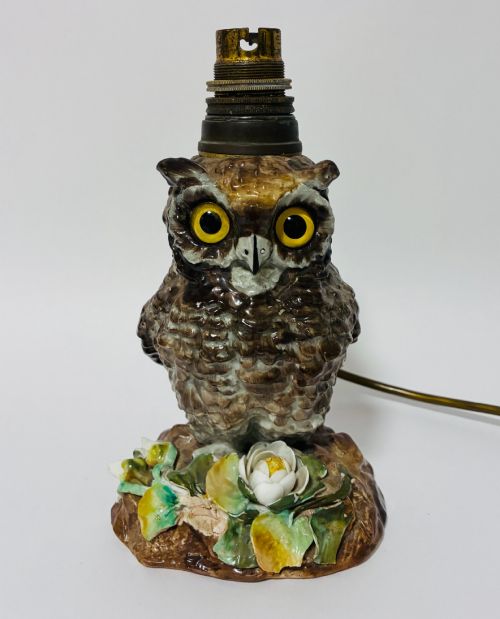
When searching for a victorian earthenware base, buyers encounter nineteenth-century Staffordshire pottery that predominantly takes the form of decorative animal figures, figure groups, table lamps, and cheese domes. The selections span periods from the Georgian era through to the late nineteenth century, capturing dogs such as greyhounds, whippets, poodles, spaniels, pugs, dalmatians, alongside lions, zebras, and human figures.
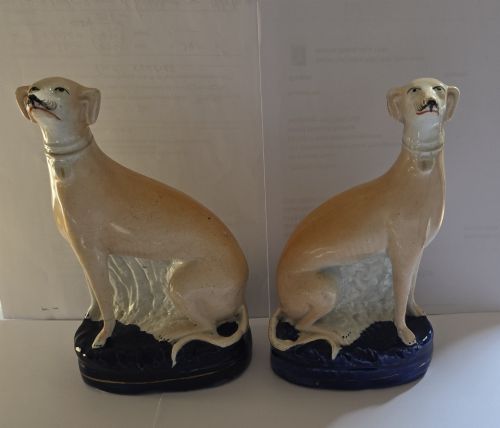
The most common configurations on this page are pairs of seated dogs, single animal figurines, and ceramic lamp bases. These objects reflect the Victorian domestic taste for animal subjects and figural representation in earthenware.
Origins trace primarily to English potteries, with specific examples spanning mid-century decades like eighteen sixty and eighteen seventy-five. The forms range from miniature poodles to large hound and hare groupings and substantial majolica cheese domes.
Materials and methods
Makers utilised earthenware bodies shaped into figures and lamp bases, applying lead glaze, majolica glaze, and enamel colours to the surfaces. Some pieces incorporate gilt details and applied ceramic encrusting.
The manufacturing process involved pottery moulding followed by glazing and kiln firing, which established the hard ceramic foundation necessary for holding intricate painted details and coloured enamels.
Victorian Earthenware Base Retail Price Guide 2026
Typical asking prices for victorian earthenware base among the pieces listed under this phrase on Sellingantiques today, from the lower quarter to the upper quarter. They describe what is for sale here now, not the wider market.
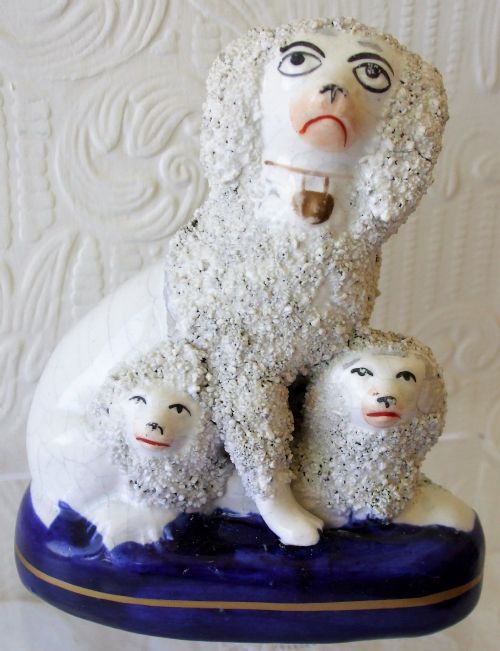
Poodles dominate the canine lineup here, appearing with elaborately textured fur and occasionally accompanied by tiny pups.
Factors of quality
The application of lead and majolica glazes creates depth of colour that distinguishes superior pieces, alongside the presence of original pairs and well-preserved gilt highlights.
James Dudson
The Victorian Earthenware Base Glossary
- Earthenware
- Porous pottery fired at lower temperatures than stoneware or porcelain. It requires a glaze to become impermeable to liquids.
- Majolica glaze
- A colourful lead glaze applied over an opaque tin-white enamel or directly onto the earthenware body. It produces rich, vibrant tones popular in nineteenth-century wares.
- Lead glaze
- A transparent silica and lead mixture applied to pottery before a final firing. This coating gives earthenware a smooth, glossy finish.
- Enamel
- Opaque glass-like pigments painted onto the surface of fired pottery. These colours are fixed in a low-temperature muffle kiln.
Victorian Earthenware Base: Frequently Asked Questions
What are these earthenware figures?
These pieces are nineteenth-century ceramic items originating largely from Staffordshire potteries. They include animal figurines, figural groups, and lamp bases.
The category encompasses domestic animals like poodles, greyhounds, and spaniels, alongside exotic creatures and decorative household items such as cheese domes.
How were these pottery bases used?
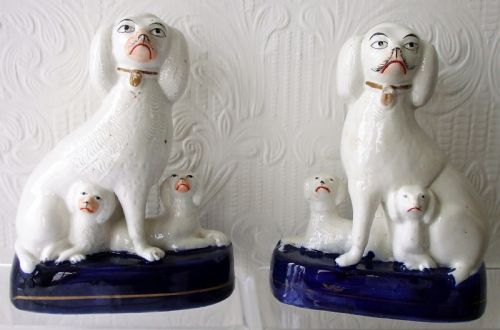
Figures like spaniels and poodles were traditionally displayed on mantelpieces in Victorian homes. Pairs of dogs often sat facing inward towards each other.
Lamp bases and cheese domes served practical functions in the dining room and parlour while incorporating decorative ceramic modelling.
How do I date Staffordshire figures?
Dating relies on stylistic clues, glaze types, and the modelling characteristics of the earthenware body. Mid-nineteenth-century pieces often feature specific enamelling styles and distinct modelling.
Reference to specific decades, such as eighteen sixty or eighteen seventy, helps place individual objects within the broader Victorian period.
What materials make up these items?
The core material is earthenware, a form of pottery fired at relatively low temperatures. This is combined with lead glaze, majolica glaze, and coloured enamels.
Selected pieces also feature gilt highlights and textured ceramic encrusting applied to the surface before firing.