






Victorian Drinking Vessels
These Victorian drinking vessels range from silver tankards to etched glass rummers, offering tangible links to nineteenth-century hospitality and daily custom.
Victorian Drinking Vessels
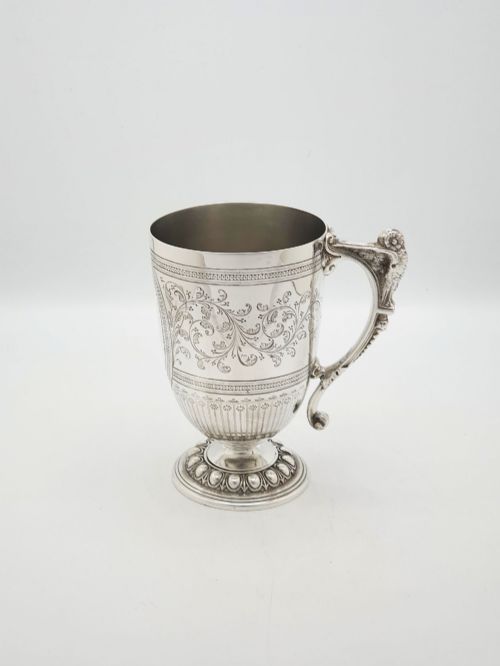
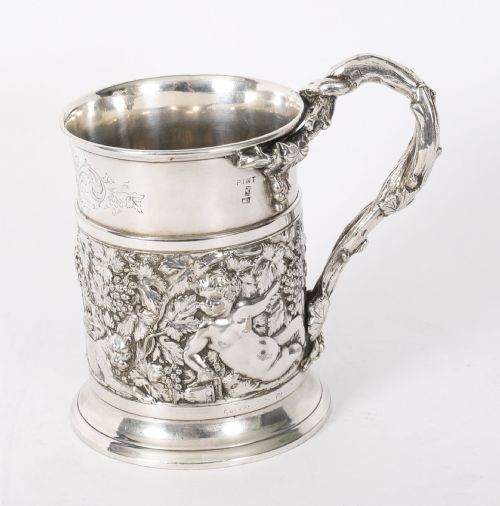
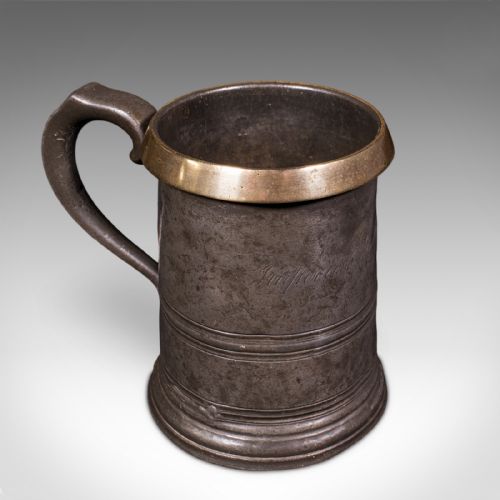
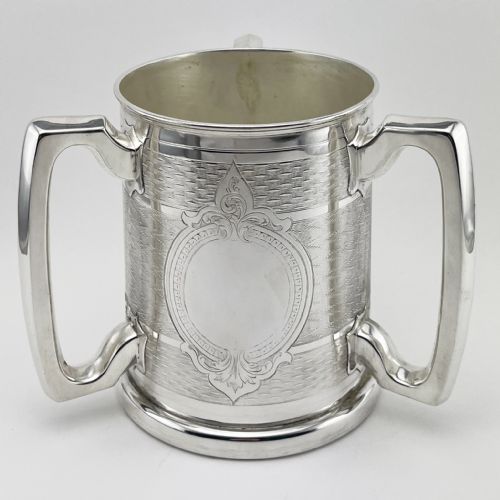
When searching for victorian drinking vessels, buyers encounter a diverse selection of utilitarian and celebratory drinking objects fashioned during the nineteenth century. The material record spans sturdy pewter public house tankards, sterling silver christening mugs, and delicate clear glass goblets.
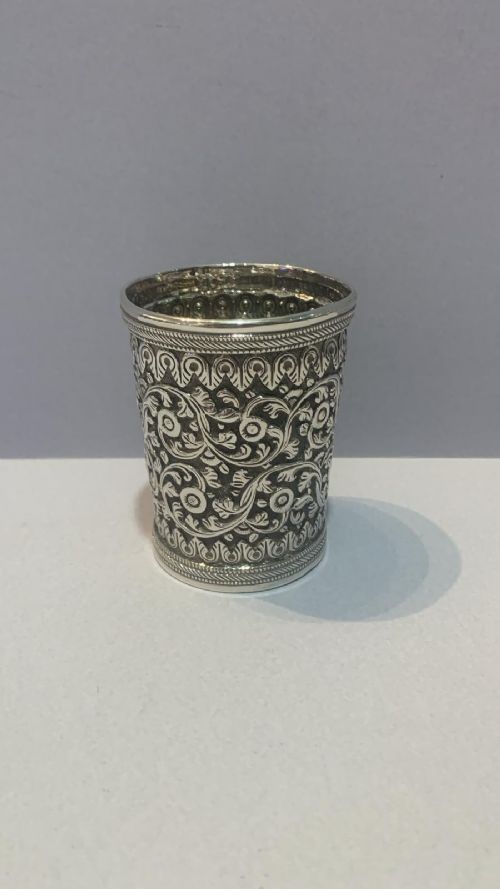
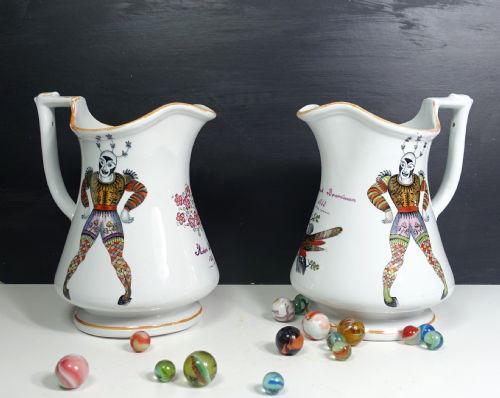
Most items on this page fall into distinct functional categories such as tankards, beakers, loving cups, and puzzle jugs. Forms originate from various workshops and regions, incorporating styles like Aesthetic Movement, Renaissance Revival, and Anglo-Indian design.
Mug and tankard variants often display chased or engraved decoration, while glass items feature intaglio work or delicate etching. These pieces reflect both domestic dining traditions and public house customs of the period.
Materials and methods
Makers utilised precious metals like sterling silver and silver plate alongside base metals such as brass, bronze, and pewter to form rigid tankards and mugs. Stoneware and salt-glazed ceramics, notably from Doulton Lambeth, provided durable alternatives for puzzle jugs and beakers.
Glassware production relied on clear glass, lead crystal, and gilded or triple cased Bohemian glass, shaped by blowing and finished with wheel-cut intaglio or delicate surface etching. Natural materials like animal horn also appear, often fitted with brass mounts or silver hardware.
Metals were frequently cast, embossed, and hand-engraved to achieve high relief decoration, while ceramic bodies were moulded, salt-glazed, and sometimes combined with silver mounts.
Victorian Drinking Vessels Retail Price Guide 2026
Typical asking prices for victorian drinking vessels among the pieces listed under this phrase on Sellingantiques today, from the lower quarter to the upper quarter. They describe what is for sale here now, not the wider market.
Listings feature items from the 19th century, including Victorian, Edwardian, and 1880 periods, in silver, glass, stoneware, and horn.
Defining quality
Quality in these objects rests upon the precision of the maker's hand, whether in the crispness of chased silver foliage or the depth of intaglio glass engraving. Weight and balance distinguish substantial sterling pieces and heavy crystal goblets from lighter, mass-produced items.
The integrity of applied elements, such as cast owl handles or tight silver mounts on horn and stoneware, indicates the standard of assembly. Superior items display harmonious proportions and clean finishing marks that survive intact from the nineteenth century.
G R Collis·Doulton Lambeth·Bernard Muller
The Victorian Drinking Vessels Glossary
- Tankard
- A tall, cylindrical drinking vessel with a single handle, typically made from silver, pewter, or ceramic. Many historical examples include hinged lids.
- Rummer
- A heavy, large-bowled drinking glass used for wine, punch, or grog during the eighteenth and nineteenth centuries. These glasses often sit upon a short stem and thick foot.
- Puzzle jug
- A ceramic vessel with a perforated neck that prevents normal drinking, requiring the user to imbibe through a hollow spout connected to the handle. They were common tavern novelties designed to test the drinker's skill.
- Wager cup
- A double-cup vessel hinged so that a smaller swiveling cup swings above a larger main bowl, used in historical drinking games. Guests attempted to drink from both vessels simultaneously without spilling.
- Intaglio
- A technique where a design is incised into the surface of glass or stone, creating a sunken image rather than a raised relief.
Victorian Drinking Vessels: Frequently Asked Questions
What were puzzle jugs used for?
Puzzle jugs served as drinking novelties in public houses and social gatherings, challenging patrons to figure out how to drink from them without spilling.
The perforated necks forced users to cover hidden holes with their fingers while drinking through the hollow rim, creating an entertaining tavern game.
How are silver and silver plate distinguished?
Sterling silver objects bear official hallmarks indicating the purity of the metal and the assay office, whereas silver-plated items consist of a base metal covered by a thin layer of silver.
Over time, wear on plated items may reveal the darker base metal underneath, while solid silver maintains its composition throughout.
What is a wager cup?
A wager cup, also known as a bridal cup, is a historical vessel featuring two cups balanced so that one pivots above the other.
Participants in wedding toasts or drinking wagers attempted to empty both cups at once without spilling a drop of wine.
How should horn beakers be cleaned?
Horn beakers require gentle care using lukewarm water and mild soap, avoiding soaking or exposure to extreme heat.
Because horn is a natural organic material, harsh detergents or hot water can cause warping or cracking over time.