

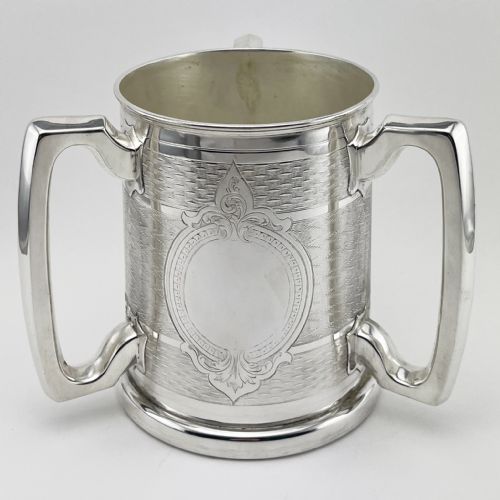


Victorian Drinking Cup
These Victorian drinking cup examples range from sterling silver christening mugs to glass flasks, offering tactile history for everyday use.
Victorian Drinking Cup
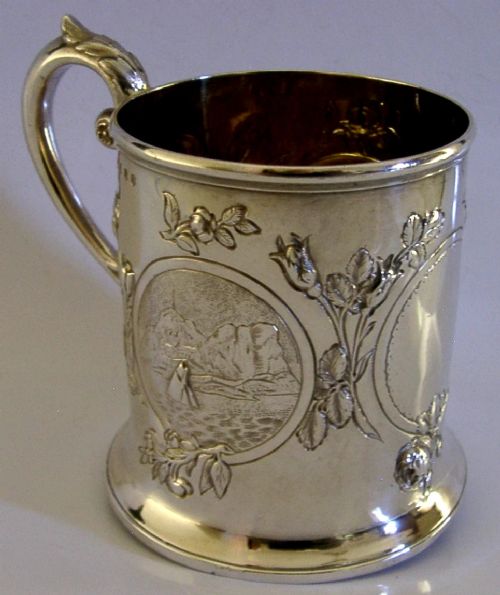
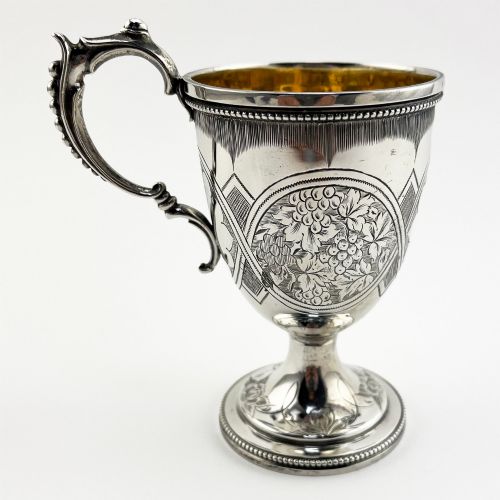
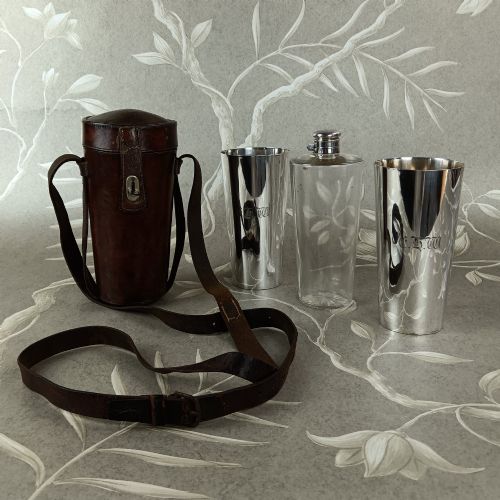
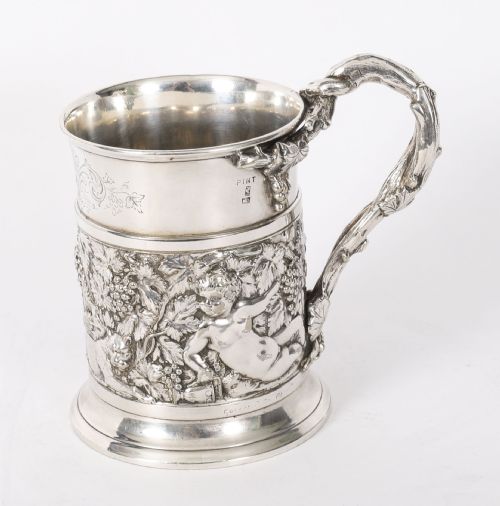
A victorian drinking cup encompasses a diverse array of vessels designed for daily toasts, formal christenings, and travel. Buyers encounter everything from heavy sterling silver tankards and parcel gilt goblets to leather-bound spirit flasks and delicate glass beakers.
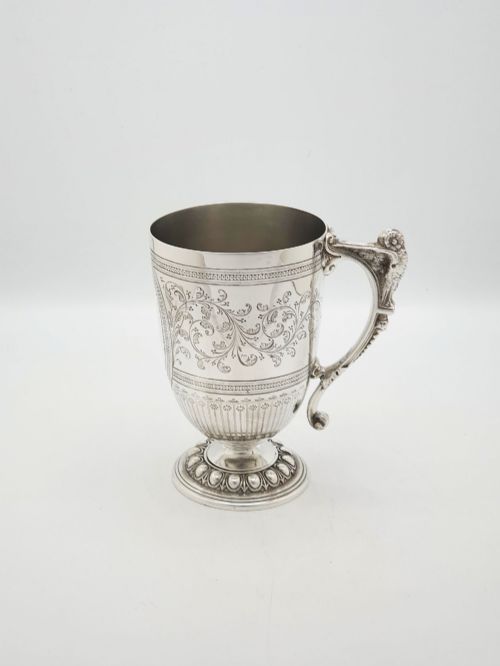
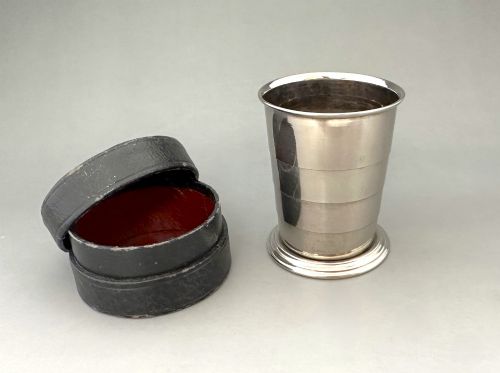
Mugs and tankards dominate the selection, often appearing in silver plate or solid sterling silver alongside ceramic and pottery variants. Novelty forms such as barrel-shaped quaichs, wager cups, and collapsible stirrup cups also surface frequently.
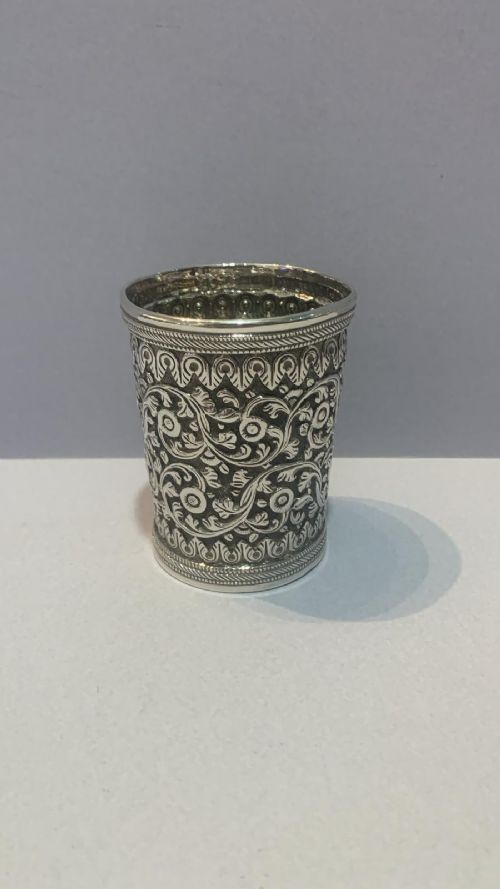
Origins stretch across British silversmithing hubs like London and Birmingham, alongside international items including Anglo-Indian Kutch beakers, Italian bronze Grand Tour goblets, and Murano glass. Pieces span the entirety of the nineteenth century and extend into the Edwardian period.
Materials and Construction
Metals form the core of the selection, utilising sterling silver, silver plate, electroplated nickel silver, bronze, and silver gilt. Silversmiths employed techniques such as chasing, embossing, and hand engraving to decorate bodies with intricate motifs.
Non-metal vessels rely on hand blown glass, Staffordshire pottery, Doulton Lambeth stoneware, horn, and leather casings. Mounts in silver frequently secure glass flasks, ceramic beakers, and crystal barrels to provide structural reinforcement and refined detail.
Victorian Drinking Cup Retail Price Guide 2026
Typical asking prices for victorian drinking cup among the pieces listed under this phrase on Sellingantiques today, from the lower quarter to the upper quarter. They describe what is for sale here now, not the wider market.
Materials span sterling silver, silver plate, glass, leather, bronze, horn, stoneware, and pottery across the nineteenth and early twentieth centuries.
Assessing Craftsmanship
Quality rests in the crispness of chased and embossed metalwork, where deep, deliberate hand engraving distinguishes superior tankards and mugs from simpler stamped items. Weight and balance also signal excellence, particularly in solid silver beakers and heavy bronze Grand Tour goblets.
The integrity of secondary materials dictates overall merit, such as the clarity of hand blown glass, the tightness of leather-wrapped flasks, and the preservation of parcel gilding on silver interiors. Maker marks and clear hallmarks anchor the provenance of finer pieces.
James Dixon & Sons·G R Collis·Bernard Muller·Mackay & Chisholm·D & J Wellby
The Victorian Drinking Cup Glossary
- Parcel Gilt
- Silver objects that feature gold plating applied selectively to specific areas, such as the interior of a goblet or mug.
- Wager Cup
- A traditional bridal or novelty drinking vessel shaped like a small human figure holding a swinging secondary cup above its head.
- Stirrup Cup
- A small cup historically handed to a rider while still mounted on a horse before a hunt, often featuring a rounded or conical base so it cannot be set down flat.
- Quaich
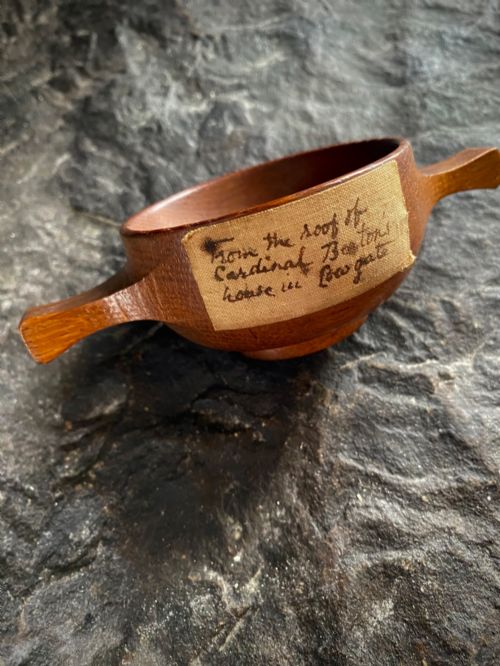
- A traditional Scottish two-handled drinking vessel, occasionally rendered in silver with novelty barrel body forms.
- Grand Tour
- Souvenir items collected by wealthy travellers on continental European journeys, frequently comprising bronze classical goblets and vessels.
Victorian Drinking Cup: Frequently Asked Questions
How do I use a wager cup?
A wager cup requires the drinker to balance the primary vessel upright while simultaneously drinking from the smaller swinging cup held aloft without spilling any liquid. Guests traditionally performed this feat at weddings and banquets to test their sobriety and skill.
Living with a wager cup involves displaying it on a flat surface where the mechanics of the swinging cup remain clearly visible. It functions primarily as a tactile conversation piece rather than a functional drinking vessel.
Were spirit flasks meant for travel?
Travel forms the fundamental purpose of these flasks, which combined silver-mounted glass bodies with protective leather cases and removable cups. Travellers tucked them into pockets or carriage compartments for refreshment on long journeys.
Collectors can display these flasks on a bar cart or shelf alongside other barware items. The removable cups and silver mounts allow for careful handling and appreciation of the craftsmanship.
How are silver and plated pieces told apart?
Hallmarks stamped directly into the metal provide the definitive proof for solid sterling silver, indicating the assay office, standard, and date letter. Plated pieces usually carry manufacturer marks or stamps denoting electroplated nickel silver without official sterling lion hallmarks.
Examining the wear patterns also helps, as silver plate may reveal the base metal underneath through heavy polishing. Solid silver maintains a consistent metal composition throughout its structure.