





Victorian Domestic Scene Artwork
Victorian domestic scene artwork captures quiet interiors and family moments painted in oil and watercolour across the nineteenth century.
Victorian Domestic Scene Artwork
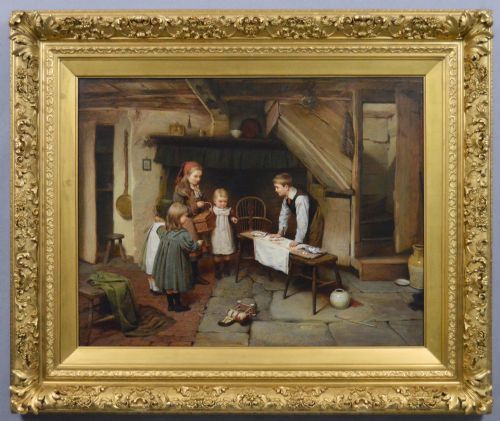
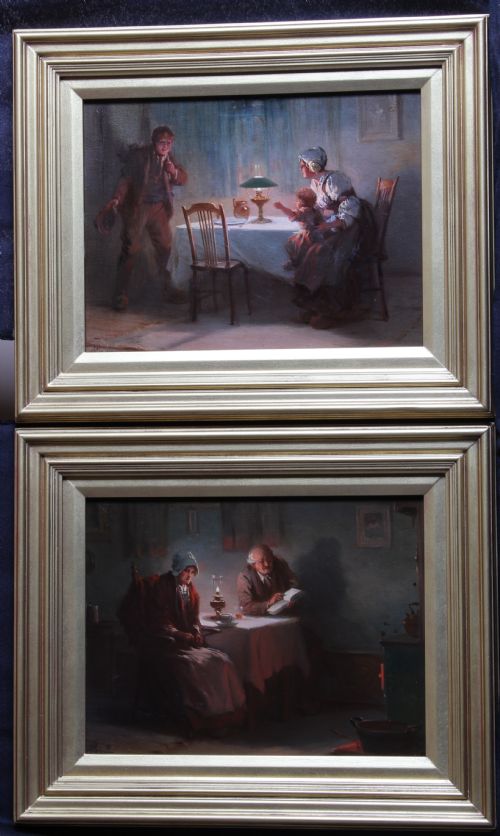
When you search for victorian domestic scene artwork, you encounter paintings that record cottage life, tea tables, and fireside rests. These pieces place you inside nineteenth-century rooms where mothers, children, and maids go about daily tasks.
The selections on this page span oil paintings, watercolours, and oils on panel. Many works date from the Victorian era proper, alongside related examples from the surrounding decades.
Genre painting forms the core of this group, showing narrative moments in country houses and humble cottages alike. You meet pairs of works and single framed pieces depicting reading, spinning, and afternoon rest.
Materials and techniques
Artists painted primarily in oil on canvas, panel, or board, while others worked in watercolour on paper. These mediums captured the soft light of cottage interiors and the textures of textiles.
Frames frequently combine wood, gesso, and gold leaf or giltwood to enclose the image. Such framing completes the historic presentation of the paintings.
Victorian Domestic Scene Artwork Retail Price Guide 2026
Typical asking prices for victorian domestic scene artwork among the pieces listed under this phrase on Sellingantiques today, from the lower quarter to the upper quarter. They describe what is for sale here now, not the wider market.
Listings feature works from the nineteenth century into the twentieth, utilising oil paint, watercolour, and giltwood framing.
Markers of quality
Quality rests in the handling of interior light and the character given to figures within the room. Stronger works render domestic tasks and facial expressions with greater depth and observation.
The preservation of the paint surface and the appropriateness of the frame influence the overall presence of the piece. Works exhibited at major institutions like the Royal Academy demonstrate notable draughtsmanship.
Stephen Samuel Lewin·James Hayllar·Harry Brooker·Alexander Rosell·James Kyd·George Smith·Théophile Emmanuel Duverger·Henry Spernon Tozer·Pauline Delacroix Garnier·Alfred Provis·Henry Silkstone Hopwood·Jonathan Pratt·Pierre-Louis Bouchard·Charles Lewis
The Victorian Domestic Scene Artwork Glossary
- Genre painting
- A representation of scenes from everyday life, typically depicting ordinary people in domestic settings. This style forms the foundation of domestic scene artwork.
- Oil on canvas
- Pigment mixed with drying oil applied to stretched woven fabric. This medium allowed artists to build rich colour and texture in interior scenes.
- Watercolour painting
- Pigments suspended in a water-based solution applied to paper. It creates luminous, transparent washes often used for interior studies.
- Giltwood
- Wood carved and covered with a thin layer of gold leaf or gilt. It provides a reflective, ornate border for historic paintings.
- Oil on panel
- Pigment applied to a wooden board rather than canvas. This solid support was common for smaller nineteenth-century cabinet pictures.
Victorian Domestic Scene Artwork: Frequently Asked Questions
What is a domestic genre painting?
A genre painting depicts everyday life and ordinary people rather than historical or mythological subjects. Domestic scenes focus specifically on indoor activities within cottages and country houses.
These works provide a visual record of past domestic habits, clothing, and interior furnishings.
How do I care for an oil painting?
Keep oil paintings away from direct sunlight and damp conditions to protect the canvas and pigment. Dust the surface gently with a soft, dry brush without using water or cleaning fluids.
Ensure the room maintains a stable temperature to prevent cracking in the paint and gesso frame.
Are watercolours fragile?
Watercolours on paper are sensitive to light and moisture because the medium is water-based. They require framing behind glass with acid-free mounts to preserve the pigments.
Display them away from direct sunlight to prevent the colours from fading over time.
How can I tell the period of a painting?
Examine the materials, stretcher bars, canvas type, and framing style for clues to the era. Signatures, titles written on the reverse, and artist biographical dates also establish when the work was created.
Stylistic elements like clothing and interior decor align with nineteenth-century realists and impressionists.