







Victorian Dog Print
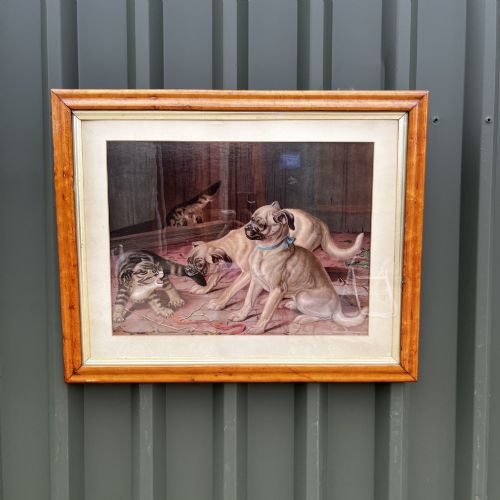
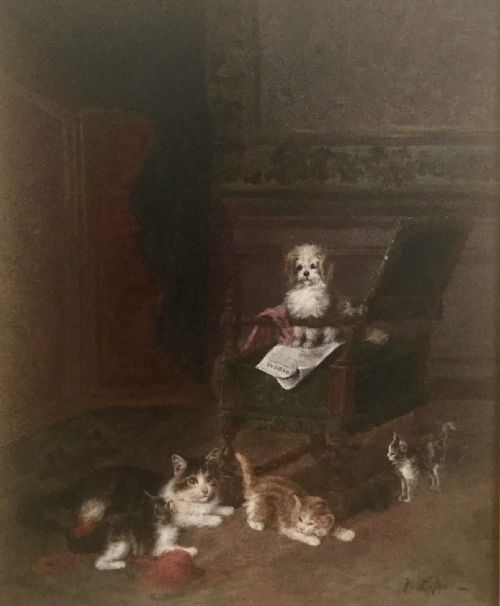
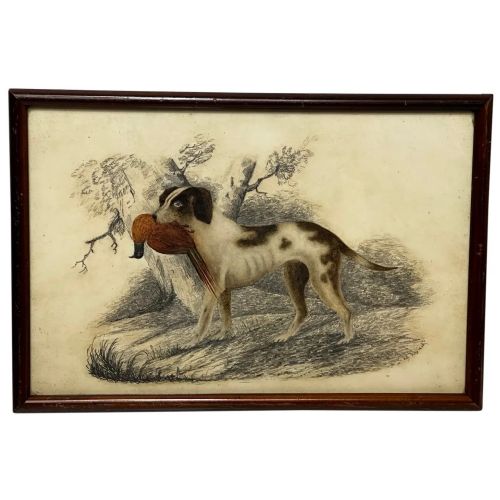
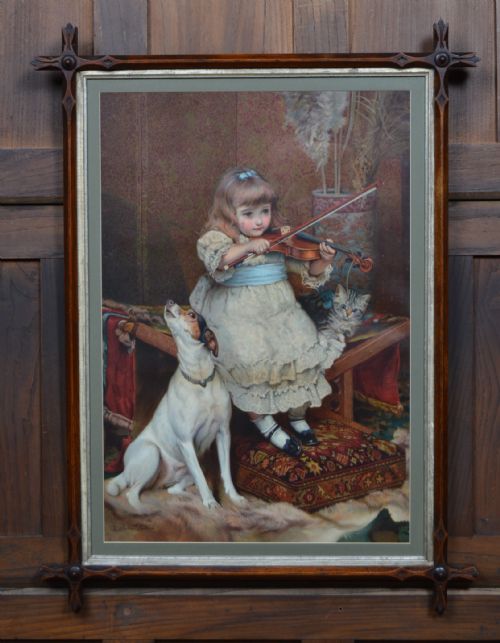
These Victorian dog print examples capture the character of canine companions through detailed etchings, chromolithographs and paintings.
Victorian Dog Print
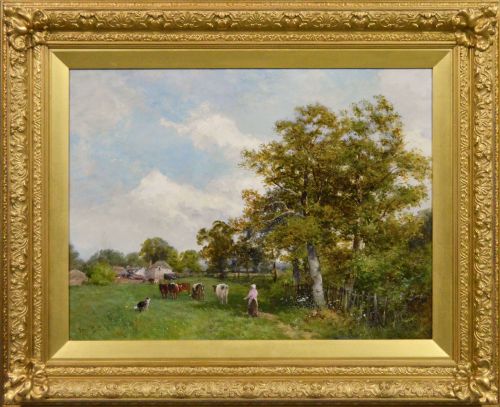
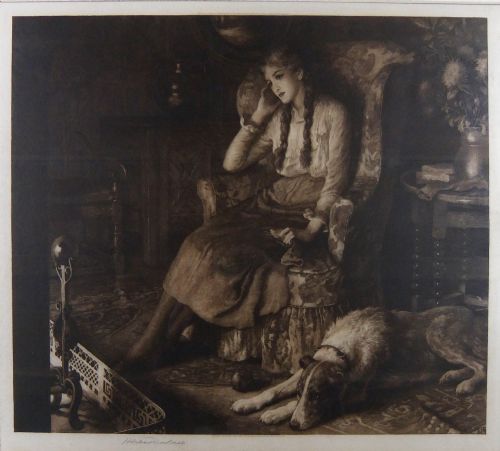
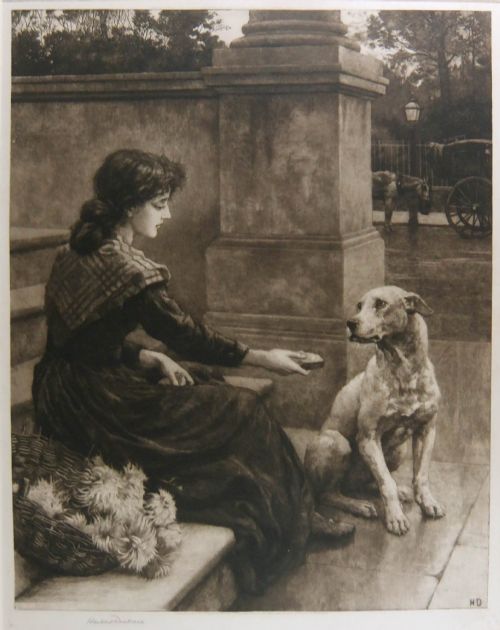
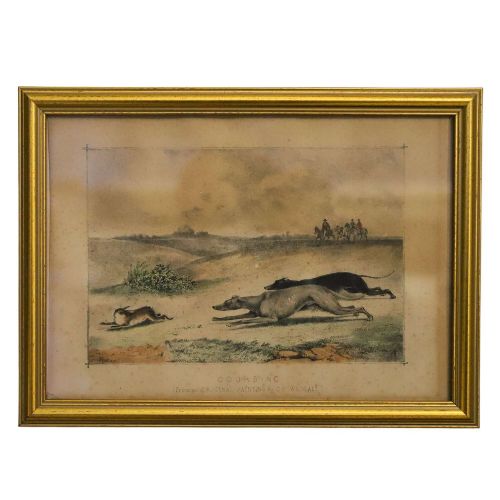
Buyers will encounter works by notable artists alongside period engravings and lithographs housed behind glass in wooden or gilded frames. These pieces record the close bond between humans and dogs, ranging from working gun dogs and field sports subjects to cherished household pugs and setters.
How they were made
The works rely upon traditional paper, ink and specialised printing methods including chromolithography and drypoint etching to capture fine detail. Etchers like Herbert Dicksee utilised metal plates to produce rich, textured impressions, while chromolithographs built up multiple coloured inks to replicate the appearance of original paintings.
Framing materials commonly involve wood, gilded wood and gold leaf combined with glass protection to preserve the delicate paper surfaces. Oil paintings in the collection employ canvas supports with traditional pigments to render realistic animal forms and landscape backgrounds.
Victorian Dog Print Retail Price Guide 2026
Typical asking prices for victorian dog print among the pieces listed under this phrase on Sellingantiques today, from the lower quarter to the upper quarter. They describe what is for sale here now, not the wider market.
Listings feature paper, ink, canvas, glass and gilded wood across periods spanning the Victorian era and the early twentieth century.
What varies in quality
The distinction between tiers rests upon the clarity of the impression, the skill of the artist and the preservation of the paper or canvas. Early drypoint etchings and original paintings by recognised artists exhibit superior linework and tonal depth compared to mass-produced decorative prints.
The condition of the original framing, the presence of protective glass and the absence of heavy discolouration on the paper surface further influence the overall standing of each piece.
Herbert Dicksee·C. H. Weigall·Horatio Henry Couldrey·Charles Burton Barber·Jules Le Roy·David Bates·Paul Jones
The Victorian Dog Print Glossary
- Chromolithography
- A planographic colour printing technique using multiple lithographic stones, one for each colour, to produce rich pictorial prints. This method allowed Victorian publishers to recreate the vibrant palette of oil paintings for domestic display.
- Drypoint
- A printmaking process where an artist scratches a design directly onto a metal plate with a sharp needle, creating a raised burr of metal. This burr holds extra ink during printing, producing the velvety, rich lines characteristic of fine nineteenth-century dog etchings.
- Etchings
- Intaglio prints created by applying acid to bite lines into a metal plate before inking and pressing onto damp paper. The resulting works demonstrate remarkable precision in rendering the fur and expression of canine subjects.
- Lithograph
- A planographic print pulled from a flat stone or metal plate treated to repel and attract ink selectively. Nineteenth-century examples served as an accessible medium for popular animal illustrations.
- Genre
- A category of art depicting scenes from everyday life, often featuring domestic animals and human companions. Victorian genre paintings and prints frequently highlight the sentiment and humour found in household settings.
Victorian Dog Print: Frequently Asked Questions
How do I care for a framed print?
Keep the artwork out of direct sunlight to prevent the ink and paper from fading over time. Maintain a stable room temperature to protect both the paper and the wooden frame from moisture damage.
Ensure the glass remains clean and check that the backing paper seals the frame securely against dust and insects.
What subjects are most common?
Sporting dogs such as pointers and setters feature prominently, reflecting nineteenth-century field pursuits and hunting traditions. Domestic pets like pugs and terriers also appear frequently in both prints and paintings.
Artists often placed these animals in pastoral landscapes or domestic interiors to emphasise their companionship and working roles.
How can I tell an etching from a lithograph?
An etching displays characteristic impressed plate marks around the image where the metal edge pushed into the damp paper during printing. Under magnification, the lines show a rich, slightly raised ink quality.
Lithographs lack plate marks and rely on a flat planographic surface texture, sometimes showing a fine dot pattern under close inspection.
Where should I hang these artworks?
These framed pieces suit studies, libraries and living spaces where traditional decor complements nineteenth-century aesthetics. Grouping smaller engravings together creates a cohesive gallery wall effect.
Choose wall space away from damp exterior walls and heat sources to preserve the organic materials safely.