



Victorian Desktop Storage
Victorian desktop storage brings together miniature chests, specimen cabinets and desk boxes designed to organise papers, tools and curiosities within arm's reach.
Victorian Desktop Storage
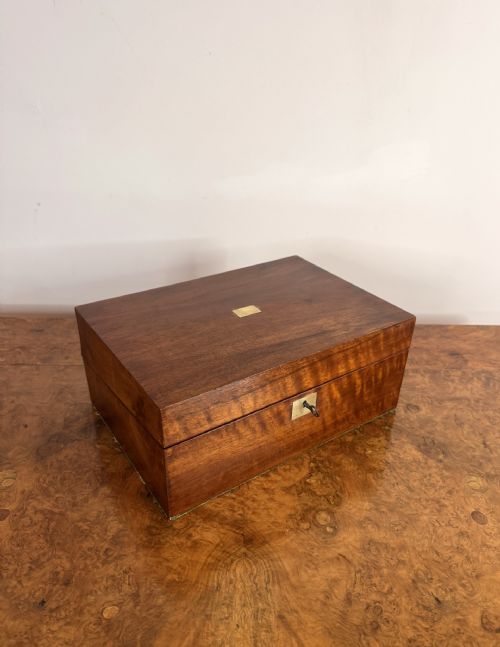
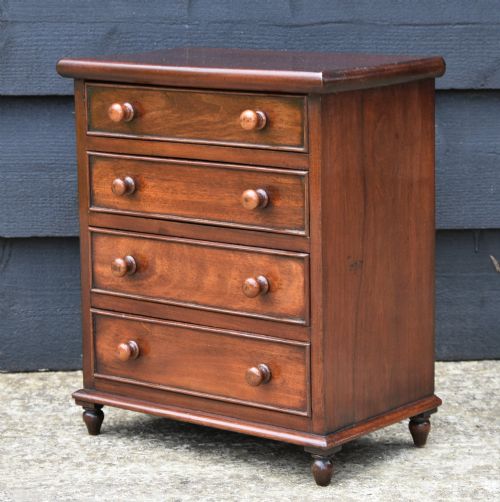
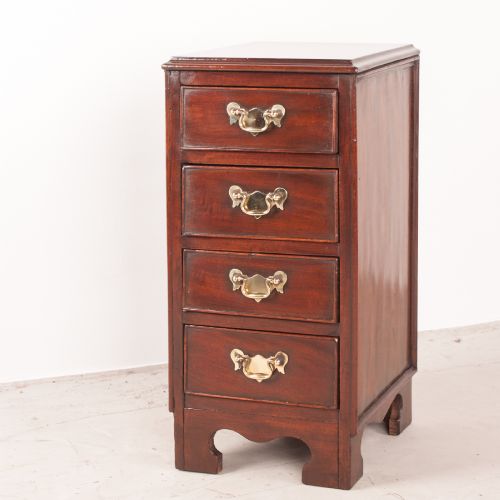
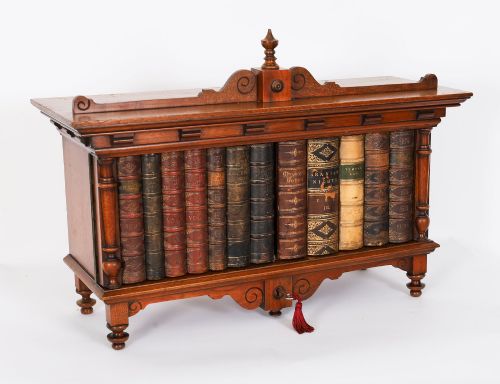
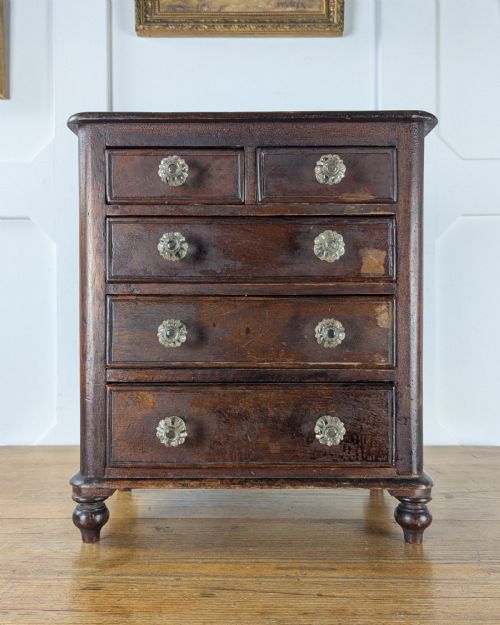
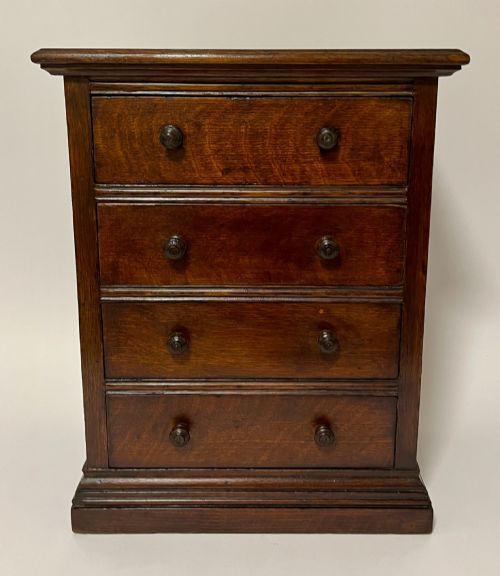
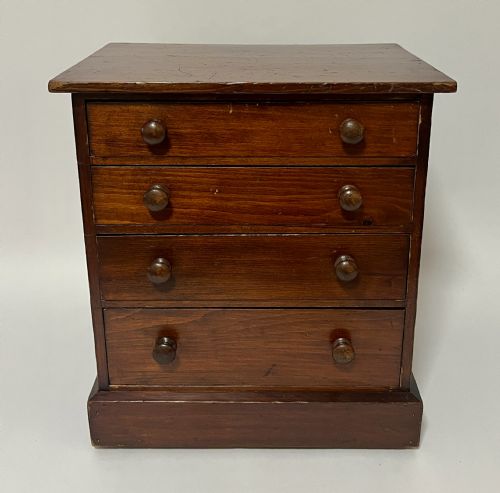
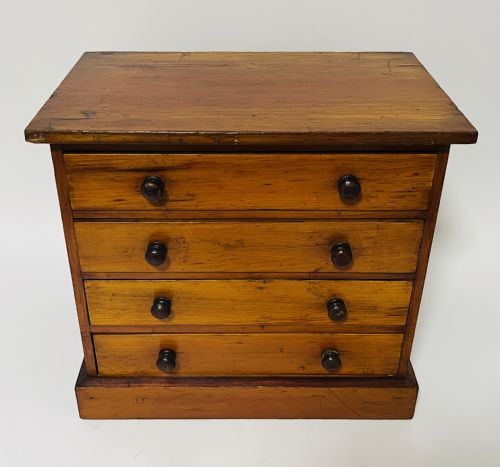
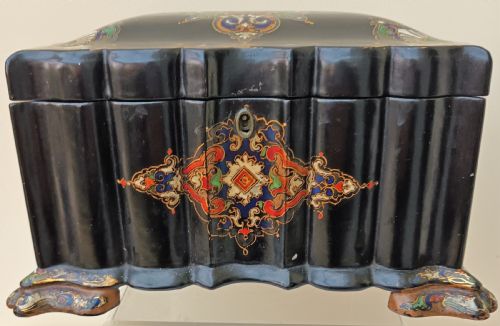
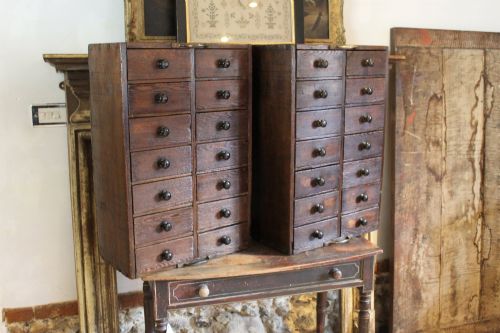
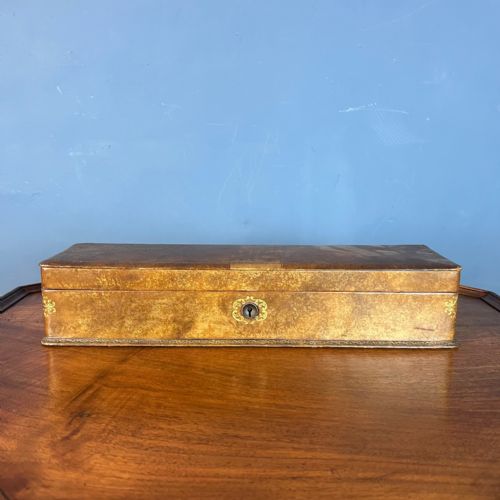
Victorian desktop storage encompasses a variety of compact wooden containers made to sit upon tables and writing desks. These pieces include miniature chests of drawers, collectors cabinets for specimens, cigar humidors and desk accessories.
The items found here originate primarily from the nineteenth century, spanning decades from the eighteen-thirties through to the nineteen-twenties. Buyers seek these functional objects to house small items while adding period character to a room.
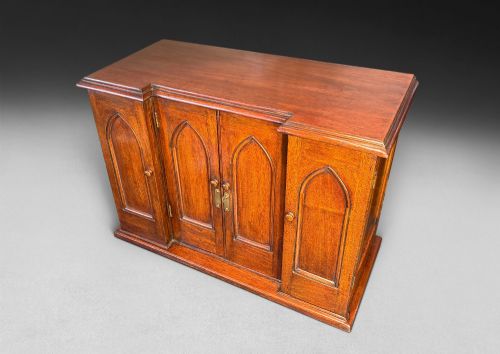
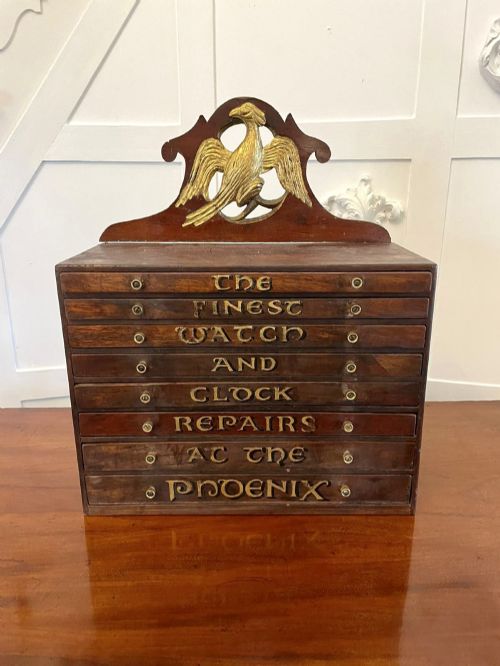
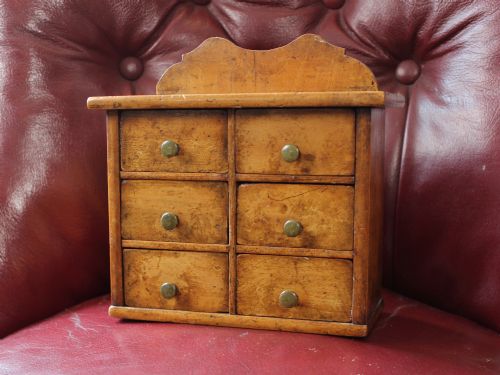
Miniature chests of drawers and tabletop cabinets dominate the selection, often mirroring the larger furniture styles of their respective decades. Pieces range from plain utility boxes to intricate display cabinets built for specific collections.
Materials and Construction
Cabinet makers utilised dense hardwoods such as mahogany, walnut and oak for these desktop pieces, occasionally employing fruitwood, pine or pollard oak for contrast. Surfaces were polished to highlight the natural grain of the timber, sometimes enhanced with marquetry or inlay work.
Brass fittings appear frequently as handles, escutcheons and corner brackets, providing both structural reinforcement and visual detail. Interior compartments often utilised leather lining, glass panels or tailored dividers suited to the intended contents.
Victorian Desktop Storage Retail Price Guide 2026
Typical asking prices for victorian desktop storage among the pieces listed under this phrase on Sellingantiques today, from the lower quarter to the upper quarter. They describe what is for sale here now, not the wider market.
Makers occasionally repurposed timber from naval vessels to build small cabinets, turning decommissioned warships into desktop storage.
Craftsmanship and Proportion
Quality rests in the precision of the joinery and the selection of figured wood veneers such as burr walnut or mahogany. Superior examples display careful attention to drawer linings, dovetail joints and original hardware.
Proportion and restraint dictate the upper tier of these pieces, where decorative elements serve the overall design rather than crowding the surface. The harmony between the exterior timber and internal fittings marks the difference in standard.
D Napier & Sons·Manoah Rhodes & Sons Ltd·Amberg
The Victorian Desktop Storage Glossary
- Apprentice piece
- A small item of furniture demonstrated by a craftsman to prove skill before gaining full guild membership. These miniature chests replicate full-size furniture down to the smallest detail.
- Specimen cabinet
- A small chest with multiple shallow drawers designed to hold natural history collections such as insects, fossils or botanical samples. Each drawer often includes glass covers or internal compartments.
- Humidor
- A specialised box lined with wood intended to store cigars at a stable humidity. Walnut and mahogany examples often feature secure locks and tight-fitting lids.
- Escutcheon
- A protective plate surrounding a keyhole, usually cast in brass. It prevents the wood around the lock from splitting through repeated use.
Victorian Desktop Storage: Frequently Asked Questions
What were miniature chests used for?
Miniature chests served various practical purposes on desks and dressing tables, holding small documents, trinkets, sewing gear or writing materials.
Craftsmen also created them as salesman samples or demonstration pieces to display cabinet-making abilities to prospective clients.
How do I clean a wooden desktop cabinet?
Dust the exterior regularly with a soft, dry cloth to prevent dirt accumulation in the grain and carved details.
Apply a traditional beeswax polish sparingly when the wood appears dry, buffing gently to maintain the natural sheen without building up residue.
Are these cabinets suitable for modern desks?
Their compact dimensions make them ideal for modern tabletops, offering practical storage for stationery, modern accessories or small collections.
They bring period character and functional organisation to contemporary workspaces without taking up excessive room.
How can I tell the age of a piece?
Examine the construction methods, such as hand-cut dovetails on the drawers, timber selection and the style of brass hardware.
Comparing the decorative motifs, such as Gothic revival carving or Victorian walnut veneer, helps narrow down the decade of manufacture.