


Victorian Desk with Slope
A victorian desk with slope brings together compact portable writing boxes and larger library pieces built for nineteenth-century correspondence.
Victorian Desk with Slope
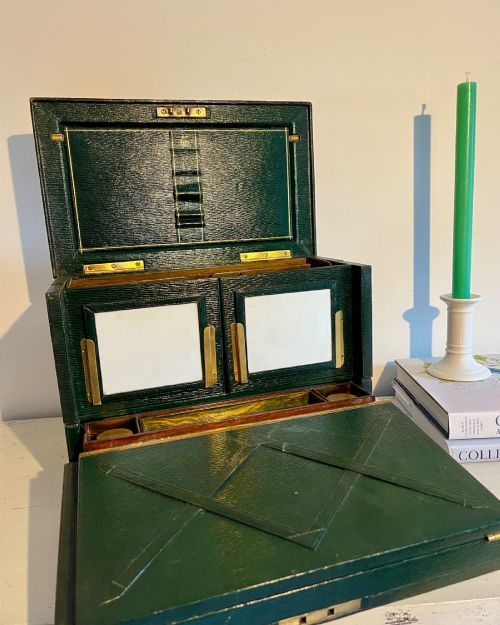
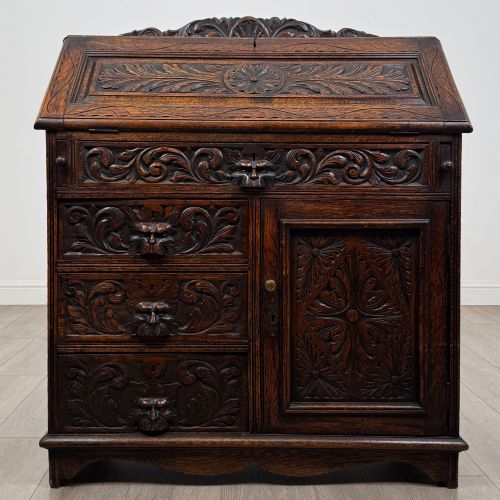
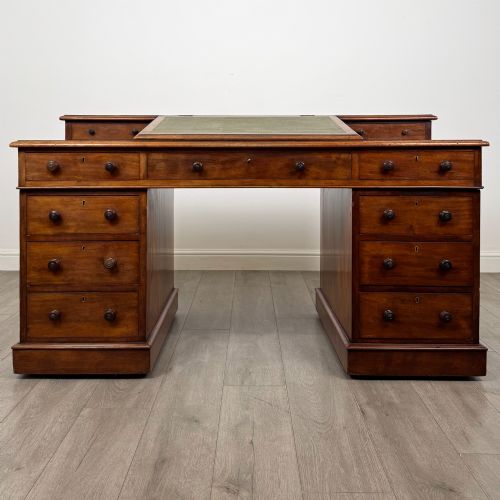
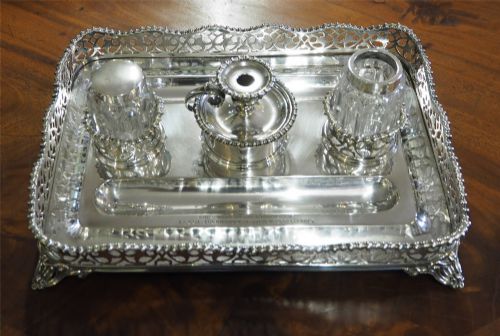
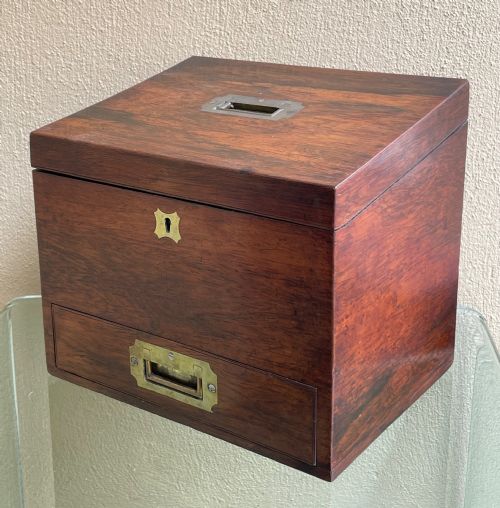
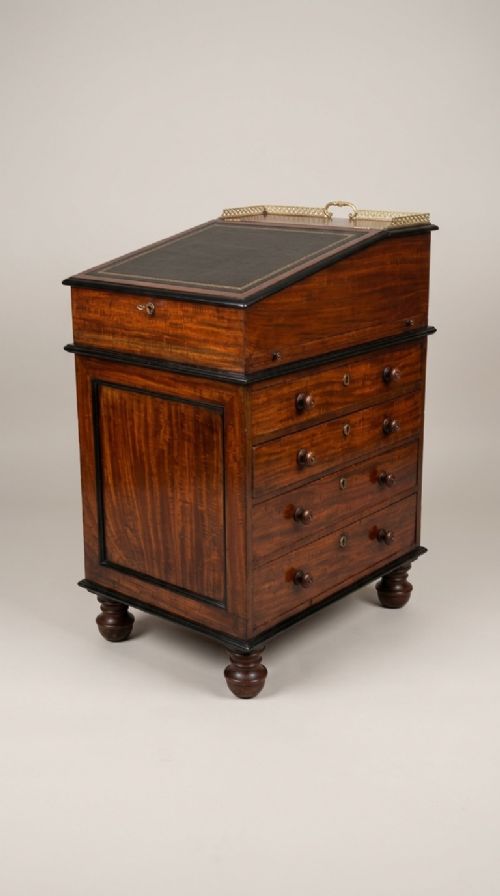
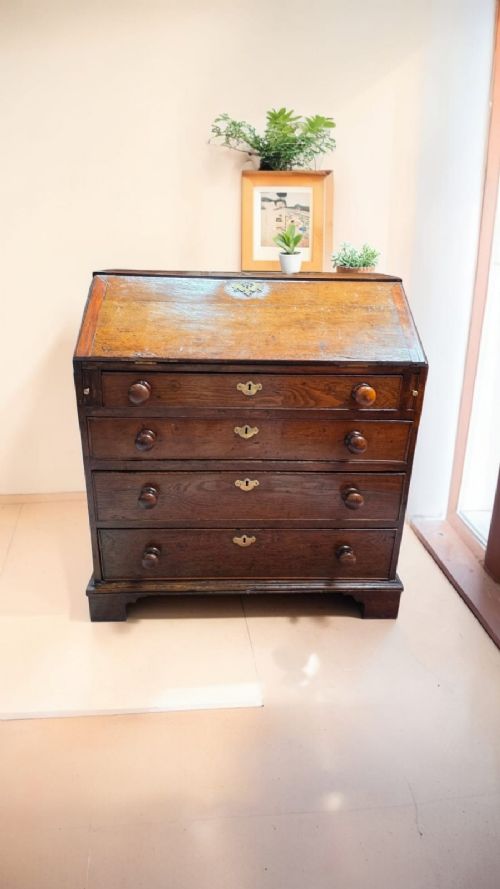
A victorian desk with slope encompasses a wide variety of writing furniture, from portable lap boxes to substantial pedestal desks and Davenport writing tables. The pieces on this page span the nineteenth century, including campaign items fitted with brass corners and military handles, alongside larger architectural forms in oak and mahogany.
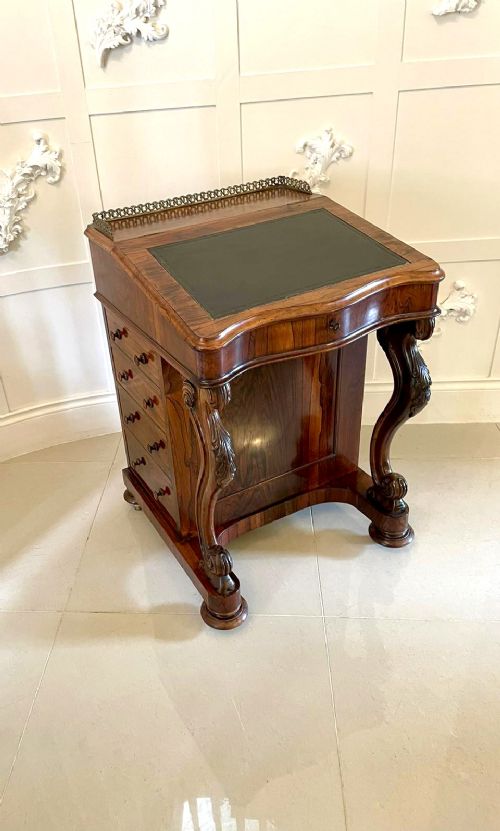
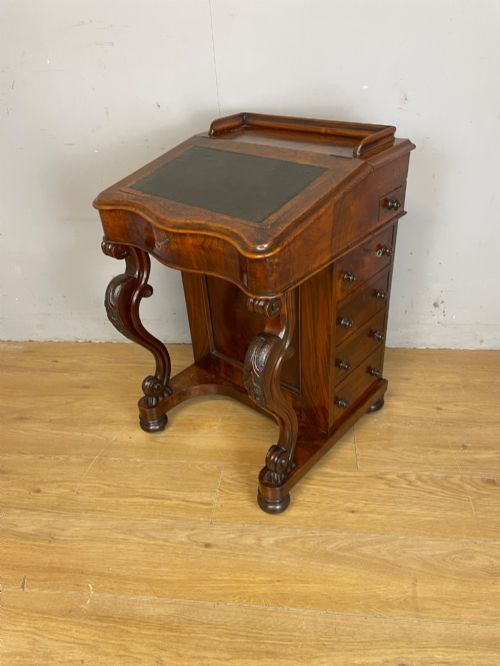
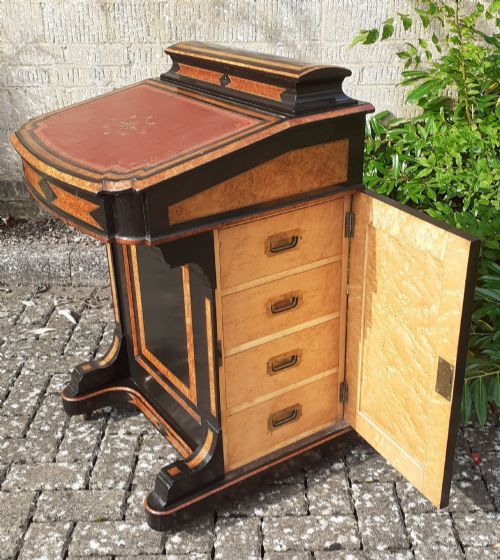
Buyers regularly encounter Davenport desks featuring sloping writing surfaces above sets of side drawers, as well as classic walnut and mahogany writing slopes designed to sit on tables. Larger library pieces such as Dickens desks and partner desks also appear, often incorporating leather writing surfaces or hidden compartments.
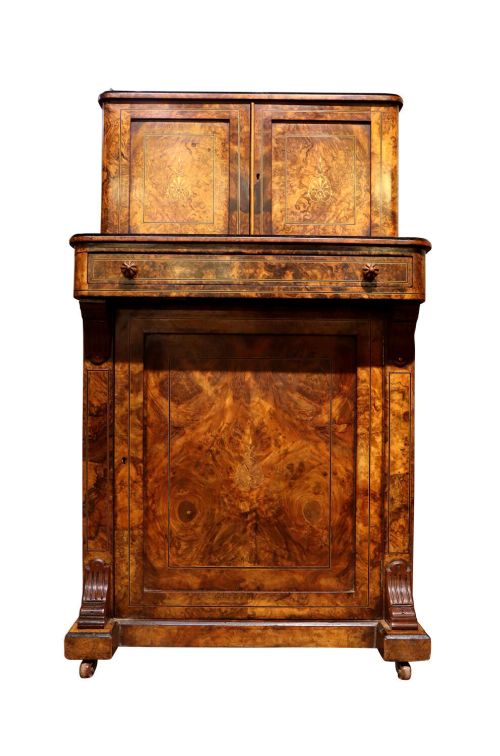
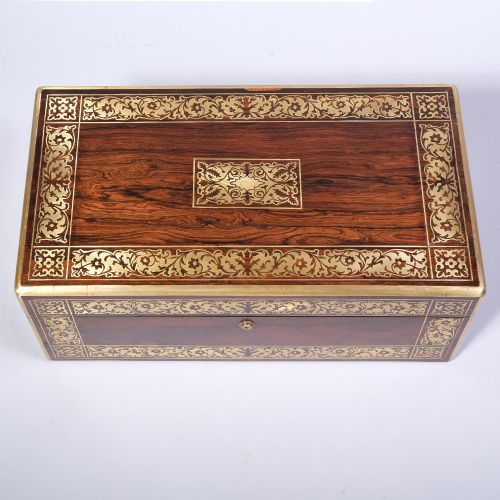
Origins range from plain utilitarian pine to decorative burr walnut and rosewood veneered boxes inlaid with brass. These forms reflect the heavy reliance on handwritten correspondence during the period, resulting in specialised storage for stationery, inkwells, and secret documents.
Materials and Construction
Cabinetmakers utilised dense tropical hardwoods like mahogany and rosewood, alongside decorative veneers including burr walnut, amboyna, and coromandel, laid over secondary structural timbers such as pine or oak. Solid woods were employed for structural integrity, while figured veneers decorated the primary visual surfaces of desks and portable boxes.
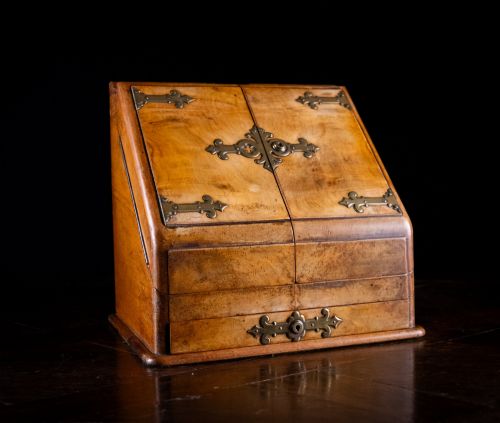
Metal hardware played an essential functional role, with brass corner brackets, strapwork, and flush campaign handles protecting portable writing slopes during travel. Secure locking mechanisms by makers like Bramah safeguarded confidential papers inside secret drawers concealed behind dummy partitions.
Several portable writing slopes include integrated candle sconces, ensuring late-night correspondence continued uninterrupted by dim lighting.
Quality and Craftsmanship
The degree of refinement in the interior fittings separates standard utility pieces from exceptional examples. Superior writing slopes and Davenport desks feature finely dovetailed secret drawers, matching satinwood interiors, and original fitted compartments for inkwells and pens.
Timber selection dictates visual depth, with highly figured burr walnut or flame mahogany veneers showing careful book-matching across the lid and front panels. Structural joinery, the retention of original working locks and keys, and minimal replacement of brass inlay or leather writing surfaces further define the better specimens.
Gillow and Co·Elkington·Maple and Co
The Victorian Desk with Slope Glossary
- Writing Slope
- A portable box with a hinged slanted lid designed for holding paper and providing an inclined writing surface. Many contain hidden compartments beneath the stationery storage.
- Davenport
- A compact pedestal desk featuring a sloped, hinged writing surface and a set of drawers opening to one side. This form became popular during the nineteenth century for drawing rooms.
- Campaign
- Furniture constructed for military use, characterised by sectional design, flush handles, and brass reinforcement to withstand frequent transport. These pieces dismantle or fold for travel.
- Bramah Lock
- A high-security cylindrical lock patented in the eighteenth century and frequently fitted to quality nineteenth-century desks and boxes. These mechanisms required specialised tubular keys to operate.
- Secret Drawer
- A concealed compartment hidden behind movable panels or false bottoms within a desk or writing box. They were intended for storing valuables and confidential letters.
Victorian Desk with Slope: Frequently Asked Questions
What is a Davenport desk?
A Davenport is a small nineteenth-century desk featuring a sloped writing surface above a pedestal of drawers. The top often houses a stationary compartment.
These pieces were originally designed for domestic writing tasks and occupy a compact footprint compared to standard pedestal desks.
Where are secret drawers usually located?
Secret drawers are commonly concealed behind false partitions inside stationery compartments or beneath removable pen trays. Users must often lift specific panels to release the hidden spring or latch.
Cabinetmakers integrated these compartments into writing slopes and Davenport desks to secure sensitive correspondence.
What woods were used for Victorian desks?
Cabinetmakers primarily used mahogany, walnut, and oak as structural timbers. Finer surfaces featured decorative veneers such as burr walnut, rosewood, coromandel, and amboyna.
Secondary woods like pine often appear inside drawer linings and internal dividers of portable boxes.