





Victorian Desk Set Accessory
When you search for a victorian desk set accessory, you are looking at practical writing implements built from brass, wood, porcelain and glass during the nineteenth century.
Victorian Desk Set Accessory
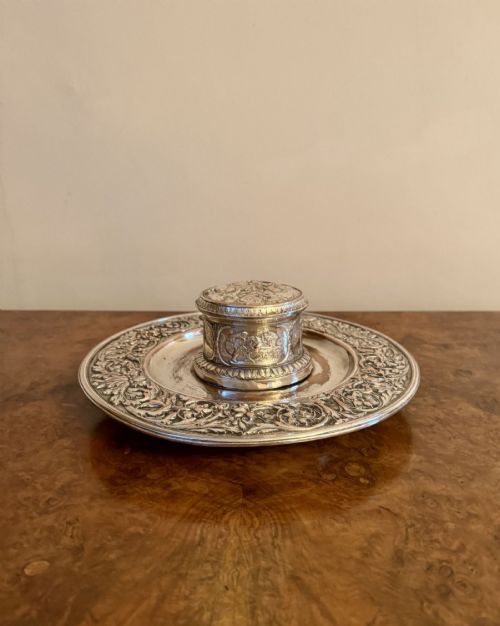
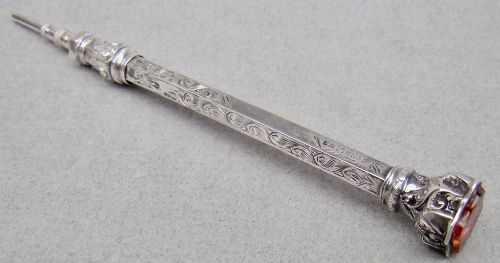
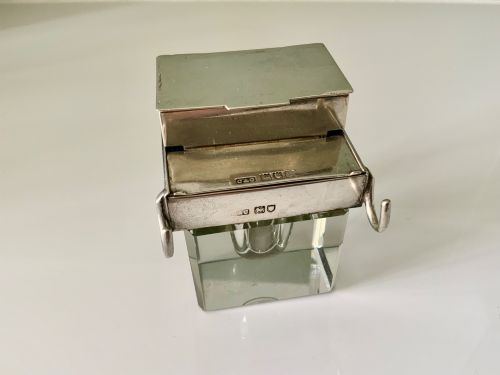
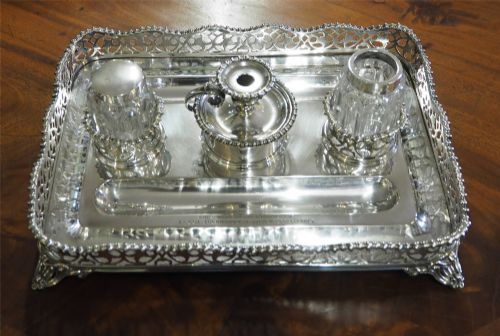
A victorian desk set accessory encompasses inkstands, inkwells, postal scales, letter racks and desk tidies designed to organise the nineteenth-century writing table. The pieces range from simple brass and oak stands to elaborate ormolu, porcelain and tortoiseshell assemblies.
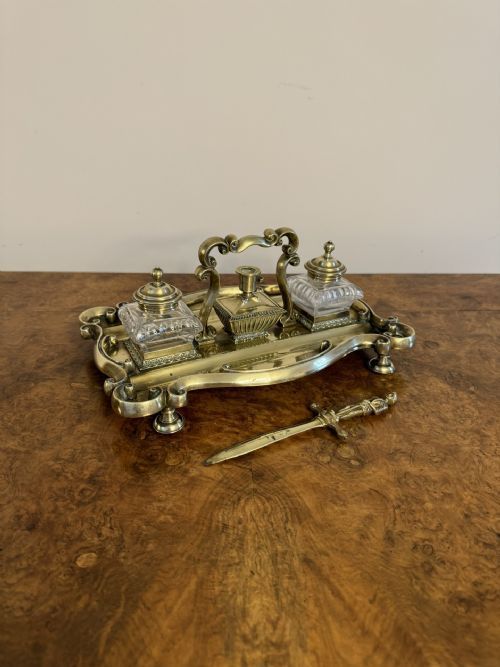
You will most frequently encounter brass inkstands, double inkwells with cut glass inserts, and mounted postal scales originating from the Victorian and Edwardian eras. These objects reflect the heavy correspondence needs of nineteenth-century households and offices.
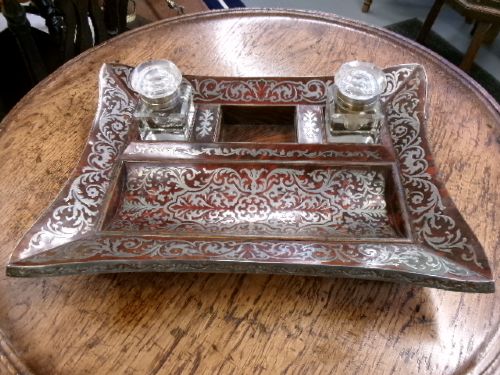
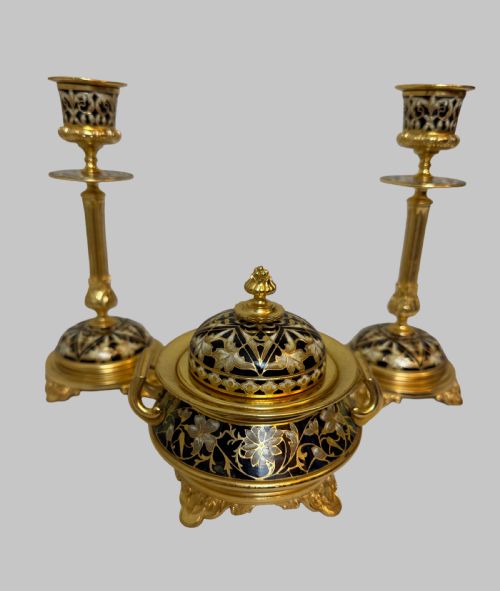
Forms vary from utilitarian mahogany and walnut bases to ornate decorative items executed in Chinoiserie, Black Forest, Grand Tour and French Napoleon III styles. Many incorporate multiple accessories such as chambersticks, candlesticks and matching pen trays.
How they were made
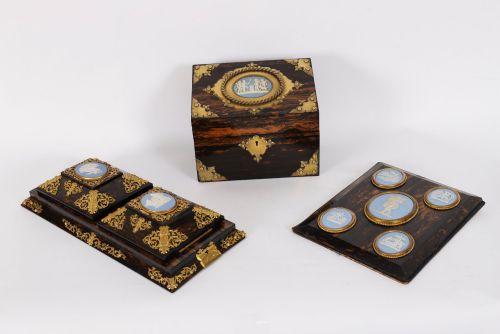
The makers utilised a wide variety of hardwoods including mahogany, walnut, coromandel, rosewood and oak, often inlaid with brass, tortoiseshell or mother-of-pearl using Boulle techniques. Many wooden stands feature carved details such as Black Forest animal motifs or Irish oak foliage.
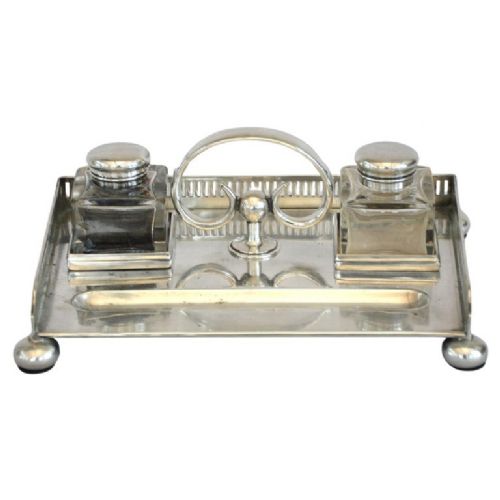
Metal components relied on cast brass, ormolu, gilt bronze, champleve enamelling and silver plating by firms like Elkington and Walker and Hall, alongside solid sterling silver elements. Glass elements were typically heavy cut glass or moulded glass fitted into inkstand reservoirs.
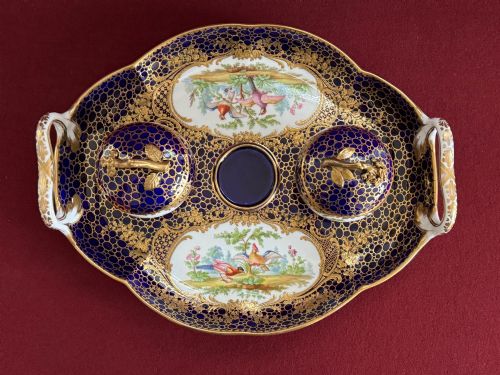
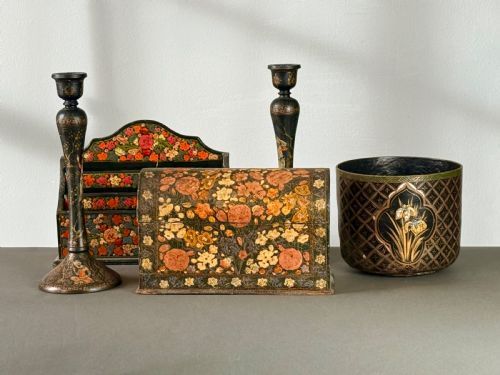
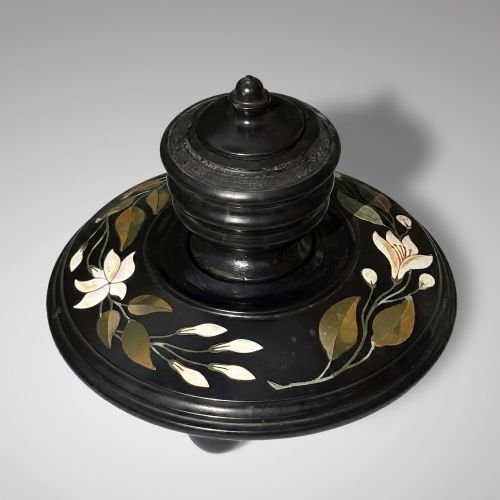
Decorative accessories integrated ceramic and stone mediums, including Minton porcelain, Sèvres style porcelain, Dutch Delft faience, jasperware, Ashford marble and agate cabochons. Papier-mché and Kashmiri lacquer finishes provided lightweight alternatives for hand-painted desk tidies.
Victorian Desk Set Accessory Retail Price Guide 2026
Typical asking prices for victorian desk set accessory among the pieces listed under this phrase on Sellingantiques today, from the lower quarter to the upper quarter. They describe what is for sale here now, not the wider market.
Listings feature brass, silver plate, sterling silver, cut glass, porcelain, coromandel, walnut, mahogany, oak, tortoiseshell, ormolu and papier-mâché.
What varies in quality
Quality depends upon the precision of the joinery and metalcasting, where crisp chisel work on ormolu and cleanly fitted brass mounts distinguish superior pieces from standard production. The weight and clarity of cut glass inkwells also indicate the standard of manufacture.
The choice of primary material heavily influences the tier of the object, with exotic timbers like coromandel and tortoiseshell, or fully integrated champleve enamel work, appearing on the most ambitious commissions. Signed maker pieces carry distinct execution standards in their mechanical scale balances and hinged silver lids.
Edwards and Jones·Edmé Samson·Elkington·Walker and Hall·S Mordan London·Robert Garrard London
The Victorian Desk Set Accessory Glossary
- Inkstand
- A fitted tray or stand holding one or more inkwells, often including spaces for pens, sanders and sealing wax. These central writing desk accessories coordinated the materials needed for correspondence.
- Ormolu
- Gilt bronze mounted onto decorative objects and furniture, popular in French and English nineteenth-century metalwork. The technique involves applying a gold amalgam to a bronze base.
- Boulle work
- A style of marquetry using brass and tortoiseshell inlaid into wood, named after the French cabinetmaker André-Charles Boulle. It adds intricate metallic patterns to the surfaces of luxury desk stands.
- Champleve
- An enamelling technique where troughs are dug into a metal surface and filled with vitreous enamel before firing. This decorative method creates colourful patterned borders on bronze frames and inkwells.
- Ashford marble
- A polished black limestone inlaid with coloured mineral specimens to form floral or geometric mosaics. It originates from Derbyshire and appears on nineteenth-century desk accessories.
Victorian Desk Set Accessory: Frequently Asked Questions
What is a double inkstand?
A double inkstand is a desk accessory that holds two separate inkwells, typically positioned on a shared wooden, brass or silver tray. These were used to keep both black and red ink readily available for correspondence.
The inclusion of two inkwells often pointed to a more substantial desk set, frequently accompanied by a pen trough, stamp box or central chamberstick.
How do postal scales work?
Postal scales use a weighted balance mechanism to determine letter and parcel postage rates based on weight thresholds. A small platform holds the item while a swinging arm or dial indicates the required fee.
Victorian examples often feature brass construction with matching calibrated weights stored directly in the scale base.
Where were these pieces used?
These accessories sat upon writing desks, library tables and bureau plat surfaces in nineteenth-century homes and administrative offices. They served as both functional tools for letter writing and decorative statements for reception rooms.
Larger double-sided sets were designed for partner desks, allowing two people to write facing each other from opposite sides of the table.
How do I care for antique wood and brass?
Maintenance requires dry dusting with a soft cloth and avoiding abrasive cleaning agents that can damage antique lacquers and patinas. Brass and ormolu components should be kept free of moisture to prevent corrosion.
Conditioning wooden surfaces like walnut and coromandel with appropriate natural waxes preserves the timber without altering the historic finish.