




Victorian Decorative Dogs
Victorian decorative dogs bring character to the hearth and tabletop through cast brass, iron, and papier mache sculpture.
Victorian Decorative Dogs
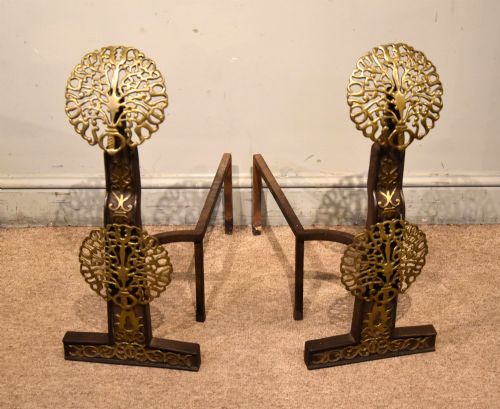
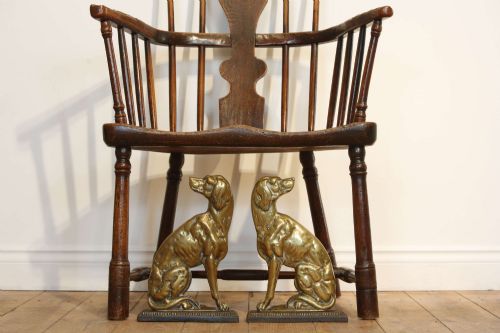
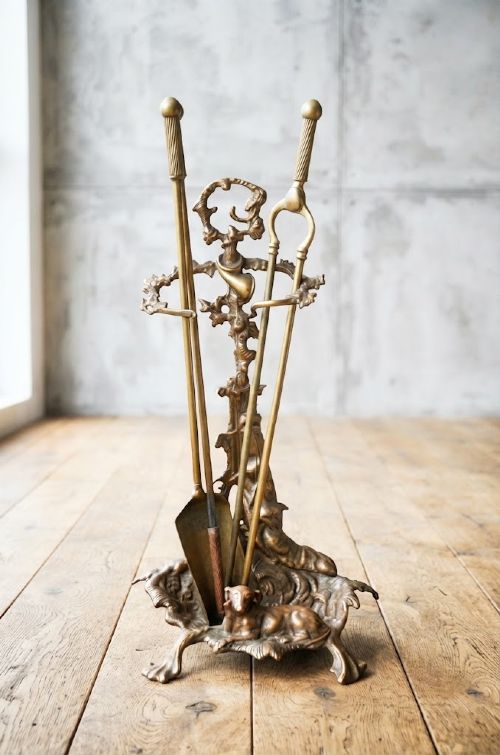
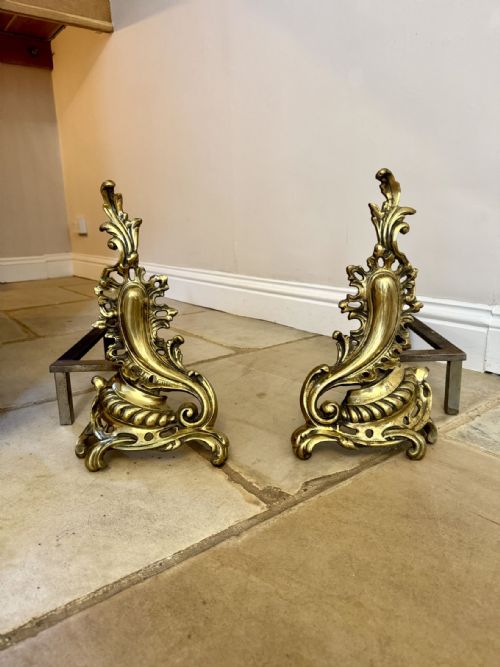
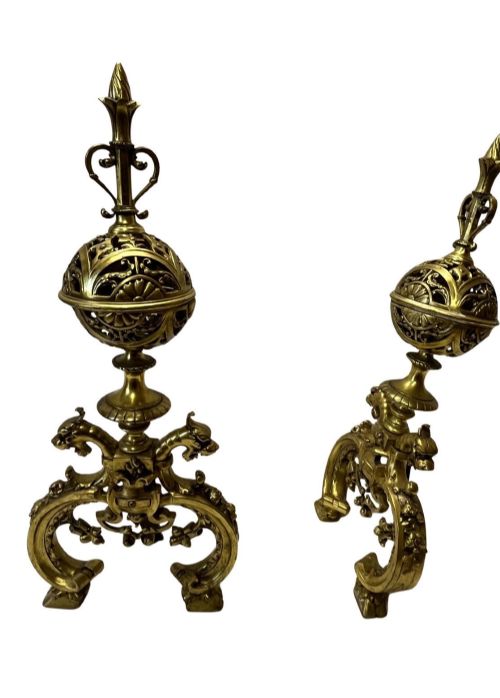
Victorian decorative dogs appear primarily as fireplace accessories, including pairs of brass, steel, and cast iron andirons or fire dogs, alongside companion stands and doorstops. These hearth pieces take the form of pugs, border collies, and general hound motifs modelled in the 19th Century.
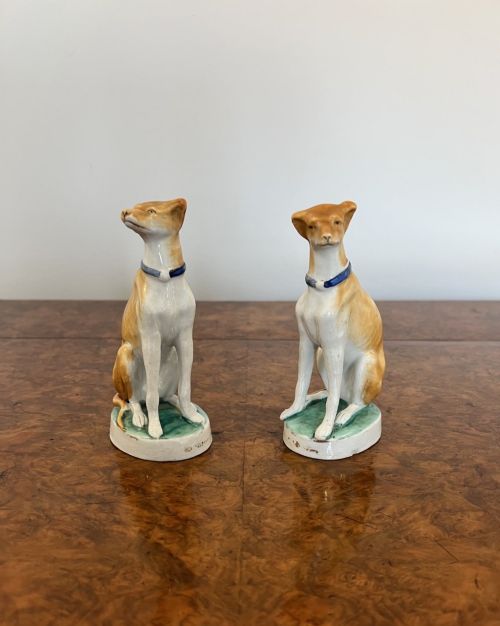
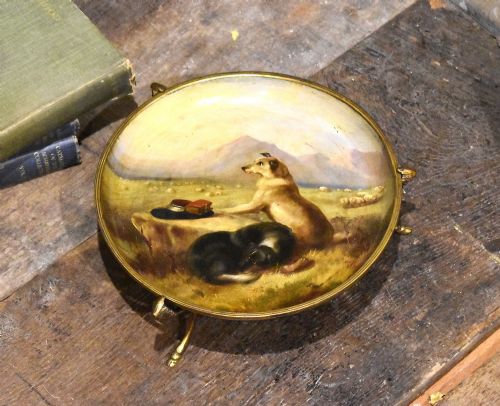
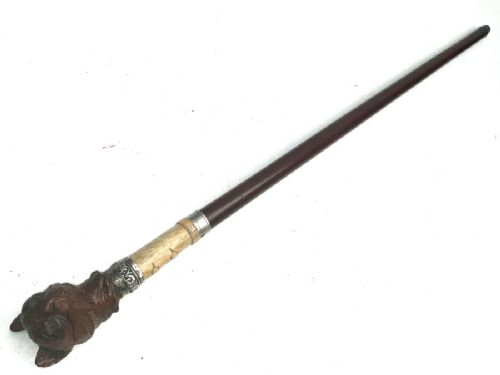
Beyond the fireplace, the category extends to tabletop and display items such as papier mache comports, silver novelty pin cushions depicting dogs and carts, and small bisque pottery poodles. Sculptural works in Parian and bronzed plaster also feature among these nineteenth-century domestic ornaments.
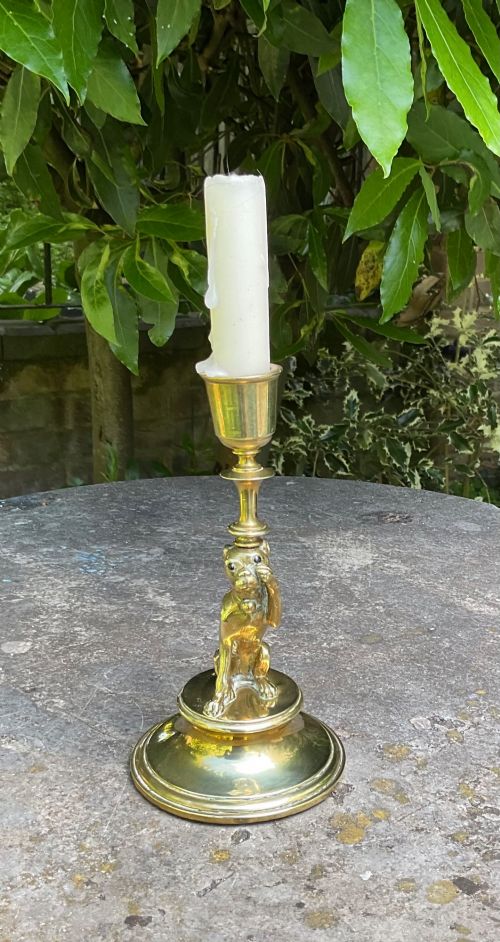
The versions most commonly met on this page are matched pairs of heavy brass andirons designed for coal or wood fires, often styled with historical revivals like French Rococo or seventeenth-century aesthetics. Novelty items such as pug candlesticks and figural pin cushions represent the lighter, decorative side of Victorian animal sculpture.
How they were made
Metal items rely heavily on foundry work, utilising cast brass, iron, and steel to form robust andirons and fire accessories. Artisans combined cast components with wrought iron elements or applied ormolu and silver details to enrich the finished surface.
Non-metallic pieces demonstrate distinct moulding and modelling traditions, such as papier mache combined with painted decoration, and fired ceramic materials including white bisque pottery and Parian ware. These techniques allowed makers to capture fine textures in animal coats and facial expressions.
Victorian Decorative Dogs Retail Price Guide 2026
Typical asking prices for victorian decorative dogs among the pieces listed under this phrase on Sellingantiques today, from the lower quarter to the upper quarter. They describe what is for sale here now, not the wider market.
What varies in quality
The Victorian Decorative Dogs Glossary
- Andirons
- Supports for burning wood logs in an open fireplace, typically made in matching pairs from brass, iron, or steel. They often incorporate decorative figural elements such as dogs or heraldic motifs.
- Parian
- A fine-grained, unglazed porcelain resembling white marble, developed in the nineteenth century for portrait busts and small sculptures. It provides a smooth surface that mimics carved stone.
- Comport
- An ornamental dish or bowl raised on a stem, used for serving fruit or sweets on a table. In nineteenth-century examples, these are sometimes formed from papier mache with painted or applied decoration.
- Ormolu
- Gilded bronze or brass applied to decorative objects and furniture as an ornamental mount. The technique involves coating base metal with a gold amalgam.
- Bisque
- Unglazed fired pottery that presents a matte, porous surface texture. It is frequently used for figurines and decorative ornaments.
Victorian Decorative Dogs: Frequently Asked Questions
What were fire dogs used for?
Fire dogs supported logs above the hearth floor to improve airflow beneath the fire.
They also served an ornamental purpose, framing the fireplace with decorative brass or iron figures when the hearth was not in use.
How do I clean brass andirons?
Brass fire dogs require gentle dusting with a soft cloth to remove soot and surface grime.
Harsh metal polishes should be avoided to preserve the aged patina built up over the nineteenth century.
Are these pieces strictly English?
While many items originate in England, nineteenth-century domestic interiors also incorporated continental designs.
French styles, particularly Rococo revival and figural bronze work, appear frequently alongside British brass and iron pieces.
How do I date Victorian dog ornaments?
Dating relies on material composition, manufacturing methods, and stylistic cues such as revival periods or registration marks.
Comparing the casting quality and wear patterns helps place an object within the nineteenth or early twentieth century.