







Victorian Cylindrical Cupboard
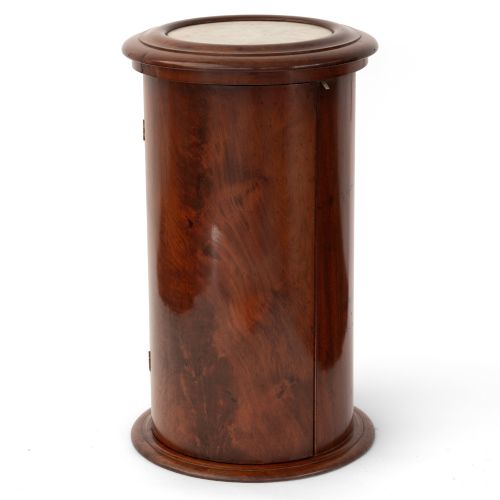
A Victorian cylindrical cupboard brings ingenious curved timber and fitted marble into a bedroom or corner space.
Victorian Cylindrical Cupboard
A Victorian cylindrical cupboard is a circular storage piece designed for the bedroom or bedside, appearing frequently as a compact cabinet or pedestal stand. These items provide discrete vertical storage within a small footprint, often featuring a single door that curves smoothly around the interior compartment.
The pieces on this page span the nineteenth century, including specific dates from the middle and latter decades of the Victorian era. Alongside traditional bedside cabinets, the selection includes circular lamp stands, nightstands, and column pedestals.
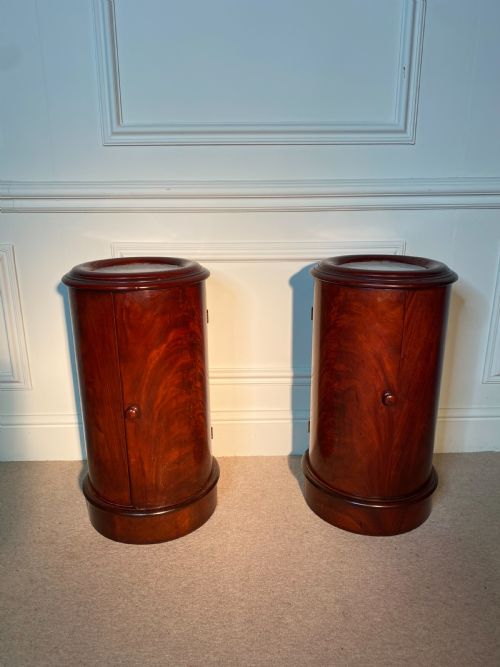
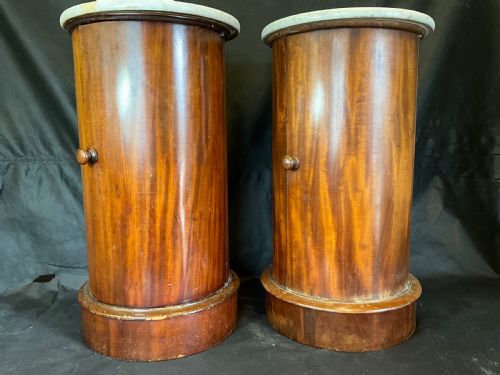
Makers and craftsmen utilised various forms to suit domestic needs, ranging from plain wooden cylinders to paired bedside cabinets with inset stone tops. Buyers will encounter both English mahogany examples and French Empire influenced designs among the current stock.
How they were made
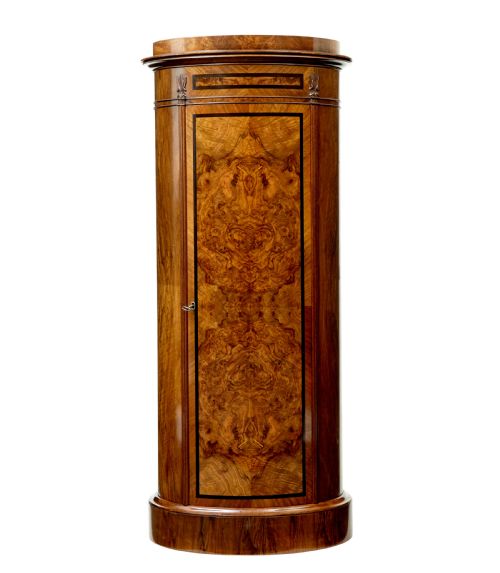
Makers constructed the curved bodies of these cabinets using finely figured timbers such as flame mahogany, burr walnut, and standard walnut. Carpenters bent or shaped the wood to form continuous cylinders, often pairing the timber carcasses with heavy ceramic or marble tops.
Surface ornamentation relies on the natural grain of the wood, with flame mahogany and burr walnut providing distinct patterns across the curved doors. Secondary materials like ebony accents and ceramic components appear on specific examples to complement the primary timber.
Victorian Cylindrical Cupboard Retail Price Guide 2026
Typical asking prices for victorian cylindrical cupboard among the pieces listed under this phrase on Sellingantiques today, from the lower quarter to the upper quarter. They describe what is for sale here now, not the wider market.
Several items double as figure stands, meaning your porcelain cat can finally tower over the room from its own mahogany column.
What varies in quality
Quality in a Victorian cylindrical cupboard rests upon the precision of the curved joinery and the smoothness of the door action. Superior examples maintain a true circular form without warping, ensuring the door sits flush within the curved frame.
The choice of top material also marks the distinction between standard and finer pieces, particularly where heavy marble or fitted ceramic slabs are employed. Finely figured veneers like burr walnut and flame mahogany indicate a higher grade of cabinetmaking.
The Victorian Cylindrical Cupboard Glossary
- Flame mahogany
- A veneer cut from the branch junctions of the mahogany tree, displaying a characteristic flame-like pattern across the timber surface. This material was favoured by Victorian cabinetmakers for its decorative visual impact on curved furniture.
- Burr walnut
- A wood grain obtained from growths on walnut trees, prized for its complex swirling patterns and rich texture. It appears frequently on the exterior surfaces of nineteenth century pedestals and cabinets.
- Pedestal cabinet
- A tall, freestanding storage piece with a vertical orientation and a relatively small footprint. These items often serve as bedside cupboards or display stands in domestic interiors.
- French Empire
- A neoclassical design style influencing nineteenth century British furniture through classical proportions and restrained ornamentation. Pieces of this style often incorporate columns and structural symmetry.
- Pot cupboard
- A traditional term for a small bedside cabinet originally intended to house a chamber pot. These practical items form a large portion of the cylindrical cupboards available from the Victorian period.
Victorian Cylindrical Cupboard: Frequently Asked Questions
How were these cupboards used?
These cupboards served primarily as bedside tables or nightstands to hold nighttime essentials and conceal chamber pots within the enclosed interior. Their compact circular shape allowed them to fit neatly into corners or beside low Victorian beds.
Over time, many of these pieces transitioned into general lamp stands, display pedestals, or side tables in living spaces. Their versatile proportions made them suitable for various rooms beyond the bedroom.
How do I date a cylindrical cabinet?
Dating relies on observing the secondary woods, construction methods, and prevailing styles associated with the nineteenth century. Pieces attributed to the earlier Victorian decades often display flame mahogany veneers, while later examples incorporate different walnut figures or specific pedestal forms.
Detailed listings often provide estimated years such as eighteen fifty or eighteen sixty based on physical characteristics. Comparing the timber grain and top materials helps place the piece within the broader Victorian timeline.
Are marble tops original to the cabinets?
Many Victorian cylindrical cabinets were constructed specifically to hold heavy marble or ceramic slabs on their upper surfaces. These inset tops provided a durable, water-resistant surface for jugs, wash basins, or lamps.
Examining the rebate and fit of the stone helps confirm its period integration with the wooden base. Such tops are a defining feature of the marble top bedside cabinets found in nineteenth century English and continental workshops.