

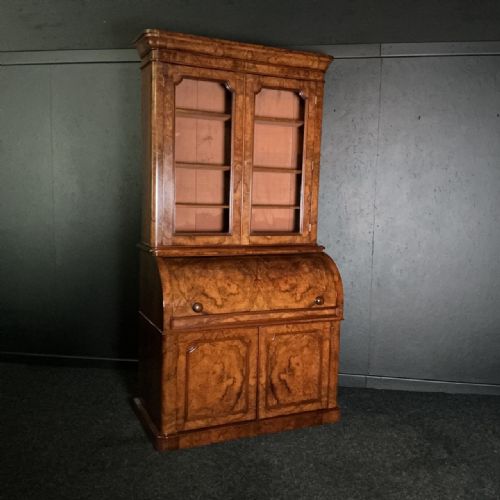


Victorian Cylinder Cabinet
These Victorian cylinder cabinet pieces combine sliding roll-front closures with fitted desk interiors, offering a compact workspace that conceals clutter with understated elegance.
Victorian Cylinder Cabinet
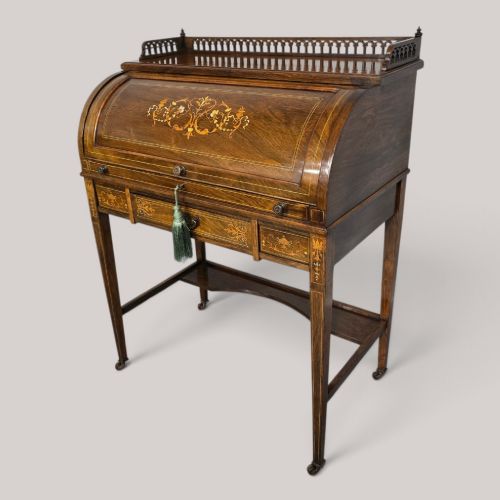
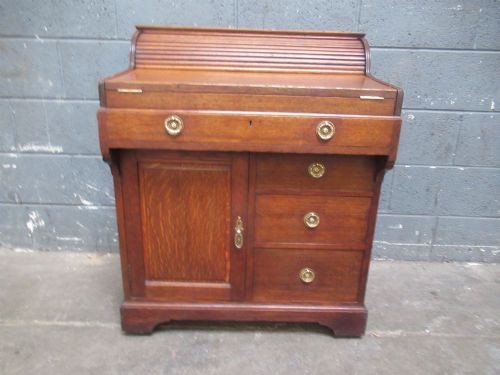
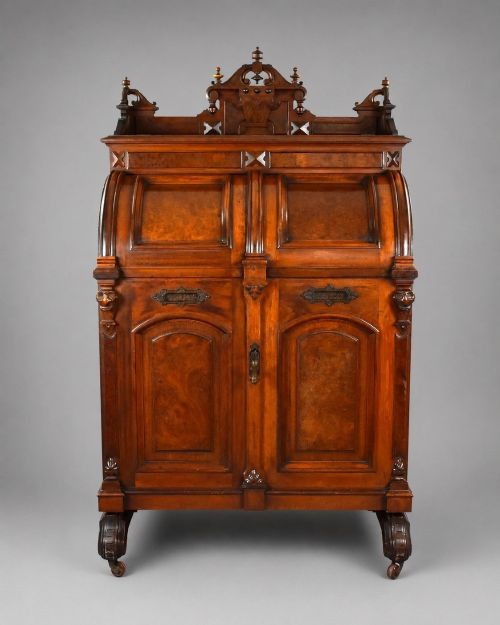
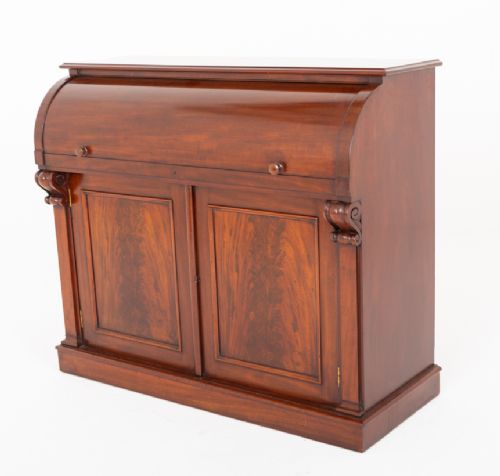
A victorian cylinder cabinet provides a concealed writing surface and pigeonholes behind a curved wooden roll front, often surmounted by a bookcase or standing as a pedestal. These forms emerge across the nineteenth century in woods like mahogany, walnut, and satinwood.
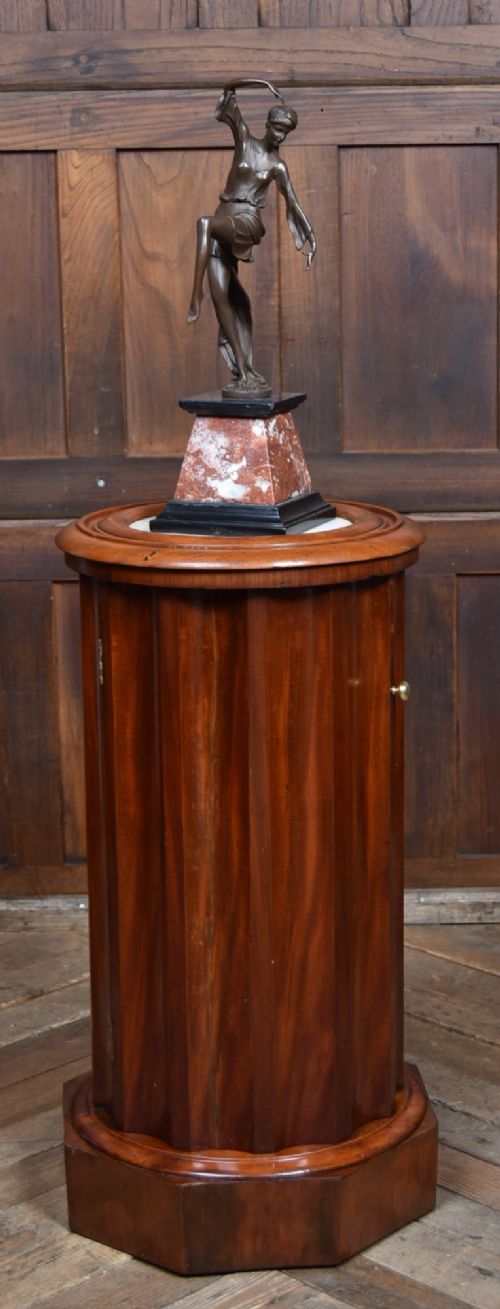
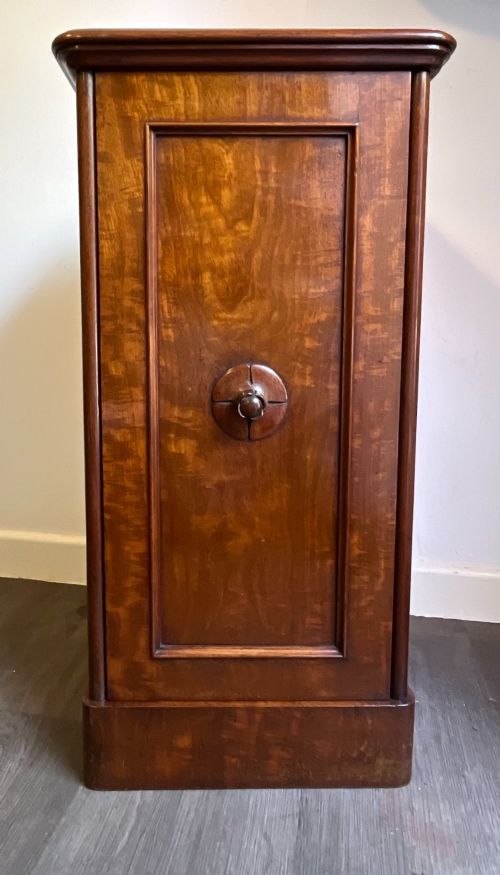
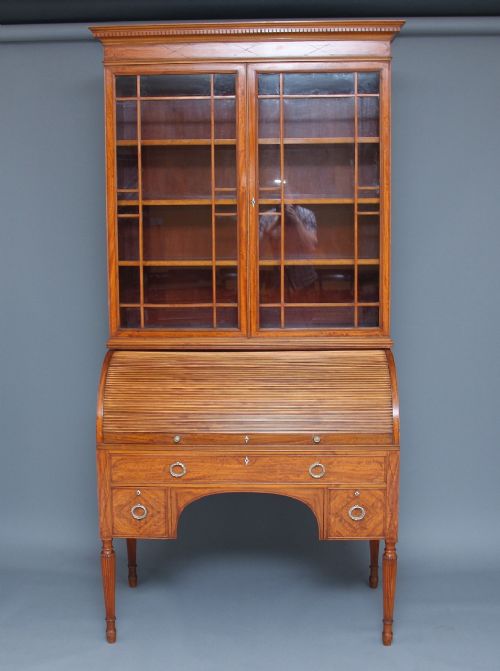
The selections on this page span diverse formats, ranging from tall bureau bookcases and desks to small bedside cupboards and lamp stands. Buyers encounter variations featuring marble tops, glass doors, and inlaid details alongside simpler timber constructions.
Materials and construction methods
Cabinet makers constructed the characteristic curved cylinder shutter using closely fitted wooden slats glued to a flexible canvas backing, allowing the panel to slide smoothly along grooved tracks. This method required precise joinery to ensure the mechanism operates without sticking over decades of use.
Timbers such as mahogany and walnut appear frequently, frequently enhanced with burr walnut or flame mahogany veneers and complemented by brass fittings. Structural integrity depends on the quality of the internal pigeonholes and drawer divisions housed within the desk compartments.
Victorian Cylinder Cabinet Retail Price Guide 2026
Typical asking prices for victorian cylinder cabinet among the pieces listed under this phrase on Sellingantiques today, from the lower quarter to the upper quarter. They describe what is for sale here now, not the wider market.
Listings feature woods such as mahogany, walnut, burr walnut, satinwood, and maple, paired with brass and marble.
Distinctions in quality
Excellence in these pieces rests upon the precision of the sliding mechanism and the choice of timber figurations, such as burr walnut or flame mahogany veneer. Superior examples maintain smooth movement in the cylinder shutter and feature finely dovetailed interior drawers.
Makers integrated decorative elements like satinwood stringing, marquetry inlay, and carved mouldings with restraint. The presence of original brass hardware and well-preserved marble tops further distinguishes the better examples from standard production.
Edwards & Roberts·Wooton Desk·Wells Fargo·Wiggers
The Victorian Cylinder Cabinet Glossary
- Cylinder top
- A curved wooden shutter that rolls back into the body of the cabinet to reveal a writing surface and pigeonholes. This design protects the desk interior while occupying less space than a traditional fold-down flap.
- Flame mahogany veneer
- A distinctive wood veneer cut from the branch forks of the mahogany tree, producing a flame-like pattern. Cabinet makers applied these decorative veneers to the primary display surfaces of high-status furniture.
- Burr walnut
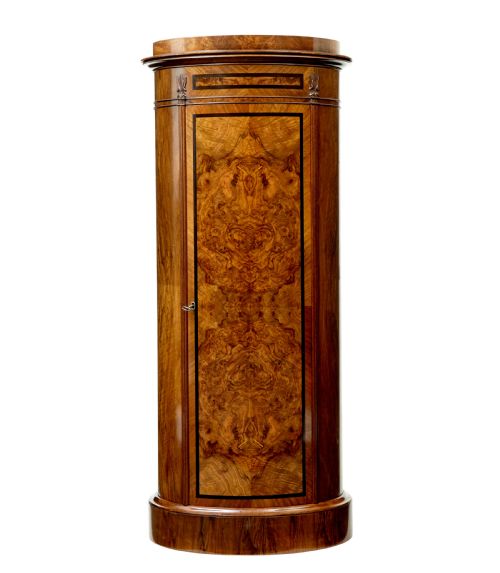
- Timber taken from walnut tree growths, characterised by swirling, knotty grain patterns. It creates a highly figured surface prized in nineteenth-century cabinet making.
- Pedestal cupboard
- A single-pedestal cabinet featuring a door enclosing internal shelves or storage space. These compact units often double as bedside cabinets or lamp stands.
- Bureau bookcase
- A piece combining a lower writing desk section with an upper glass-fronted shelving unit for books. The desk area is typically enclosed by a cylinder roll front or a sloping flap.
Victorian Cylinder Cabinet: Frequently Asked Questions
How does a cylinder mechanism work?
The curved wooden shutter runs on tracks recessed into the sides of the cabinet body. Pulling the handle guides the flexible shutter upward into the housing above the desk.
Proper alignment of the internal tracks ensures the mechanism slides freely without catching against the writing surface.
Where should I place a cylinder cabinet?
These compact pieces fit well in studies, living rooms, or bedrooms as functional writing desks or display surfaces. Their enclosed fronts hide paperwork and small items to maintain a tidy appearance.
Avoid placing timber furniture directly next to heat sources or in strong sunlight to protect the polished wood surfaces and veneers.
How do I care for the wood finish?
Dust the surfaces regularly with a soft, dry cloth to prevent dirt accumulation. Apply quality beeswax occasionally to nourish the timber and maintain the polished sheen.
Keep moisture away from the wood and wipe up any spills immediately to prevent staining or lifting of the underlying veneers.
How are different periods identified?
Cabinet styles shift from Regency designs with clean classical lines to more ornate Victorian and late-Victorian carvings and inlays. Examining the secondary woods, screw types, and construction methods helps determine the era of manufacture.
Drawer linings and backboards often reveal hand-cut dovetails on earlier pieces and machine-sawn joints on later nineteenth-century examples.