

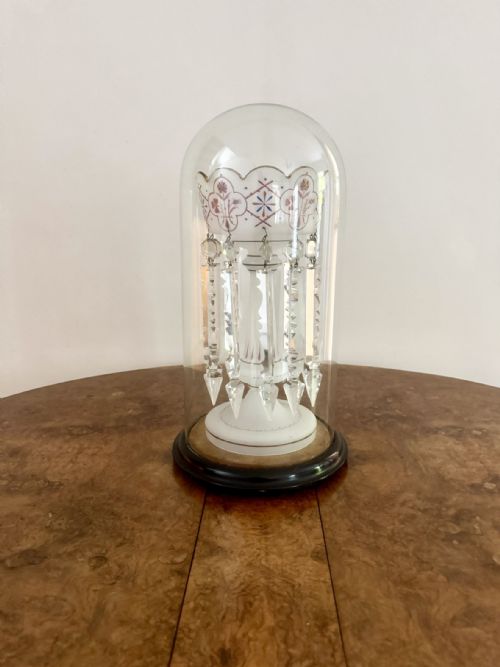


Victorian Cut Glass Lustres
Victorian cut glass lustres are decorative mantle ornaments suspended with glittering crystal prisms, prized for catching and refracting candlelight.
Victorian Cut Glass Lustres
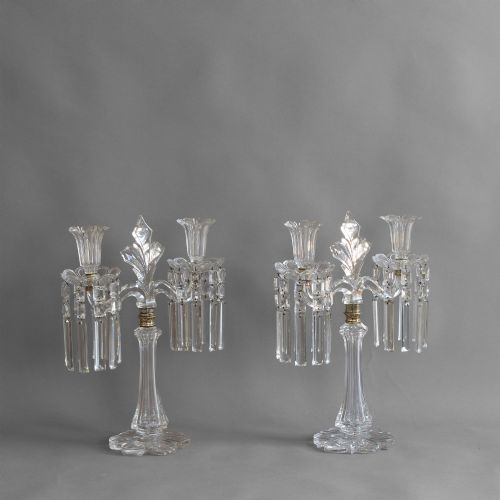
Victorian cut glass lustres are ornamental mantel pieces, primarily designed in pairs to sit upon fireplace shelves or console tables. These decorative objects integrate hollow glass bodies fitted with suspended crystal drops that catch and refract ambient light.
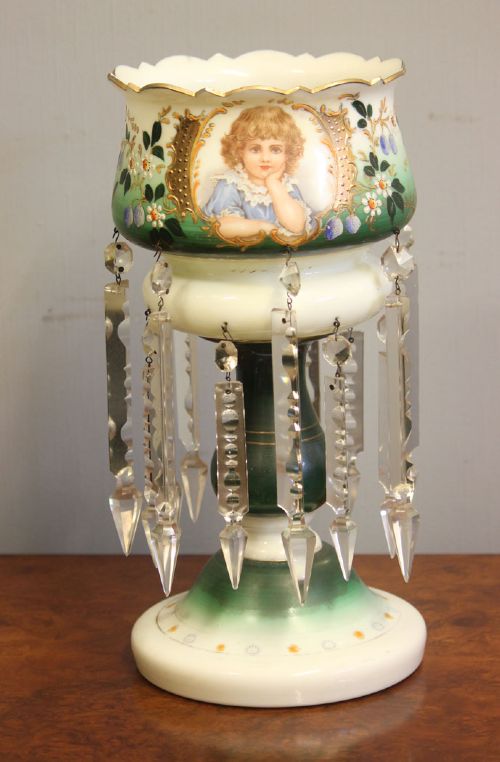
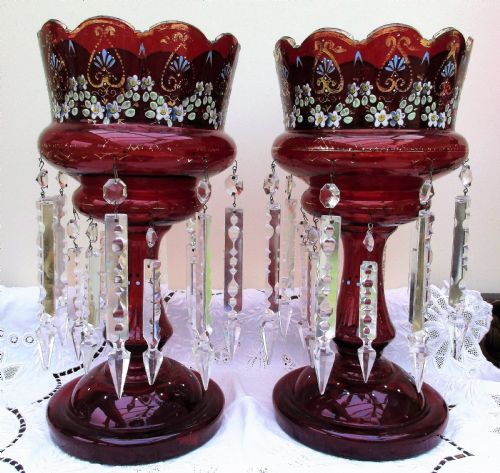
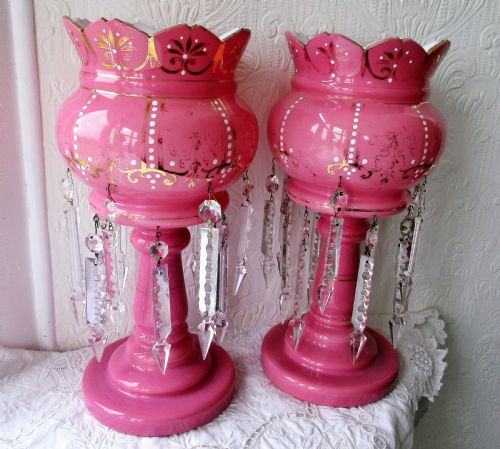
The selections encountered here span mantel lustres, table lustres, and paired candlesticks, frequently originating from the Victorian period alongside Regency, William IV, and 18th Century examples. Makers and regions represented include Bohemian and English workshops producing ruby, green, pink, cranberry, uranium, and milk glass forms.
Most items appear as symmetrical pairs equipped with faceted or prismatic crystal pendants hanging from a central bowl or collar. Alongside traditional mantel pieces, variations include candelabras, chandeliers, and pieces complemented by storm shades or glass domes.
Materials and Techniques
Glassmakers utilised heavy crystal, flash glass, and coloured glass bases, applying overlay and enamel techniques alongside gold leaf and gilding to enrich the surfaces. Many items combine glass components with brass fittings, gilded bronze frames, and intricate hand-cut facets.
The fabrication relied on mouth-blowing glass into moulds or shaping it by hand before cutters applied deep bevels and geometric facets to the body and hanging drops. Artisans then pierced the rims to suspend crystal prisms using wire hooks or metal pins.
The documented periods span the 18th Century, Regency, William IV, and Victorian eras.
Assessing Quality
Quality rests in the crispness of the glass cutting, the depth and clarity of the coloured body, and the brilliance of the crystal prisms. Superior examples exhibit precise facets that scatter light cleanly without blurring, paired with rich, saturated glass colours such as deep ruby or clear cranberry.
The integrity of the gilding and enamel work distinguishes finer pieces, as does the completeness and matching nature of the suspended crystal drops. Substantial weight in the glass and refined proportions in the brass or bronze mounts further separate standard production from exceptional examples.
The Victorian Cut Glass Lustres Glossary
- Lustre
- An ornamental mantel vase or candlestick fitted with hanging crystal prisms designed to reflect light. These decorative fixtures became immensely popular during the 19th century.
- Flash glass
- A vessel formed of a clear or contrasting glass body coated with a thin outer layer of coloured glass. Cutters then ground through the outer layer to expose the base glass underneath.
- Prism
- A cut crystal pendant suspended from the rim of a lustre to refract light. They take various shapes, including spears, drops, and spear-points.
- Cranberry glass
- A rich pinkish-red transparent glass coloured with gold chloride during production. It is frequently seen in Victorian tableware and mantel ornaments.
- Overlay glass
- A technique where one layer of coloured glass is fused over another layer of a different colour. The outer layer is then partially cut away to create contrasting patterns.
Victorian Cut Glass Lustres: Frequently Asked Questions
Where were Victorian cut glass lustres displayed?
These decorative objects sat predominantly on mantelpieces above fireplaces, where flickering firelight could animate the hanging crystal drops.
Owners also placed them on side tables, console tables, and pianos to catch the light from lamps and candles.
How do you clean glass lustres safely?
Dust the glass body and individual crystal drops regularly with a soft, dry feather duster or microfiber cloth.
For deeper cleaning, remove the crystal drops and wash them gently in lukewarm soapy water, ensuring every piece is dried thoroughly before reattachment.
Were lustres used as actual candlesticks?
Many designs functioned simultaneously as candlesticks and decorative ornaments, featuring central sockets intended to hold wax candles.
Other variations served purely as decorative mantel vases or figures, lacking a functional candle socket entirely.
What colours are common in these lustres?
Ruby glass and cranberry glass dominate the palette, offering deep, rich red tones characteristic of the Victorian era.
Green, pink, milk glass, and uranium glass also appear frequently, often enhanced with white overlay and gilt decoration.