



Victorian Cut Crystal Chandelier
A victorian cut crystal chandelier catches the candlelight or gaslight in a room, offering the heavy refraction and dense sparkle of nineteenth-century glass.
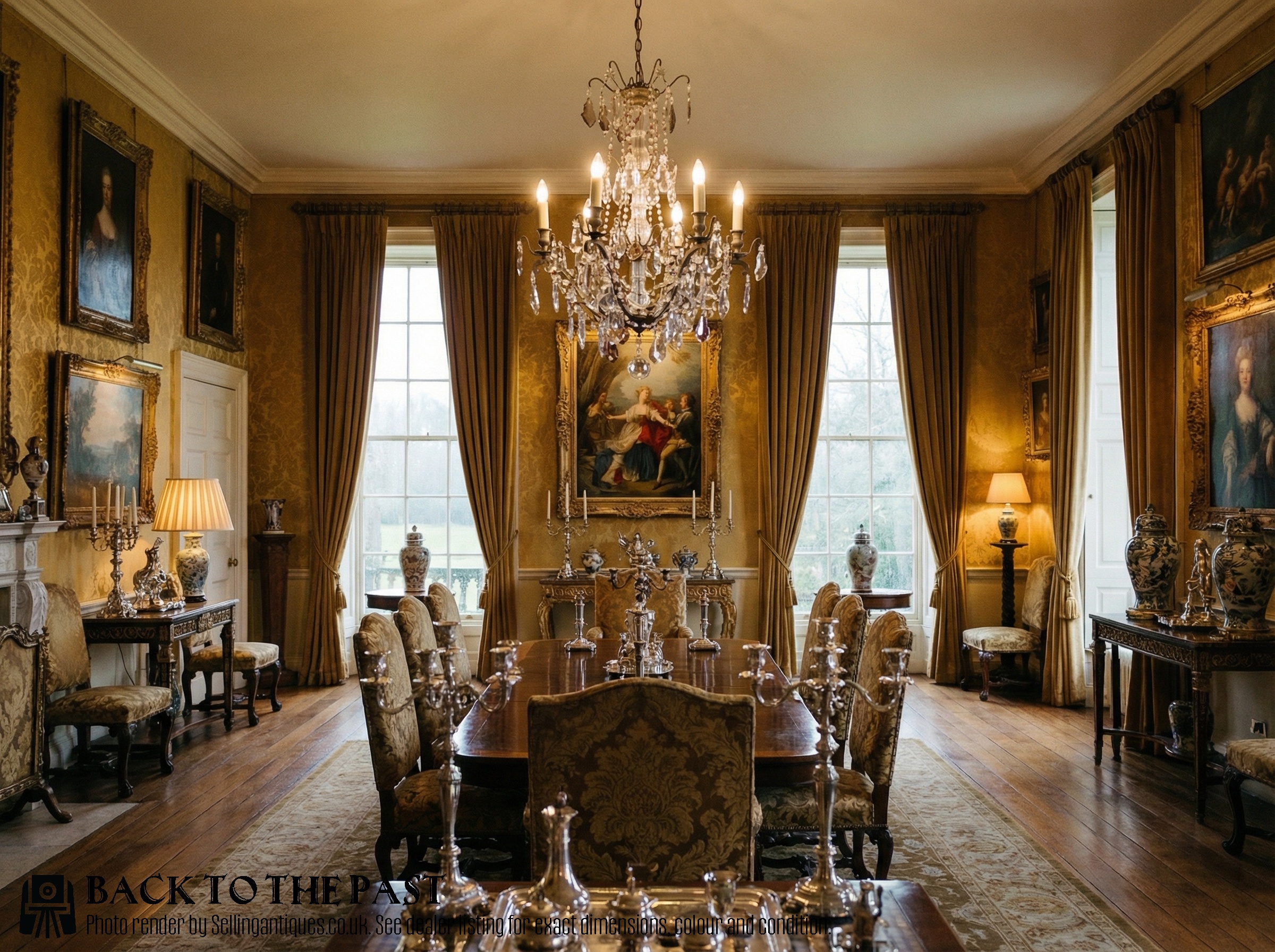
Victorian Cut Crystal Chandelier
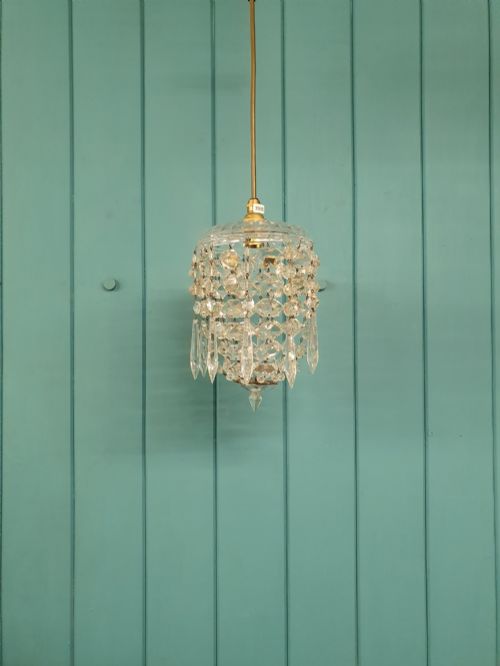
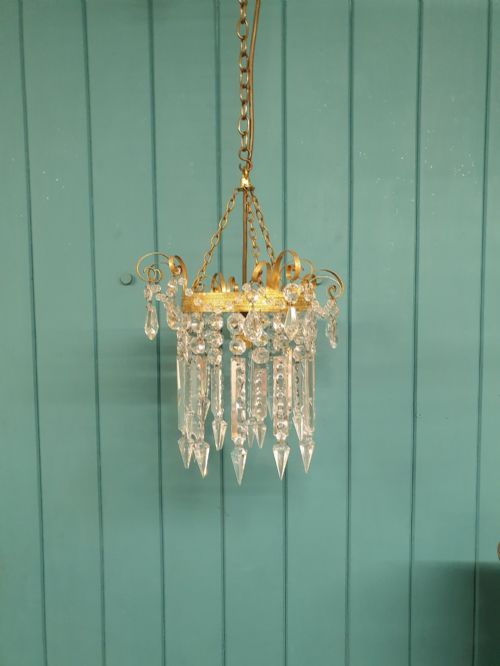
When you search for a victorian cut crystal chandelier, you encounter large ceiling fixtures and smaller hall lanterns designed for nineteenth-century interiors. The selection spans English basket forms, waterfall pendant lights, and French cage chandeliers that bring considerable weight and presence to a high ceiling.
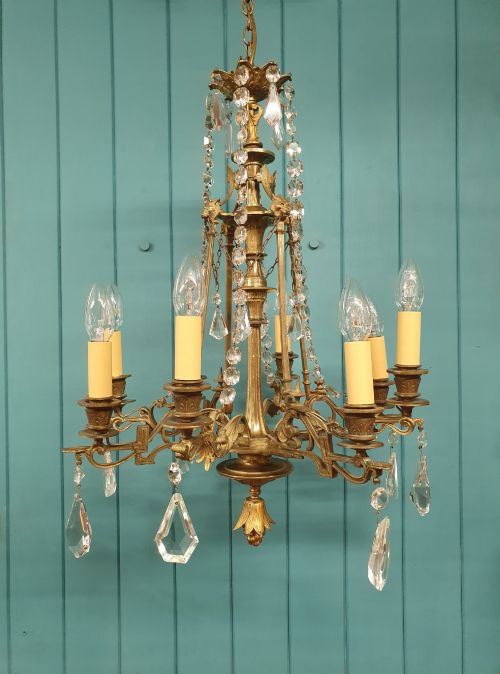
You are most likely to meet pieces originating from the nineteenth century, including Victorian and Edwardian examples, alongside French styles such as Napoleon III, Rococo, and Chateau designs. These range from intimate six-light fixtures up to large twelve-light assemblies featuring numerous cut drops.
Forms also extend beyond standard ceiling lights to include related items such as plafonniers, dish lights, and pairs of matching lustres. The core of the selection remains heavily weighted towards cut glass and crystal bodies suspended on brass, gilt bronze, and silver-plated frames.
How they were made
Makers constructed these fixtures using robust metal frameworks of brass, gilt bronze, and silver plate to support the heavy glass components. Metalwork often incorporated decorative cast details like lion masks or intricate gilt bronze mounts.
The glass elements rely on lead crystal and cut glass, shaped by hand-cutting and polishing to maximise refraction. Prisms, beads, and teardrop drops are wired together to form cascading tents, bags, and waterfalls around the central stems.
Victorian Cut Crystal Chandelier Retail Price Guide 2026
Typical asking prices for victorian cut crystal chandelier among the pieces listed under this phrase on Sellingantiques today, from the lower quarter to the upper quarter. They describe what is for sale here now, not the wider market.
One chandelier listed here comes complete with cast brass lion masks keeping watch over the candles.
What varies in quality
Quality rests upon the depth and crispness of the hand-cutting on the crystal prisms and the weight of the metal armature. Superior pieces demonstrate meticulous facet work that splits light sharply, paired with substantial bronze or brass structures rather than lighter pressed metals.
The integrity of the design integration also separates standard examples from the finest pieces. Fully articulated cage frames, harmonious proportions between the brass or bronze mounts and the glass drapery, and original matching components distinguish the upper tier of the range.
Baccarat
The Victorian Cut Crystal Chandelier Glossary
- Cage chandelier
- A lighting fixture featuring an open metal framework shaped like a birdcage, entirely dressed with glass beads and crystal drops.
- Tent and bag chandelier
- A style where crystal strands gather upward into a conical tent shape above a gathered bag of drops underneath.
- Lustre
- A decorative tabletop ornament featuring cut-glass pendants hanging from a central column, sharing materials with the chandeliers.
- Plafonnier
- A shallow or flush-mounted ceiling light designed to sit close to the plasterwork rather than dropping on a chain.
- Gasolier
- A lighting fixture originally plumbed for gas lighting, later converted to electricity with preserved nineteenth-century brass or bronze arms.
- Paste
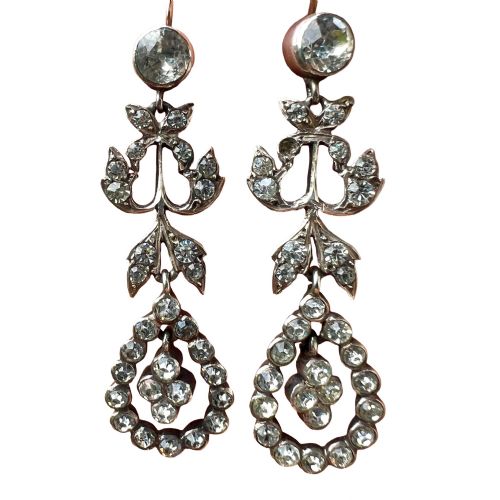
- Hand-cut glass or lead crystal used in jewellery or decorative mounts to imitate gemstones with high refractive brilliance.
Victorian Cut Crystal Chandelier: Frequently Asked Questions
Are these chandeliers wired for modern electricity?
Many fixtures have been rewired over time to comply with modern safety standards while retaining their nineteenth-century frames, candle tubes, and gasolier bodies.
It is advisable to check the specific electrical specifications of each individual light before installation in a domestic ceiling.
How do I tell Victorian from Edwardian chandeliers?
Victorian examples tend towards heavy brass, gilt bronze, and elaborate cast ornamentation like lion masks or dense French rococo scrollwork. Edwardian pieces often present slightly lighter proportions and cleaner basket or dome arrangements.
Both periods utilise heavy cut glass and lead crystal, making style of the metal mount and framing the most reliable guide to age.
What is the difference between glass and crystal?
Crystal contains lead oxide, which increases the weight of the material and allows for deeper, sharper facet cutting that refracts light into distinct spectral colours. Standard glass is lighter and lacks the same dense sparkle when cut.
Nineteenth-century makers prized lead crystal for its ability to hold crisp edges during hand-polishing.