

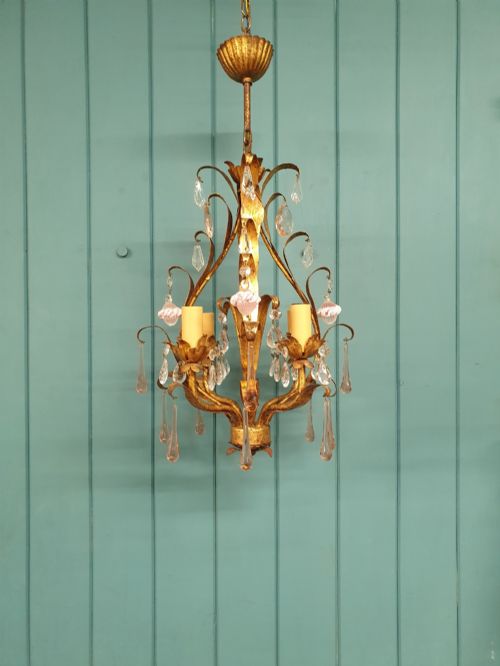
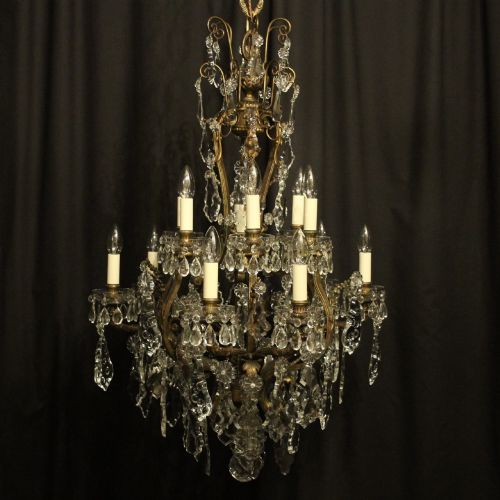


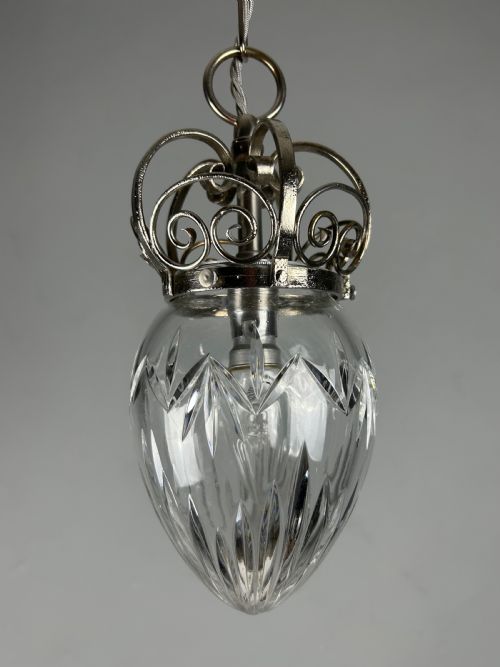


Decorative Glass Chandelier Drops
These decorative glass chandelier drops are small suspended prisms designed to refract light and adorn period lighting fixtures.
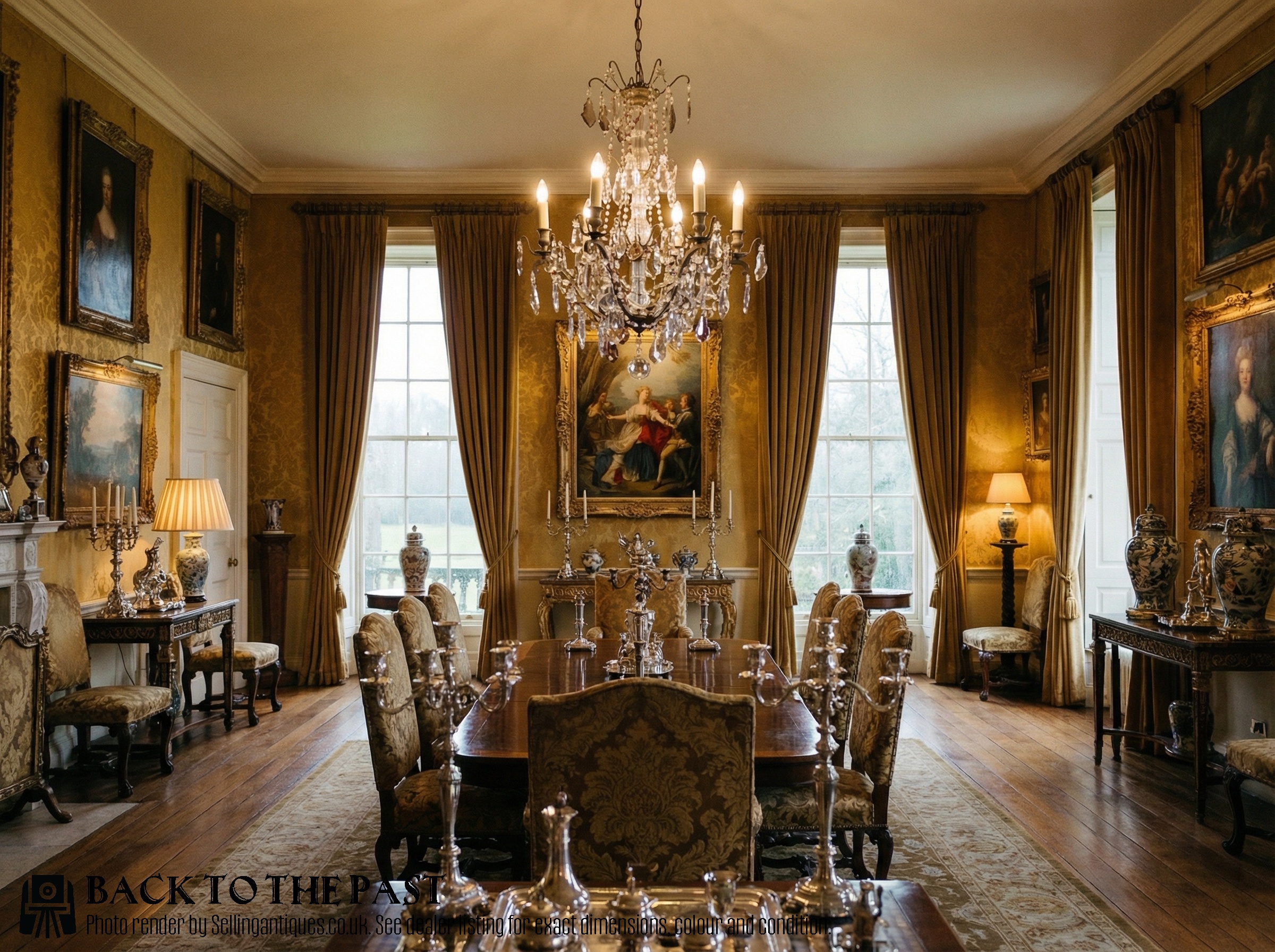
Decorative Glass Chandelier Drops
Decorative glass chandelier drops are suspended glass components that catch and multiply light from overhead fixtures. When people search for decorative glass chandelier drops, they seek the prismatic components that adorn antique lighting or replacement crystals for restoration work.
The pieces on this page originate across various historical periods, including the nineteenth century, Edwardian era, and the nineteen-thirties. They appear alongside complete chandeliers, pendant lights, and table lustres rather than as standalone parcels of loose drops.
How they were made
Makers shaped these drops from crystal, glass, and cut glass, suspending them from metal frames formed of brass, gilt brass, gilded bronze, chrome, and silver. The glass elements rely on precise cutting techniques to create sharp facets that maximise light refraction.
Mounting hardware ranges from simple metal loops to elaborate cast frames finished in gilt or bronze. These components demonstrate the traditional manufacturing methods of their respective periods, from nineteenth-century casting to early twentieth-century metalworking.
Decorative Glass Chandelier Drops Retail Price Guide 2026
Typical asking prices for decorative glass chandelier drops among the pieces listed under this phrase on Sellingantiques today, from the lower quarter to the upper quarter. They describe what is for sale here now, not the wider market.
Listings span the nineteenth century, nineteen-ten, nineteen-twenty, nineteen-thirty, and the Edwardian era, incorporating materials such as crystal, chrome, and gilded bronze.
What varies in quality
Quality in these items rests upon the clarity of the glass and the precision of its facets. Sharp, clean edges on cut glass create brighter light refraction than soft or moulded alternatives.
The craftsmanship of the supporting metalwork also distinguishes better examples, particularly where cast bronze or gilt brass frames hold the glass elements securely. The integration between the hanging drops and the main fixture reveals the overall standard of manufacture.
The Decorative Glass Chandelier Drops Glossary
- Cut glass
- Glass that has been shaped and patterned using abrasive wheels and polishing agents. This technique produces sharp facets that catch and scatter light effectively.
- Gilt brass
- Brass that has been coated with a thin layer of gold or gold-coloured leaf to enhance its appearance. It provides a bright, warm finish often seen on period frames.
- Gilded bronze
- Bronze that has received a gold surface treatment. This durable material offers a rich substrate for decorative lighting components.
- Table lustre
- A freestanding candelabra adorned with hanging glass drops designed to sit on a piece of furniture. These decorative objects use prisms to reflect candlelight.
Decorative Glass Chandelier Drops: Frequently Asked Questions
What are chandelier drops used for?
Chandelier drops hang from lighting fixtures to refract and scatter light around a room. They enhance the visual brilliance of chandeliers, pendant lights, and candelabras.
Historically, these glass prisms also demonstrated the owner's wealth through the cost of processed crystal and skilled cutting.
How do I date antique glass drops?
Dating relies on the cutting style, the composition of the glass, and the manufacturing methods of the attached metal loops or pins. Earlier nineteenth-century examples often feature hand-cut facets and heavier metal fixings.
Later pieces from the nineteen-thirties incorporate modern metals like chrome or standardised machine-cut crystal.
Are these drops made of crystal or glass?
Makers used both lead crystal and standard glass depending on the period and the desired optical quality. Crystal contains metallic oxides that increase its weight and refractive index.
Standard glass offers a lighter alternative while still providing decorative sparkle when faceted.
How do I clean antique glass drops?
Cleaning requires gentle washing with warm water and a mild detergent to remove accumulated dust without damaging the surface. Technicians often clean drops while attached to the frame using a spray solution and a catch cloth.
Harsh chemicals and abrasive cloths should be avoided to protect the polished facets and any delicate metal fixings.