




Victorian Cupboard on Legs
A victorian cupboard on legs offers practical bedside and display storage elevated upon architectural or carved supports.
Victorian Cupboard on Legs
A victorian cupboard on legs brings together functional storage and raised furniture design, typically seen in bedside tables, pot cupboards, and compact cabinets. These pieces frequently appear in mahogany, walnut, and oak, reflecting the domestic needs of the nineteenth century.
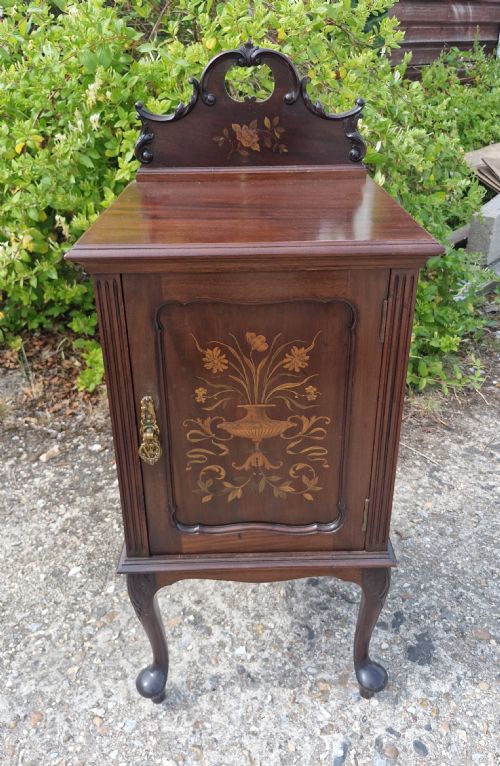
The versions most commonly met on this page include mahogany pot cupboards and walnut bedside cabinets raised on cabriole or turned legs. Forms range from simple late nineteenth century bedside tables to ornate display cabinets and dressers incorporating marquetry inlay.
Origins span standard Victorian production alongside revival styles such as Queen Anne, Louis XIV, and Chippendale. Buyers find these items functioning effectively as bedside tables, nightstands, and small side cabinets in contemporary interiors.
How they were made
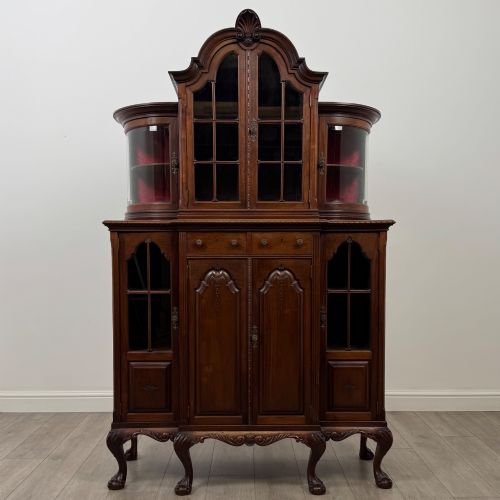
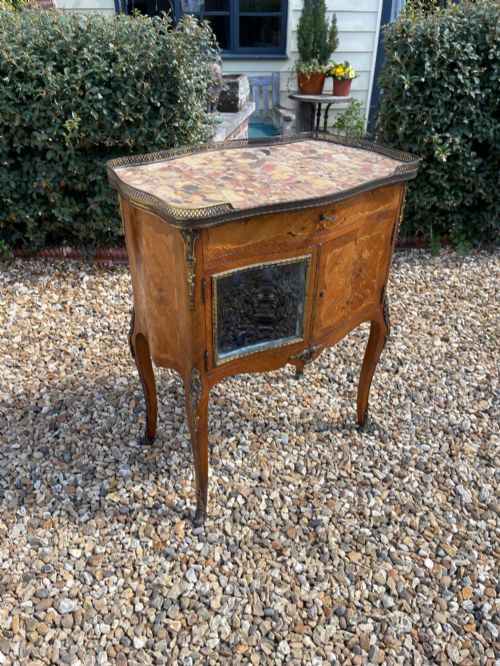
Cabinet makers utilised dense hardwoods including mahogany, walnut, oak, and kingwood, often embellished with marquetry inlay and decorative carving. Surfaces frequently featured contrasting timber grains, applied mouldings, and occasionally inset marble tops.
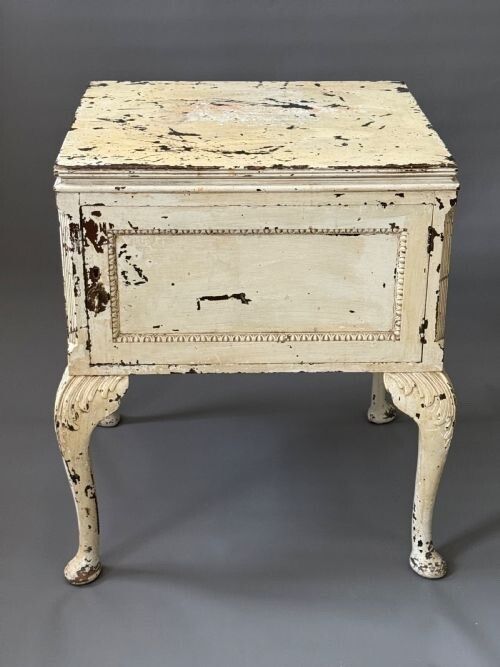
Structural support relied upon distinct leg formations, notably cabriole legs with carved details such as green man motifs or lion masks. Joinery combined traditional drawer construction with fitted internal shelving and glazed or panelled doors.
Carved green man faces peer unexpectedly from beneath oak bowfront drawers, watching over the nineteenth century bedroom.
What varies in quality
Quality separates standard utilitarian production from exceptional decorative specimens through the selection of figured timbers and the precision of marquetry inlay. Superior examples display refined proportions and intricate carving, such as floral marquetry or figural reliefs.
The integration of materials like marble tops and brass hardware elevates a piece within the range. Execution of the leg supports and the crispness of architectural details further distinguish finer cabinets from simpler workshop outputs.
The Victorian Cupboard on Legs Glossary
- Pot cupboard
- A small bedside cabinet originally designed to house a chamber pot behind a single door. These pieces typically feature an enclosed upper section and stand on raised legs.
- Marquetry inlay
- The art of applying small pieces of veneered wood to a structure to form decorative patterns or pictures. Floral motifs are frequently encountered on nineteenth century walnut surfaces.
- Cabriole leg
- A furniture leg that curves out and then narrows down inward, resembling the shape of an animal's leg. This form appears frequently on revival pieces from the period.
- Bowfront
- A convex, curved front on a cabinet, chest, or dresser. This design softens the angles of the furniture and demands precise woodworking skill.
- Chiffonnier
- A low sideboard or cabinet with drawers and shelves, developed during the nineteenth century. These items provide compact storage and display surfaces for domestic interiors.
Victorian Cupboard on Legs: Frequently Asked Questions
What is a pot cupboard?
A pot cupboard is a small enclosed bedside cabinet created to hold a chamber pot. They were standard bedroom furniture in nineteenth century homes.
Today, these compact cabinets function well as bedside tables or small side units in living spaces.
How do I identify a Victorian cabinet?
Victorian cabinets display characteristics typical of nineteenth century manufacturing, utilising dense hardwoods like mahogany and walnut. Common indicators include period timber patination and traditional joinery methods.
Stylistic influences often reference revival periods such as Queen Anne or Louis XIV alongside standard Victorian forms.
Where should I place a bedside cabinet?
Bedside cabinets fit naturally beside a bed to provide enclosed storage and a surface for lamps and books. Their elevated leg design maintains a sense of space in the room.
They also serve effectively as small side tables in hallways or reception rooms.
Are marble top cabinets delicate?
Marble tops provide a durable and water-resistant surface originally chosen for practical bedroom use. They withstand everyday items easily while adding weight and stability to the furniture.
Care simply involves avoiding acidic spills that might etch the polished stone surface.
What woods were used?
Cabinet makers predominantly used mahogany, walnut, and oak for structural frames and surfaces. Exotic woods such as kingwood and satinwood appear on more decorative specimens.
Inlay work frequently incorporated contrasting veneers to create detailed floral or geometric patterns.