


Victorian Crystal Scent Bottle
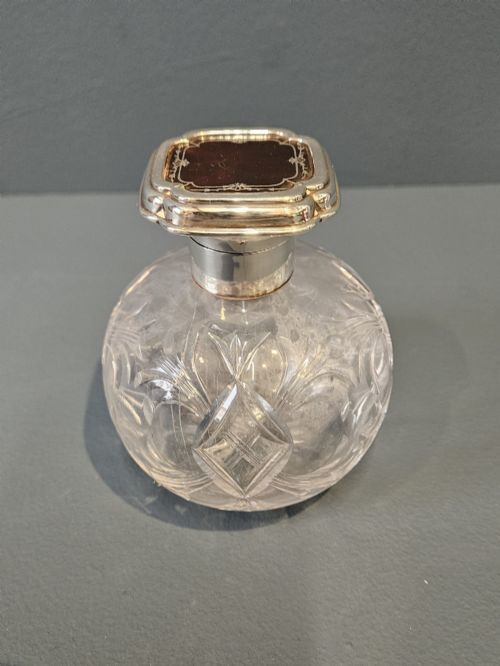
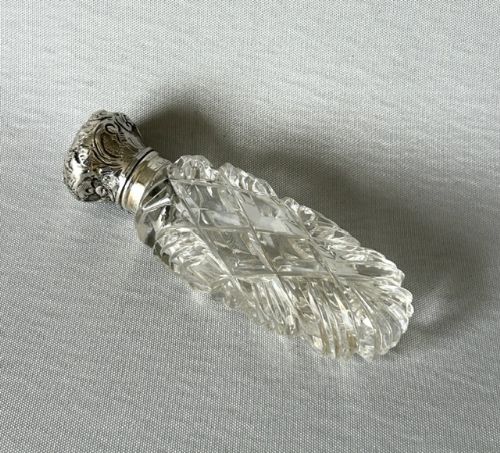
These Victorian crystal scent bottle examples are practical dressing table accessories that combine cut glass with precious metal mounts.
Victorian Crystal Scent Bottle
A victorian crystal scent bottle is a functional container designed to hold perfume, frequently paired with matching dressing table accessories or housed within fitted travelling sets and caskets. The pieces appearing here span the nineteenth century into the early twentieth century, showing a clear preference for robust cut crystal and glass paired with sterling silver or silver gilt collars.
Forms range from simple globe and heart shapes to tall vanity jars and gentleman's cologne bottles, occasionally found as matching pairs or multi-bottle sets. While the core of the selection originates from the Victorian period, adjacent eras such as the Edwardian period and Napoleon III style are also represented through similar glass-cutting and metal-mounting traditions.
Materials and technique
Makers utilised heavy cut crystal and glass, sometimes enhanced by ruby, green, or emerald flash colouring and intricate surface engraving. These glass bodies were combined with solid sterling silver, silver gilt, and occasional brass mounts, occasionally paired with tortoiseshell or leather cases.
Metalwork components such as collars, caps, and locking mechanisms required precise silversmithing to secure the glass necks properly. Craftspeople shaped the glass through blowing and deep wheel-cutting to achieve the faceted optical effects characteristic of the period.
Current listings feature cut crystal, sterling silver, brass, tortoiseshell, and leather across the Victorian, Edwardian, and Napoleon III styles.
Separating the top of the range
Quality rests upon the depth and crispness of the glass cutting, the weight and purity of the silver mounts, and the overall integrity of the ensemble. Superior examples demonstrate heavy lead crystal with sharp, clean facets and fully marked precious metal collars.
The presence of original fitted boxes, lockable mechanisms with working keys, or scarce colourways like emerald and ruby flash elevate certain vessels above standard clear glass iterations. Completeness in paired sets and multi-bottle caskets further distinguishes higher tier items.
S. Morden and co
The Victorian Crystal Scent Bottle Glossary
- Cut crystal
- High-clarity glass containing lead oxide, shaped by deep mechanical or hand wheel-cutting to refract light through numerous facets.
- Silver gilt
- Sterling silver that has been coated with a thin layer of gold on its surface, providing a rich contrasting tone against the clear glass.
- Flash glass
- A vessel formed by coating a clear glass core with a thin outer layer of coloured glass before cutting through the top layer to reveal the clear base.
- Dressing table accessory
- A functional vanity item intended for daily personal grooming use, often produced in matching suites for domestic display.
- Scent casket
- A decorative box lined to securely hold multiple perfume bottles, designed for safe transport or elegant storage.
Victorian Crystal Scent Bottle: Frequently Asked Questions
How do I date a Victorian scent bottle?
Dating relies heavily on assay office hallmarks stamped onto the silver collars, which indicate specific year letters and towns. Stylistic clues such as facet patterns and the presence of original fitted boxes also help narrow down the decade.
Items spanning the late nineteenth century often feature registration numbers or maker's marks that correlate with historical records. Comparing the glass weight and cutting style against dated benchmark pieces clarifies the timeline.
Were these bottles meant for travel?
Many examples were specifically engineered for travel, housed securely within fitted leather boxes or locking caskets alongside matching vanity jars. Their robust cut glass walls and screw-down or hinged silver caps prevented accidental spillage in transit.
Gentlemen's cologne bottles and travelling sets were standard accessories for affluent Victorians on the move. The inclusion of lockable mechanisms ensured personal fragrances remained secure away from home.
How should I clean the silver mounts?
Silver collars and hinged caps require careful maintenance using a non-abrasive silver cloth to preserve any underlying hallmarks or engraving. Care must be taken to prevent harsh chemical polishes from contacting the glass or interior cork seals.
If the bottle retains an original stopper or glass dauber, cleaning fluids should be kept entirely away from internal residues. Gentle wiping maintains the contrast between the polished metal and the faceted crystal.
What caused the different glass colours?
Colours such as ruby, emerald, and green were achieved by adding specific metallic oxides to the molten glass batch prior to blowing. Alternatively, flash glass techniques layered a saturated hue over clear crystal before cutting.
The resulting contrast allowed Victorian glassmakers to expose brilliant clear facets through the coloured surface. This optical interplay made coloured bottles particularly prized for dressing table displays.