


Victorian Crystal Lighting
Victorian crystal lighting brings unmatched sparkle to a room through cut glass prisms, brass mounts and coloured glass.
Victorian Crystal Lighting
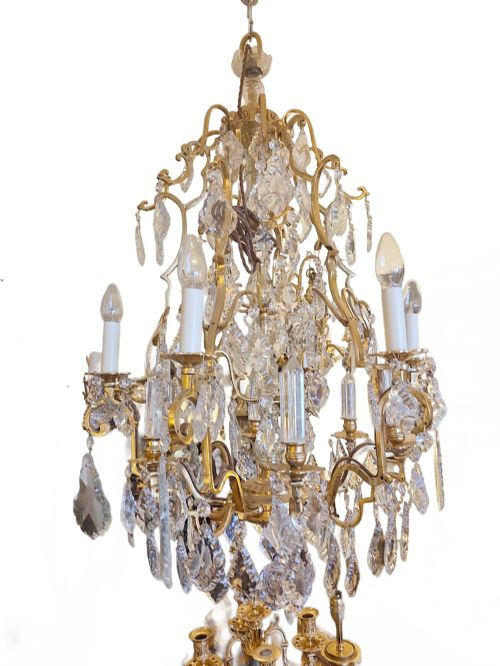
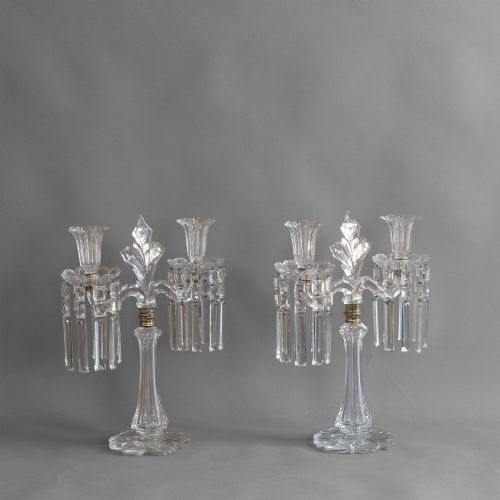
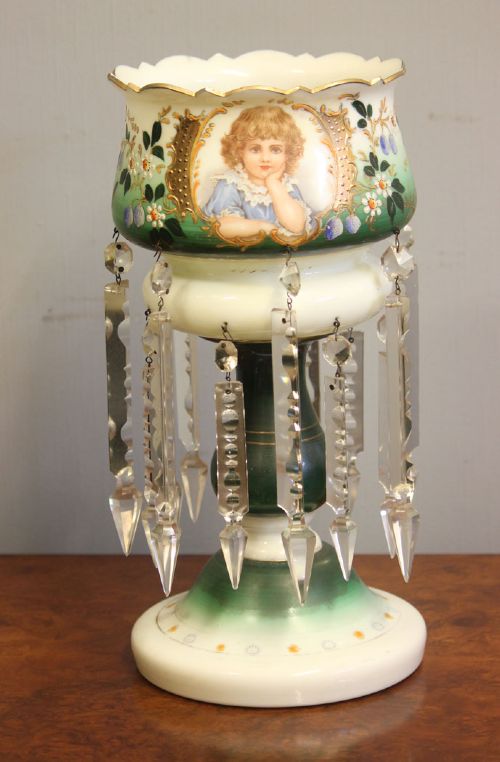
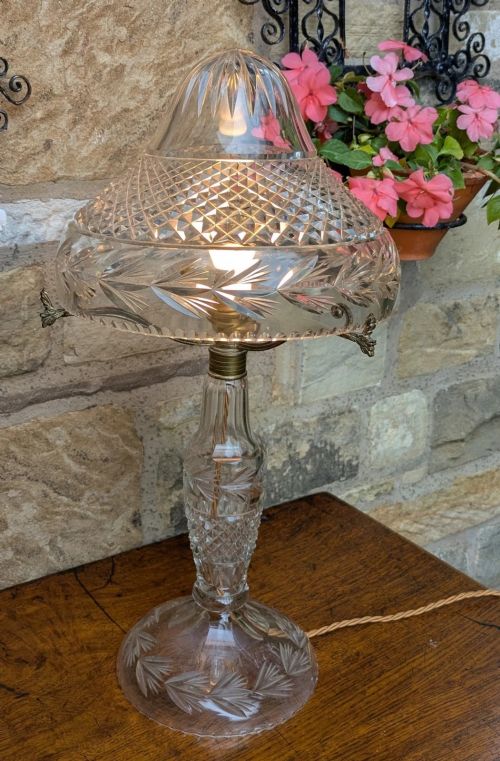
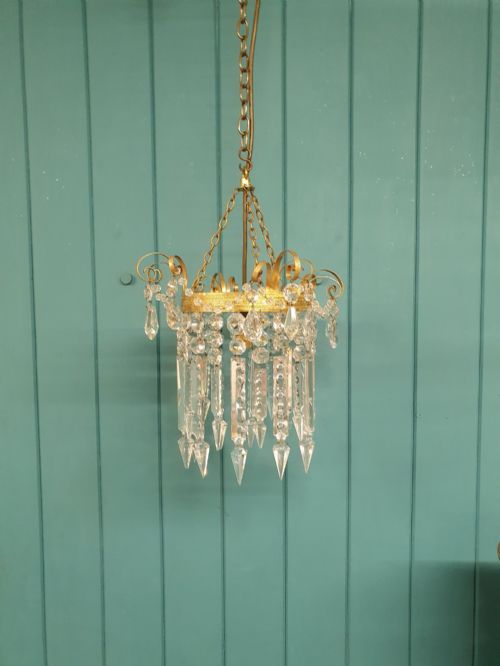
Victorian crystal lighting encompasses chandeliers, table lamps, mantel lustres and candelabras produced during the nineteenth century and the Edwardian era. Buyers seek these pieces for their combination of functional illumination and decorative glass elements that catch and refract light.
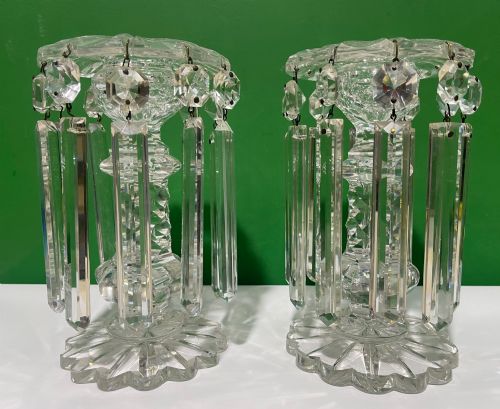
The most common forms found in this selection include pairs of coloured glass lustres, cut glass chandeliers and brass-mounted table lamps. These items originate from English, French and continental makers working in styles ranging from Regency and French Empire to Late Victorian.
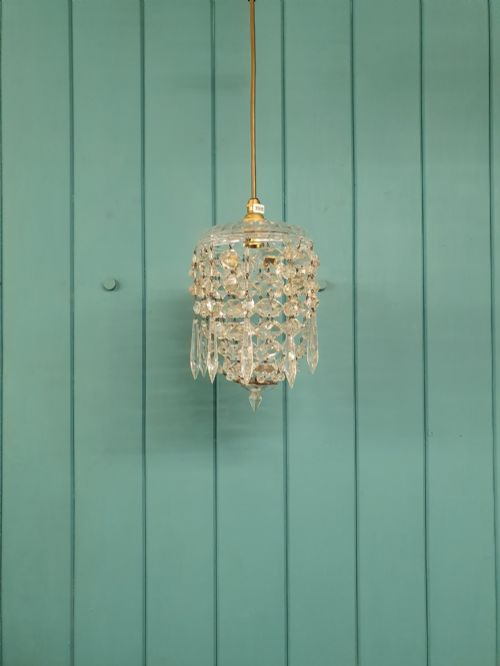
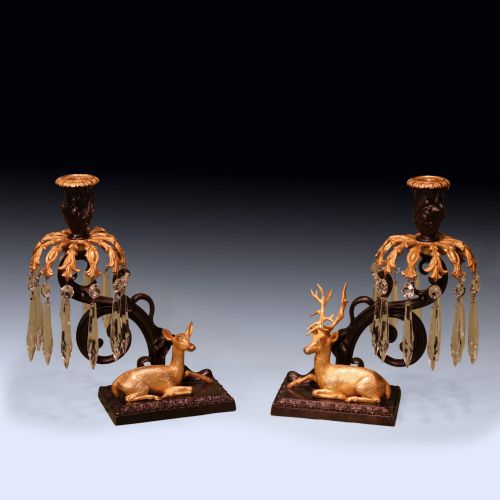
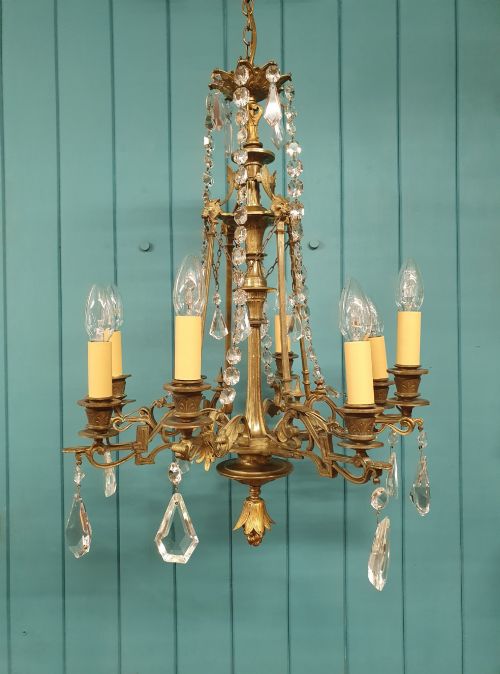
Objects vary from single table lamps and pendants to large multi-arm chandeliers and gasoliers with gilt bronze and lion mask details. Each piece reflects the period preference for ornate domestic illumination utilising glass, crystal and metal.
How they were made
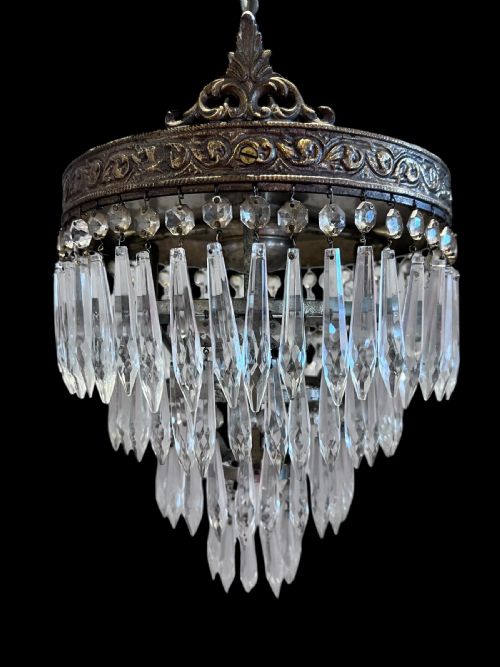
Maker construction combines cut glass, lead crystal and moulded glass with brass, bronze, ormolu and gold leaf framing. Components such as prisms, pendants and storm shades are assembled by hand using wire pins or metal fittings attached to cast metal bases.
Colour is introduced through ruby, pink, yellow and opaline glass techniques, often employing flash glass overlays where a thin layer of coloured glass is cut away to reveal clear glass beneath. Gilt decoration and enamel finishes are applied to the glass and metal surfaces before final assembly.
Victorian Crystal Lighting Retail Price Guide 2026
Typical asking prices for victorian crystal lighting among the pieces listed under this phrase on Sellingantiques today, from the lower quarter to the upper quarter. They describe what is for sale here now, not the wider market.
Listings feature items from the 19th century, Victorian period, and Edwardian era, incorporating materials such as rock crystal, brass, enamel, and gold leaf.
What varies in quality
Quality differences lie in the depth and precision of the glass cutting, the weight of the brass or bronze mountings, and the clarity of the crystal components. Superior examples display crisp faceting on prisms and clean casting on metal frames, whereas simpler items utilise moulded rather than cut glass.
The presence of matching sets, particularly pairs of lustres or candelabras with intact crystal drops and original storm shades, distinguishes the finer items from single surviving pieces or those assembled from mismatched parts.
Osler·Baccarat·Clarke
The Victorian Crystal Lighting Glossary
- Lustre
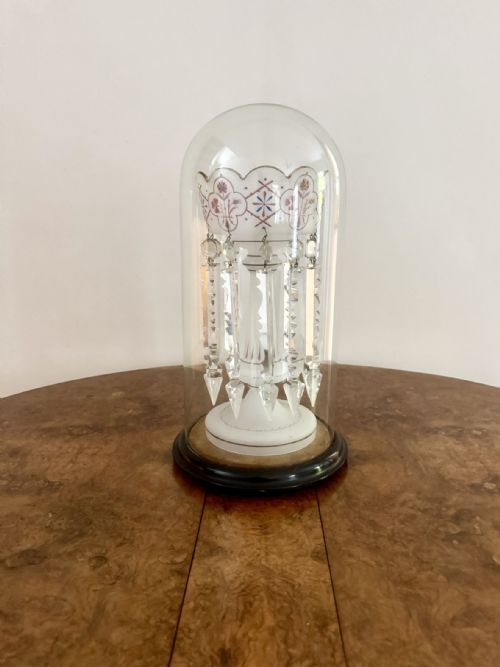
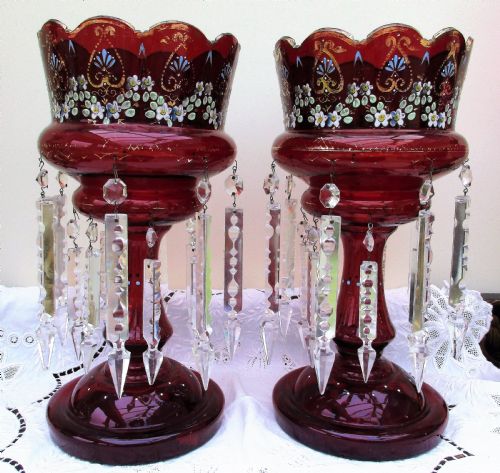
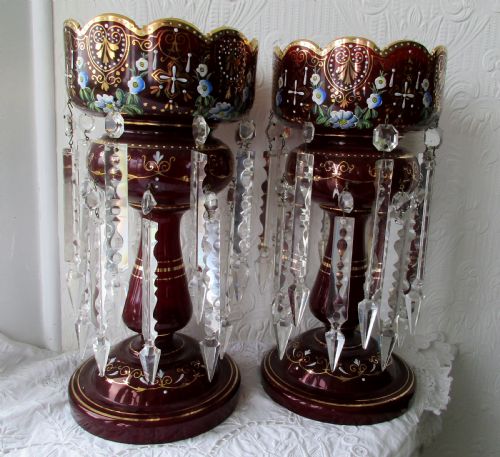
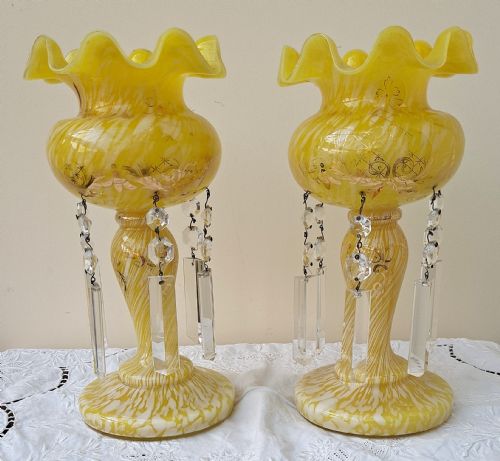
- A decorative mantel ornament featuring a central vase or stem hung with cut glass prisms. These pieces became popular in the Victorian period for reflecting candlelight.
- Plafonnier
- A ceiling-mounted bowl light or flush fixture close to the ceiling. This French term describes shallow dome or basket-style lights.
- Ormolu
- Gilt bronze mounted on decorative objects and lighting fixtures. The technique involves applying a gold amalgam to a bronze base.
- Flash glass
- Glass made in two or more distinct layers of contrasting colours. Artisans cut through the outer layer to expose the underlying colour.
- Gasolier
- A multi-branched lighting fixture designed for gas illumination before conversion to electricity. These fixtures often feature heavy cast bronze or brass frames.
Victorian Crystal Lighting: Frequently Asked Questions
How do mantel lustres work?
Mantel lustres sit on fireplace mantels or side tables as decorative ornaments rather than primary light sources. They hold suspended crystal prisms that catch and refract ambient light in the room.
Many examples include a central vase or candle socket, allowing them to function as both candlesticks and prism-hung ornaments.
Are these chandeliers wired for electricity?
Many period chandeliers and pendant lights undergo rewiring to meet modern electrical standards for safe domestic use. Some larger fixtures originate as gasoliers and receive conversion work to accept standard electric bulbs.
Buyers should examine individual listings to confirm the current wiring status and compatibility with standard ceiling fittings.
What is flash glass?
Flash glass consists of a base layer of clear or coloured glass coated with a thin outer layer of a different colour, typically ruby or yellow. Craftsmen cut through the outer layer on a grinding wheel to create decorative patterns.
This technique produces strong colour contrast between the remaining opaque surface and the transparent or lighter glass beneath.
How do I date a crystal chandelier?
Dating relies on material combinations, metal casting styles, and the specific cut of the glass prisms. Victorian and Edwardian pieces often combine brass or bronze with lead crystal drops and distinct regional design traits.
Consulting the listed period and examining the mounting techniques helps establish the exact manufacturing decade.