


Victorian Crystal Light
Victorian crystal light pieces bring prismatic sparkle and period charm to a room, uniting cut glass, brass and coloured lustre glass.
Victorian Crystal Light
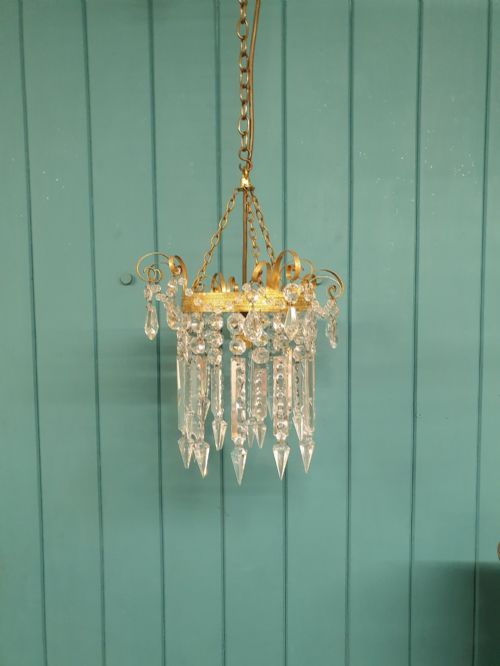
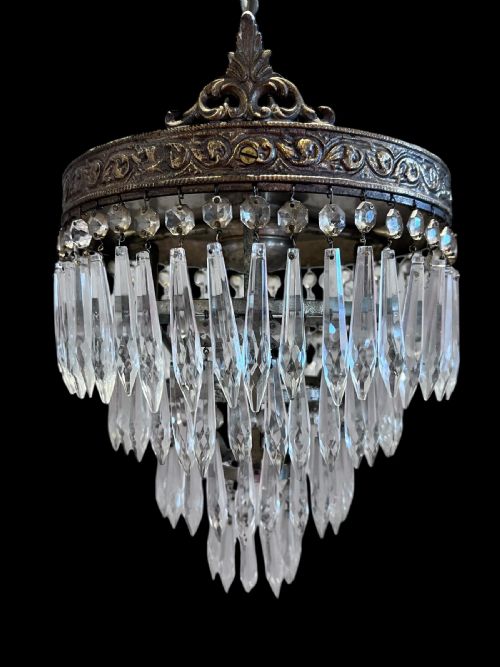
When searching for victorian crystal light, a buyer encounters a diverse group of illuminating objects spanning chandeliers, ceiling lights, table lamps, and mantel lustres. These items originate predominantly from the nineteenth century, encompassing Victorian and Edwardian periods alongside related French and English designs.
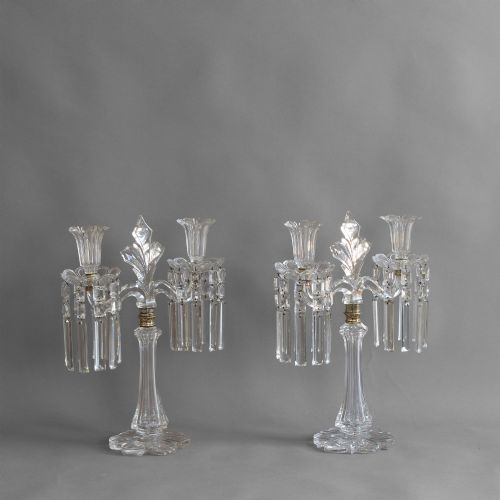
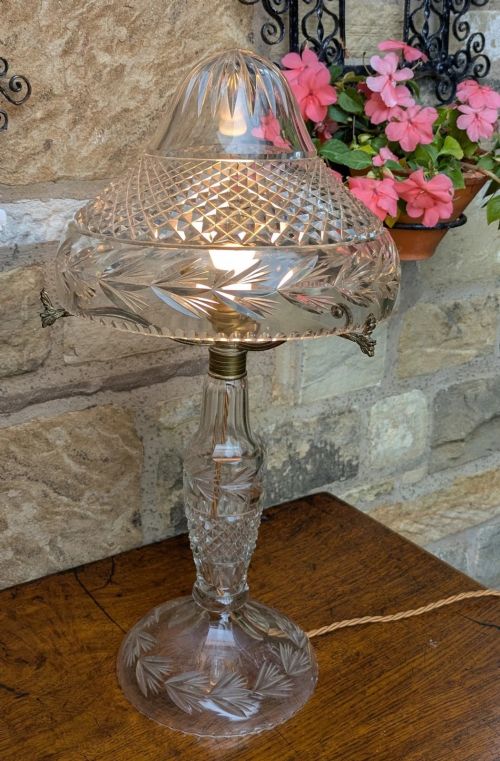
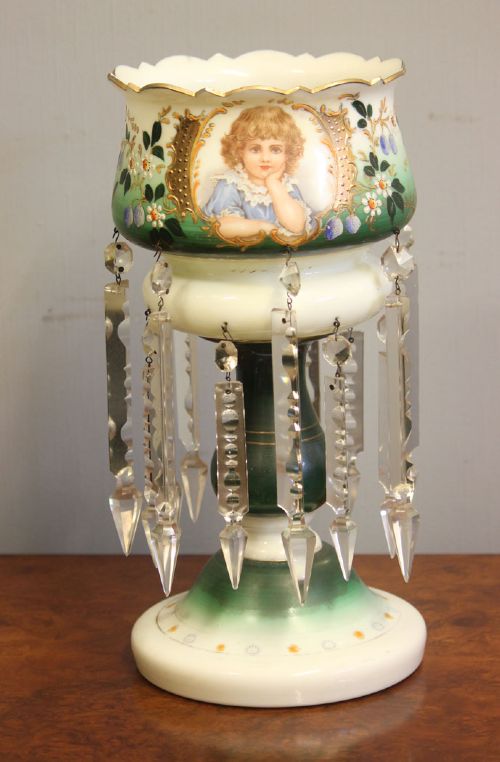
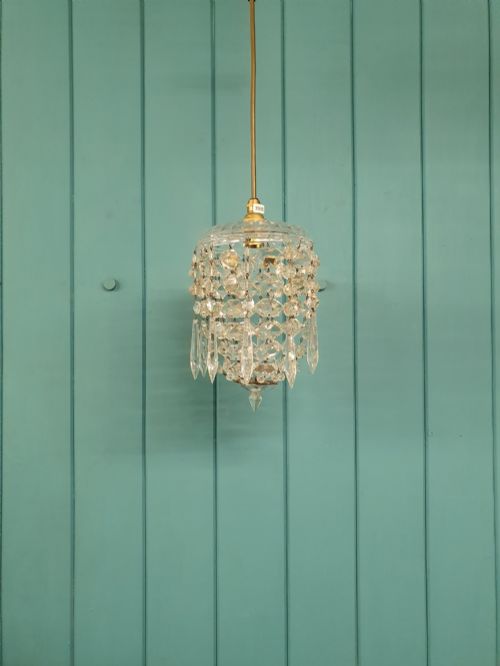
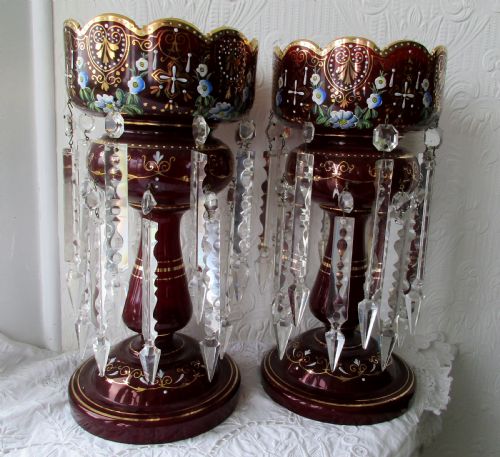
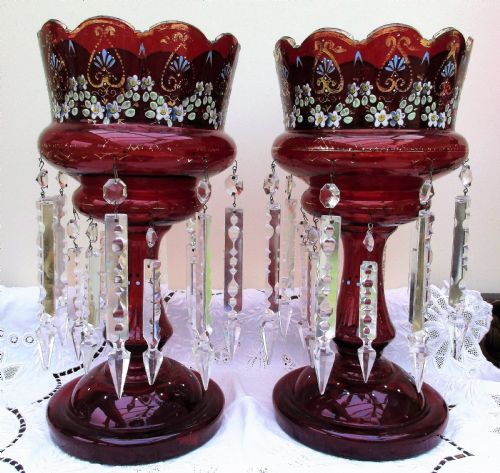
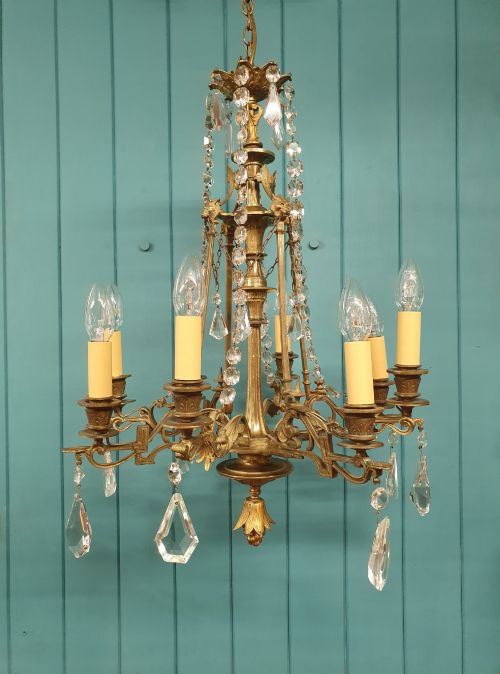
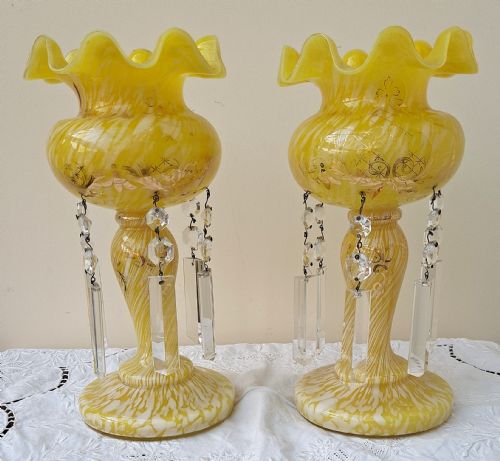
The most common forms on this page include cut glass chandeliers, table lamps utilising lead crystal, and pairs of coloured glass mantle lustres adorned with hanging prisms. Objects range from small single-light ceiling fixtures and oil lamps to substantial multi-armed brass and bronze chandeliers.
Materials and construction
Makers shaped these fixtures using combinations of brass, bronze, gilt metal, and heavy glass or rock crystal. Cut glass and lead crystal components were meticulously faceted to refract illumination from candles, oil, or early electric fittings.
Factors of quality
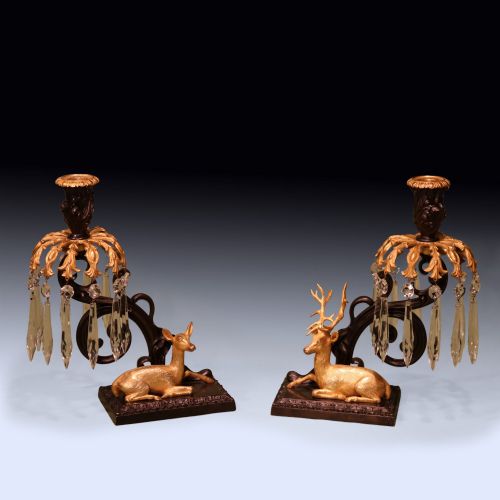
Quality in these pieces rests upon the crispness of the glass cutting and the weight of the metal chassis. Finer examples display deep, sharp facets on the crystal drops and substantial, well-cast brass or bronze armatures decorated with detailed motifs like lion masks or figural bases.
The integrity of the ensemble also dictates standard, with matched sets of pendant drops and intact flash glass colouring representing superior tier specimens compared to assembled or heavily repaired counterparts.
Baccarat·Osler
The Victorian Crystal Light Glossary
- Lustre
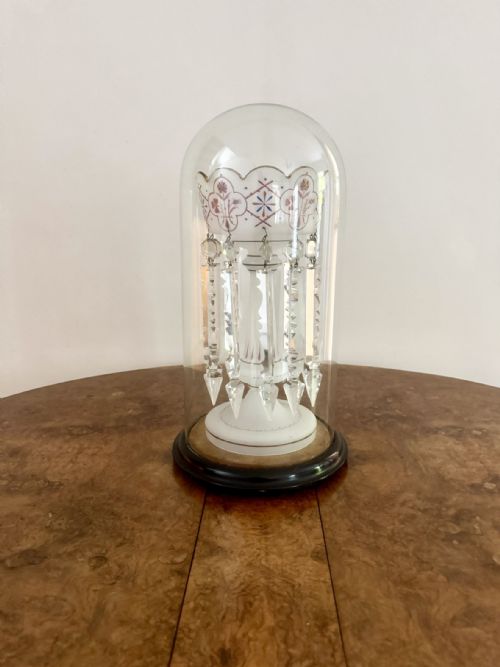
- A decorative tabletop vase or candlestick hung with cut glass prisms designed to catch and refract light. They were frequently produced in pairs during the Victorian era in ruby, green, or opaline glass.
- Plafonnier
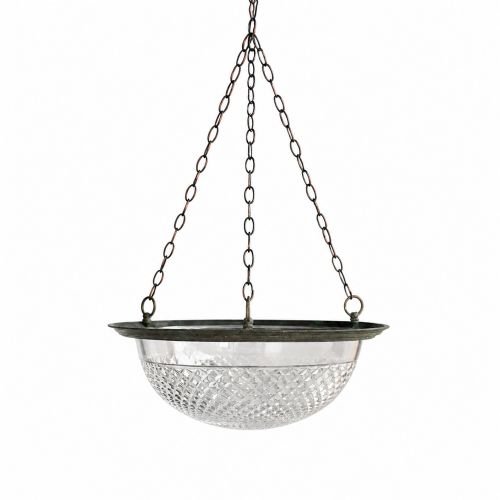
- A ceiling-mounted dome or bowl light fitted flush or close to the ceiling. These fixtures often employ cut glass or crystal domes held in metal mounts.
- Flash glass
- Glass formed by blowing a thin layer of coloured glass over a colourless base, then cutting through the outer layer to create patterns. This technique appears often in Victorian ruby glass pieces.
- Ormolu
- Finely chopped high-karat gold applied to a bronze base using a mercury-gilding process. It provides a rich, durable metallic finish on nineteenth-century French and English mounts.
- Cricklite
- A patented brand of glass candlestick and lamp system designed to hold small nightlights. These utilised specialised glass shades and bases.
Victorian Crystal Light: Frequently Asked Questions
What is a mantle lustre?
A mantle lustre is a decorative glass vase or candlestick fitted with a ring of hanging crystal prisms. They sat on mantelpieces to reflect ambient light from candles or oil lamps.
Victorian examples frequently utilise coloured flash glass, such as ruby or yellow, paired with ornate gilt decoration and hand-cut glass pendants.
How do I identify a Victorian crystal chandelier?
Victorian crystal chandeliers typically feature heavy brass or bronze frames combined with hand-cut lead crystal drops and prisms. Look for construction methods using threaded pins or wire loops to secure individual glass elements.
Stylistic cues include nineteenth-century forms such as waterfall drops, dome fixtures, and multi-armed gasoliers or candle branches.
Are these lamps rewired for modern use?
Many hanging fixtures and table lamps from this era have been updated with modern electrical wiring to meet contemporary safety standards. This allows historical chandeliers and table lamps to function safely in modern homes.
Buyers should inspect the specific listing details to confirm whether a piece retains original fittings or has been adapted for electricity.
What distinguishes Edwardian from Victorian lighting?
Edwardian lighting generally follows the turn of the twentieth century, often lighter in proportion while retaining the cut glass and brass materials of the preceding Victorian decades. Designs frequently incorporate refined Edwardian brass mounts alongside cut crystal domes.
Both periods share craftsmanship techniques, though Edwardian pieces sometimes show early transitions toward electricity alongside traditional oil and candle formats.