




Victorian Crystal Lamp
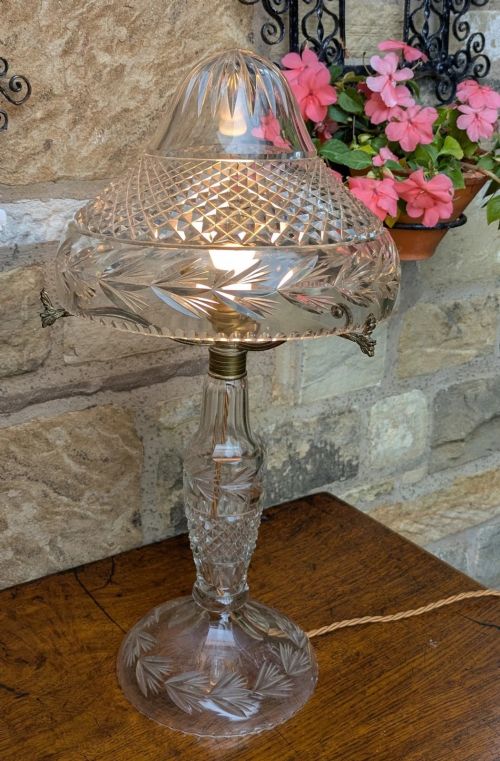
A victorian crystal lamp brings brilliant cut glass and brass together to catch the light in any room.
Victorian Crystal Lamp
The inventory ranges from English table lamps with brass mounts to French Napoleon III and Empire pieces incorporating bronze and rock crystal. These lighting forms span simple candlesticks to elaborate chandeliers and candelabra.
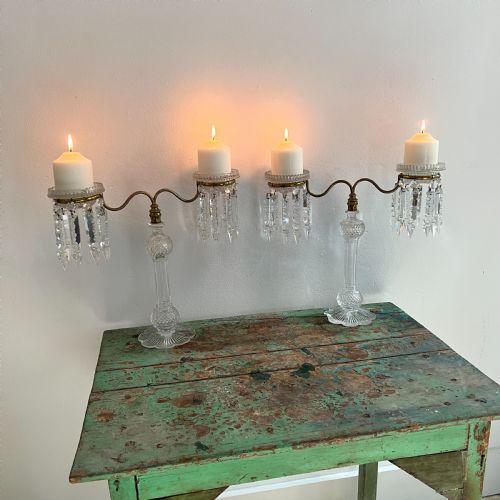
Many examples utilise period oil or paraffin reservoirs mounted on brass or gilt metal bases. The selection also includes specialised items such as Cricklite glass candlesticks and mantle lustres with storm shades.
How They Were Made
Cut glass and lead crystal form the sparkling body of these pieces, shaped through intensive wheel-cutting and polishing techniques. Brass, bronze, and gilt metal mountings provide the structural support and decorative collars.
Makers combined glass reservoirs with metal bases using threaded fittings and secure collars. Enamel and gilt decoration frequently accent the glass surfaces, adding colour and intricate detail to the design.
Mermaid figures occasionally support rock crystal columns on French torch lamps.
What Varies in Quality
The clarity and depth of the cut crystal separate standard production from finer examples. Deep, crisp diamond cutting refracts light far more effectively than shallow or smoothed facets.
The weight and finish of the metal mounts dictate the overall calibre of the piece. Heavy cast brass and detailed bronze work indicate superior workshop standards compared to lighter stamped metals.
Osler·Baccarat·Clarke
The Victorian Crystal Lamp Glossary
- Lead crystal
- Glass containing lead oxide to increase brilliance, weight, and the dispersion of light. This material allows for deeper and sharper cutting.
- Lustre
- A mantle ornament or candlestick hung with crystal prisms designed to catch and reflect light. These often feature matching storm shades.
- Electrolier
- A light fixture designed specifically for electricity rather than converted from gas or oil. These large pieces often form the centrepiece of a room.
- Cricklite
- A patented glass candlestick system designed to hold specific night-lights safely. Clarke produced these popular Victorian table lighting items.
- Reservoir
- The container that holds oil or paraffin on older lamps before electrification. These are frequently formed from coloured or clear cut crystal.
Victorian Crystal Lamp: Frequently Asked Questions
Are these lamps converted for modern electricity?
Many pieces originate as oil or paraffin lamps that have been adapted for modern domestic wiring. The original reservoirs and burners are often retained for decorative authenticity.
Buyers should inspect the internal wiring methods used during conversion to ensure they meet current safety standards.
How do I identify a Victorian crystal lamp?
Examination of the cut glass facets, metal mounts, and overall weight helps establish the period. Victorian pieces typically feature heavy lead crystal and solid brass or bronze components.
Stylistic cues such as Classical Revival or French influence also assist in dating the lighting accurately.
What is the difference between glass and crystal?
Crystal contains lead oxide, which increases the density and refractive index of the material. This composition permits much sharper and deeper cutting than standard window or bottle glass.
Lead crystal also produces a distinct ringing sound when gently tapped.
How should I clean a crystal lamp?
Delicate washing with lukewarm water and mild soap preserves the surface of the glass and metal mounts. Harsh chemicals can damage gilt decoration and antique brass finishes.
Prisms and pendants are often removed individually for careful cleaning before reattachment.