
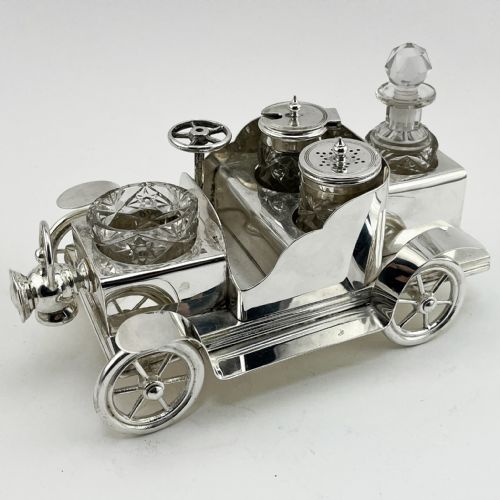


Victorian Cruet Stand
A victorian cruet stand is a fitted frame holding condiment bottles for the dining table, combining practical service with ornate silver plate or sterling silver.
Victorian Cruet Stand
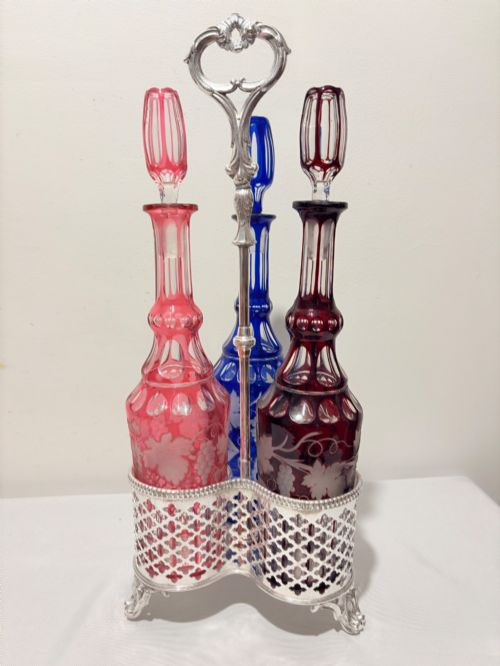
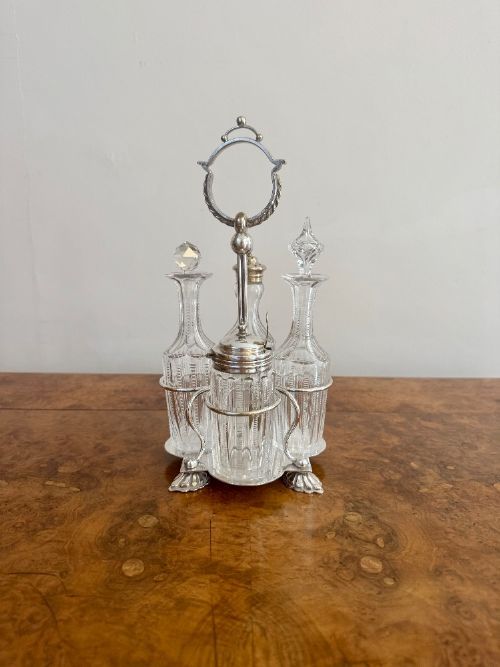
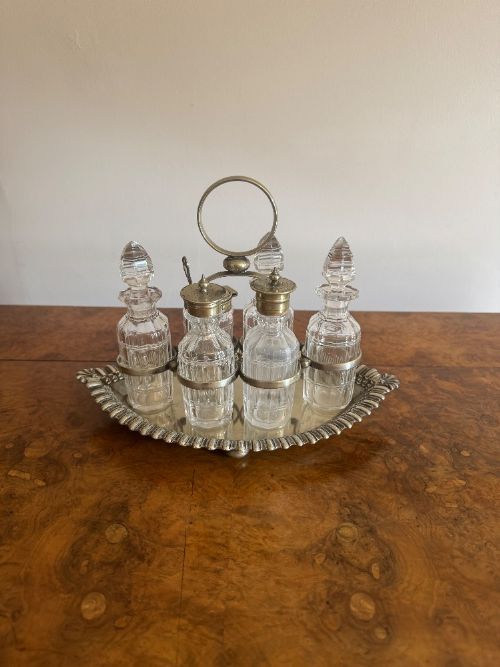
A victorian cruet stand is a table accessory designed to hold multiple bottles for condiments such as oil, vinegar, mustard, and pepper. These pieces appear primarily in silver plate and sterling silver frames, often combined with cut glass bottles or oak bases.
The selections available range from simple four-bottle condiment sets to elaborate multi-bottle decanter stands and egg cruets. Pieces date across the nineteenth and early twentieth centuries, spanning the Victorian and Edwardian periods.
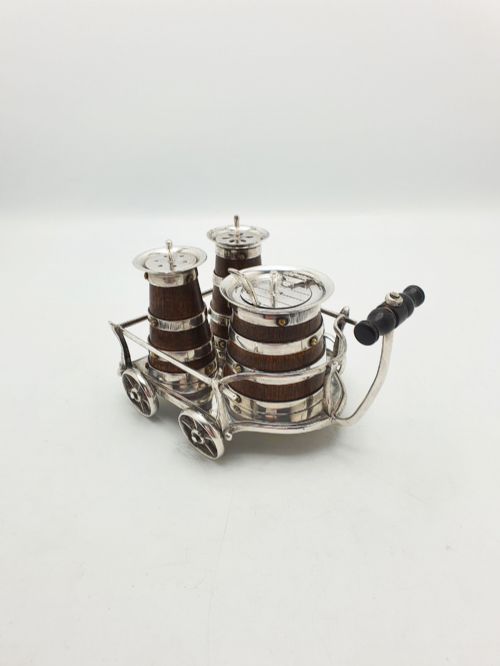
Novelty forms also emerge frequently in the evidence, taking shapes such as carts, farmyards, hunting scenes, and butler trays. These functional dining items served domestic households during formal meals.
Materials and construction
Makers utilised silver plate and sterling silver for the structural frames, handles, and bottle mounts. These metals were shaped through casting and plating techniques to achieve decorative borders and sturdy carrying loops.
Cut glass and coloured glass form the bottles and decanters held within the stands, frequently paired with wooden elements like oak bases or trays. Metalwork often incorporates detailed engraving, central shields, and figural components.
Listings feature items dated from the Georgian era through to the Edwardian period, spanning sterling silver, silver plate, cut glass, and oak.
What separates the best examples
Quality rests in the weight of the metal frame, the crispness of any cast decoration, and the integrity of the glass bottles. Pieces by recognised makers display superior proportions and finer chasing on handles and mounts.
The presence of matching original cut glass bottles substantially elevates an assemblage. Complete sets where every bottle matches the frame reflect higher original expenditure and better survival.
Mappin Brothers·Walker & Hall·Elkington & Co·Wade Wingfield Wilkins·William Hutton & Sons
The Victorian Cruet Stand Glossary
- Cruet set
- A collection of glass bottles or jars for oil, vinegar, and sauces, held together in a metal frame. These sets sat at the centre of the dining table for guests to season their food.
- Silver plate
- A layer of silver fused to a base metal such as copper or Britannia metal. This technique allowed makers to produce substantial domestic items at a lower cost than solid silver.
- Egg cruet
- A specialised table stand fitted with cups for boiled eggs, often accompanied by spoons and salt cellars. These items were popular for formal breakfasts.
- Novelty cruet
- A condiment set designed in a playful or pictorial shape, such as a vehicle, animal, or piece of furniture. These items combined dining utility with conversation-starting design.
- Condiment stand
- A frame designed to hold various sauce and spice containers without necessarily forming a traditional matched cruet set. These frames accommodated changing dining fashions.
Victorian Cruet Stand: Frequently Asked Questions
What is a victorian cruet stand used for?
A victorian cruet stand held essential condiments like oil, vinegar, mustard, and pepper for dining table service. Guests used the bottles to season food during formal meals.
Such stands sat in the middle of the dining table or on sideboards until required. Their portable frames allowed servants to pass the condiments around the table easily.
How do I clean a silver plated cruet frame?
Clean silver plated frames using a gentle silver polish and a soft cloth to avoid wearing through the thin silver layer. Wash glass bottles separately in warm soapy water.
Avoid abrasive cleaners or harsh chemical dips that damage the original finish. Ensure all parts are thoroughly dried before reassembly.
How can I tell if the glass bottles are original?
Original bottles fit the cutouts in the metal frame precisely and match the style and wear patterns of the stand. Look for consistent glass quality and matching cut patterns across all stoppers and bottles.
Replacement bottles often show minor discrepancies in height, glass tint, or base dimensions. However, many surviving stands have experienced bottle replacements over their long history.
Where should I display a cruet stand at home?
Display a cruet stand on a dining table, sideboard, or open cabinet where light catches the cut glass bottles and silver frame. Placing it away from direct heat sources protects any wooden elements like oak bases.
Using the stand for its original purpose or simply displaying it empty highlights the craftsmanship. Ensure the supporting surface is stable, as heavy glass and metal combinations require secure placement.