


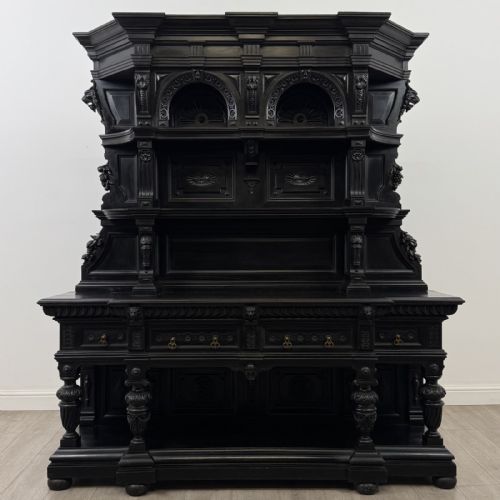

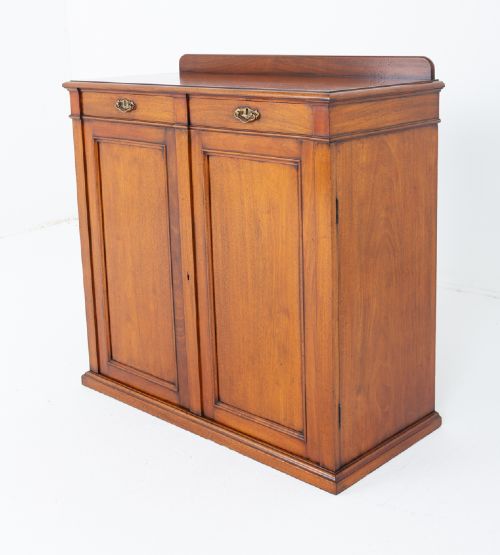
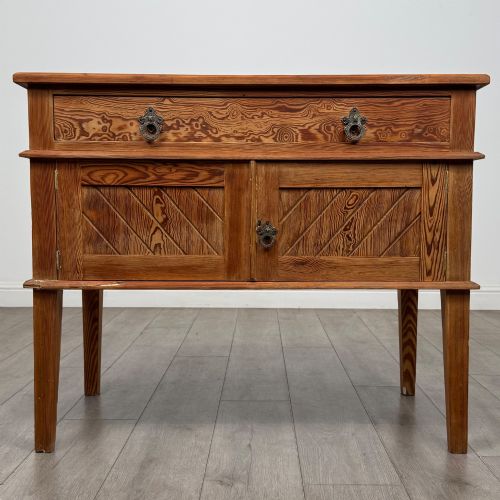
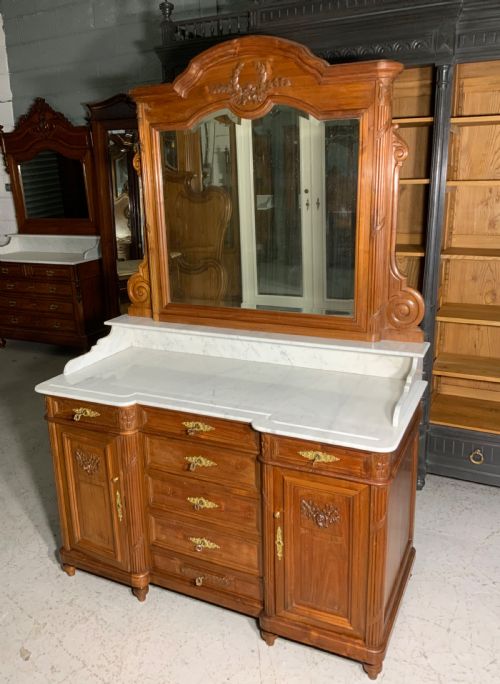
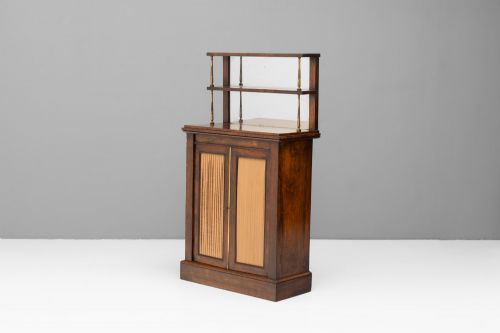
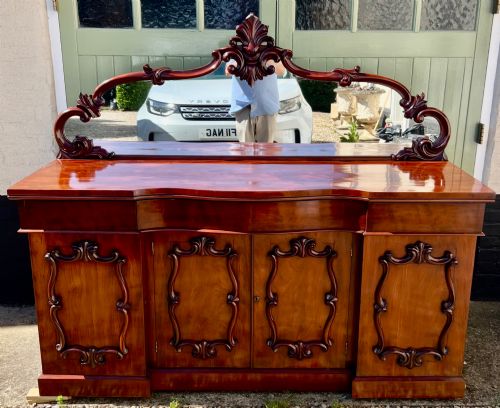
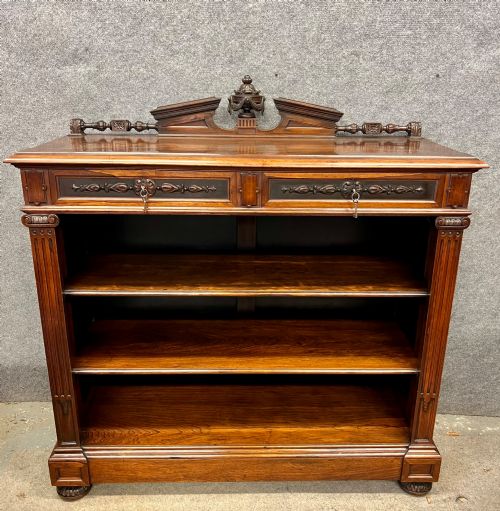


Victorian Credenza Unit
These Victorian credenza unit pieces bring distinct nineteenth-century craftsmanship to domestic storage, offering robust timber construction paired with classic detailing.
Victorian Credenza Unit
A Victorian credenza unit search brings up a variety of nineteenth-century storage forms, including side cabinets, chiffoniers, and display pieces. These items serve practical utility while adding period character to a room.
The pieces listed span multiple decades of the nineteenth century, utilising dense hardwoods and softer pines in equal measure. Buyers encounter both polished formal furniture and painted vernacular country pieces.
Makers and workshops of the era produced these cabinets in mahogany, rosewood, walnut, and pine, often incorporating glass panels, marble tops, and brass hardware.
Styles range from straightforward Victorian and Gothic Revival to French Rococo Revival, Sheraton Revival, and Arts and Crafts, reflecting the diverse design movements of the period.
How they were made
Cabinet makers utilised solid timbers like mahogany, walnut, rosewood, and pine for the main structures, often applying fine veneers to curved and flat surfaces alike. Joinery relied on traditional methods, ensuring the long-term stability of doors, drawers, and shelving.
Metal components such as brass handles, iron fittings, and ormlu mounts were secured to the timber frameworks to provide functional operation and decorative contrast. Glass panes and marble inserts were integrated into specific display and top surfaces.
Surface treatments varied from polished French polish and wax finishes to applied paint and ebonisation, depending on the intended formality and regional origin of the piece.
Victorian Credenza Unit Retail Price Guide 2026
Typical asking prices for victorian credenza unit among the pieces listed under this phrase on Sellingantiques today, from the lower quarter to the upper quarter. They describe what is for sale here now, not the wider market.
Listings feature pieces spanning the nineteenth century, incorporating materials from brass and marble to mahogany and pine.
What varies in quality
The refinement of the timber selection and the precision of the joinery mark the distinction between standard workshop items and pieces from noted cabinet makers. Finer examples display carefully matched veneers, sophisticated carving such as lion mask details, and integrated ormolu or porcelain mounts.
Structural integrity depends on the original construction and the preservation of secondary timbers like pine and ironwork. Pieces retaining their original brass hardware, glass, and surface finishes command greater regard among collectors.
Gillows·Shapland & Petter·Robert Strahan
The Victorian Credenza Unit Glossary
- Credenza
- A low cabinet or sideboard designed for display and storage, often featuring glazed doors or central cupboards.
- Chiffonier
- A small sideboard or low cupboard popular in the nineteenth century, frequently fitted with a raised shelf back or open shelving.
- Ormolu
- Gilded bronze or brass mounts applied as decorative ornaments to furniture surfaces during the period.
- Ebonisation
- A wood finishing technique that darkens lighter timbers like pine or mahogany to imitate the appearance of ebony.
- Veneer
- A thin layer of valuable wood applied to a base timber carcass to provide decorative grain patterns.
Victorian Credenza Unit: Frequently Asked Questions
How do I style a Victorian credenza in a modern room?
These cabinets work well as focal points in living rooms or dining spaces, providing practical surface area and internal storage.
Pair the rich wood tones with neutral walls to let the nineteenth-century craftsmanship stand out clearly.
Were these cabinets used for dining rooms?
Many nineteenth-century sideboards and cabinets were designed to hold tableware, linens, and provisions in formal dining spaces.
Smaller variants also served as display surfaces in drawing rooms and reception halls.
What is the difference between mahogany and pine pieces?
Mahogany and rosewood pieces generally represent formal, polished parlour furniture featuring fine grain and decorative veneers.
Pine and painted pieces typically belong to country or vernacular traditions, offering a more rustic aesthetic.
How should I care for antique wood surfaces?
Keep these items away from direct sunlight and strong heat sources to prevent the timber and veneers from drying out.
Apply a traditional beeswax polish occasionally to nourish the wood and maintain the natural lustre of the finish.