
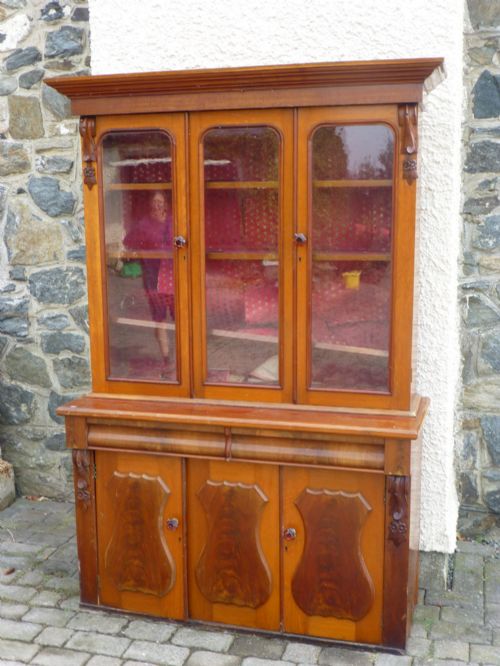
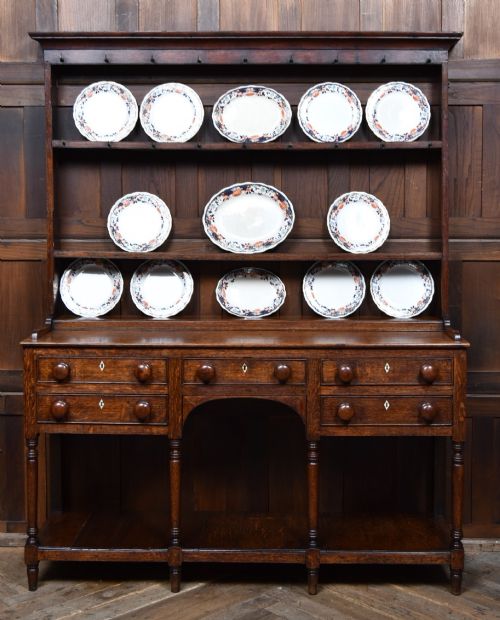
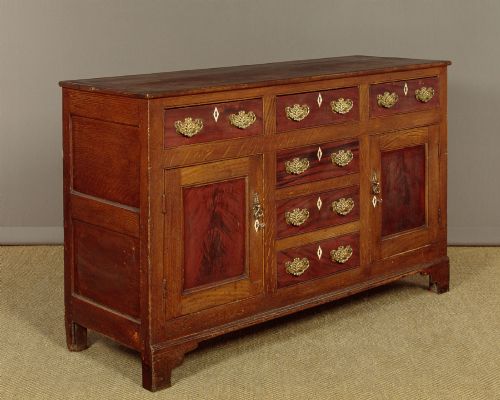
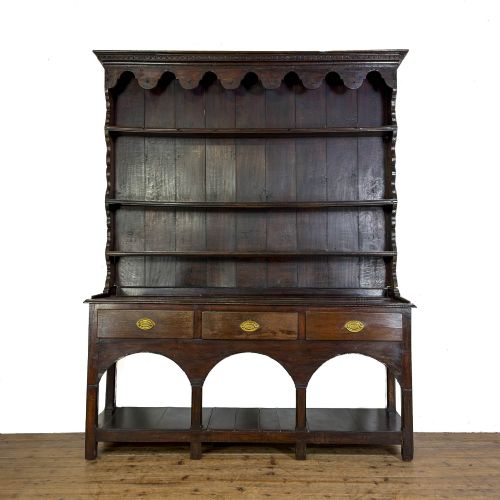
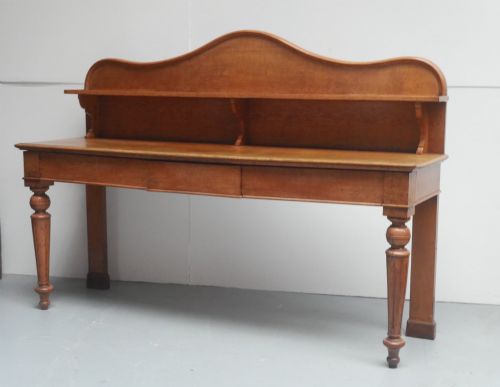
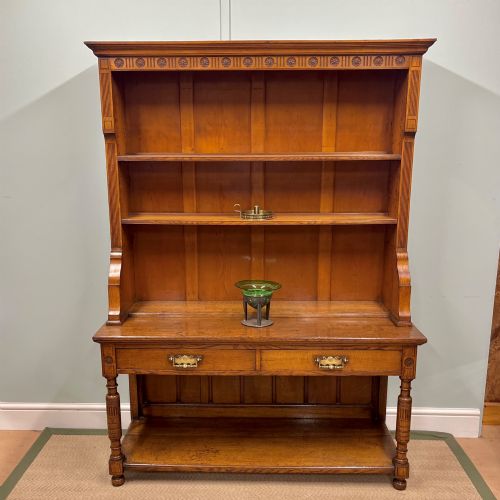


Victorian Country House Sideboard
A victorian country house sideboard brings solid proportions and working practicality to a room, built from honest timbers to handle daily domestic life.
Victorian Country House Sideboard
A victorian country house sideboard encompasses robust oak, pine, and mahogany pieces designed for storage and serving in large domestic spaces. The selection ranges from monumental dresser bases and serving tables to glazed bookcase cupboards and fitted kitchen dressers.
The prevailing examples originate from the nineteenth century, including specific dates from eighteen-fifty to eighteen-eighty, alongside earlier Georgian foundations. Regional varieties feature English country styles, Welsh vernacular pieces with rack attachments, and Scottish serving tables.
Buyers encounter everything from rustic painted pine washstands and kitchen bases to grand mahogany morning room cabinets and breakfront drawer arrangements. These forms reflect the varied demands of country estate service rooms and formal dining spaces alike.
Materials and construction
Makers relied heavily on sturdy timbers such as oak, mahogany, pine, and walnut, selecting each wood for its strength and grain pattern. Painted finishes frequently appear on pine and kitchen pieces, preserving the surface with traditional pigments.
Metal hardware such as brass fittings provide functional contrast to the wooden doors and drawers. Glass panels feature in upper bookcase cupboards, while bone details occasionally accent the cabinetry.
Joinery techniques prioritize utility and endurance, visible in heavy frames, breakfront drawer construction, and integrated rack systems. The assembly supports both grand display requirements and heavy domestic use.
One notable nineteenth-century Welsh dresser carries a past life straight from Café Snowdon.
Quality and distinction
The caliber of a victorian country house sideboard rests on the selection of timber, whether figured mahogany or well-matured oak. Monumental scale and balanced proportions elevate certain serving tables and dresser bases above standard utility pieces.
Originality of surface finish dictates much of the distinction, particularly where early paint remains intact on pine kitchen furniture. Structural integrity across large cabinets and complex dresser racks ensures the piece maintains its intended presence.
Gillows
The Victorian Country House Sideboard Glossary
- Dresser base
- The lower cabinet portion of a dresser, often featuring drawers and cupboards without the upper plate rack.
- Breakfront
- A piece of furniture where the central section projects forward from the flanking outer cabinets.
- Serving table
- A long, sturdy table designed for the preparation and presentation of food in dining areas.
- Plate rack
- The open shelving unit mounted above a dresser base to display ceramic plates and platters.
- Vernacular
- Regional furniture styles built by local makers following traditional domestic building methods rather than high academic designs.
Victorian Country House Sideboard: Frequently Asked Questions
What is a country house sideboard?
A country house sideboard is a substantial timber storage and serving piece built for nineteenth-century estate dining rooms and kitchens. These pieces emphasise deep drawers, large cupboards, and durable construction.
They serve as practical furniture designed to handle heavy household use while anchoring the room with traditional proportions.
How do I identify a Victorian piece?
Victorian pieces typically display nineteenth-century timber choices like oak, pine, and mahogany, often combined with brass hardware and substantial joinery. Regional styles such as Welsh vernacular or English country influence the overall form.
Examining the construction methods and original surface finishes helps confirm the nineteenth-century production period.
Where were these sideboards used?
These sideboards functioned primarily in country estate dining rooms, morning rooms, and large kitchens for storing dining china and serving food.
Today, they adapt well to modern dining spaces, kitchens, and large living areas needing significant surface and cabinet storage.
Are painted finishes original?
Many pine and kitchen pieces retain early or original painted surfaces applied to protect the wood in busy domestic environments. This paint often shows natural wear from decades of household service.
Such finishes contribute directly to the historic character and visual warmth of the cabinet.