

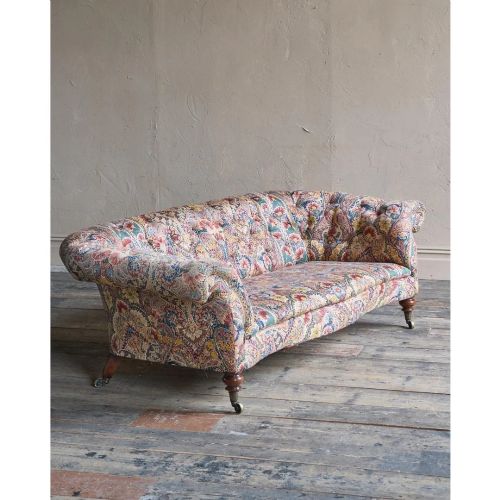
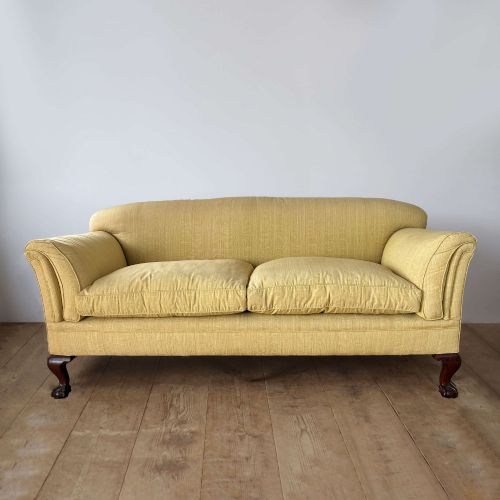


Victorian Country House Settee
A victorian country house settee brings deep-seated comfort and enduring English craft to a room, built for long hours by the hearth.
Victorian Country House Settee
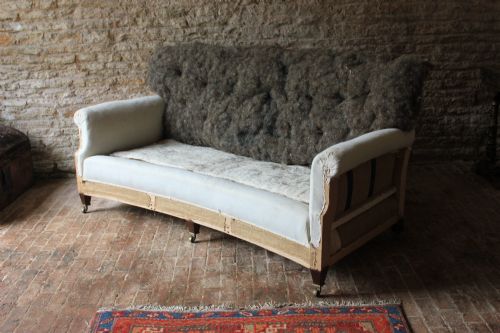
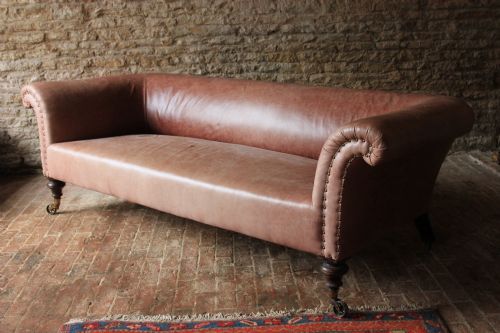
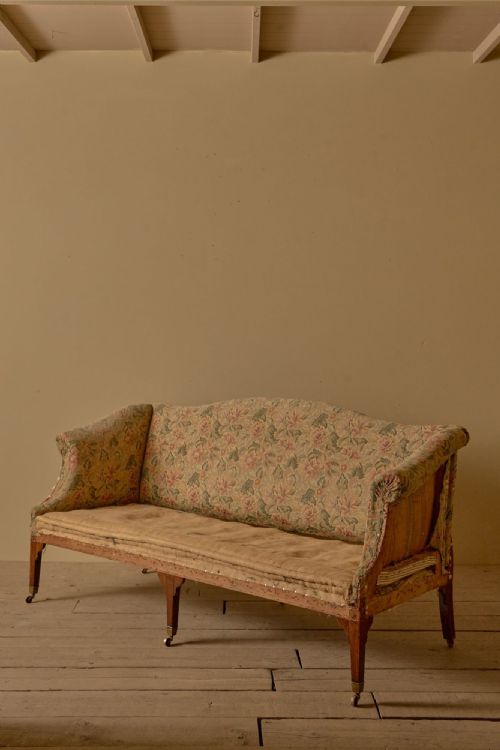
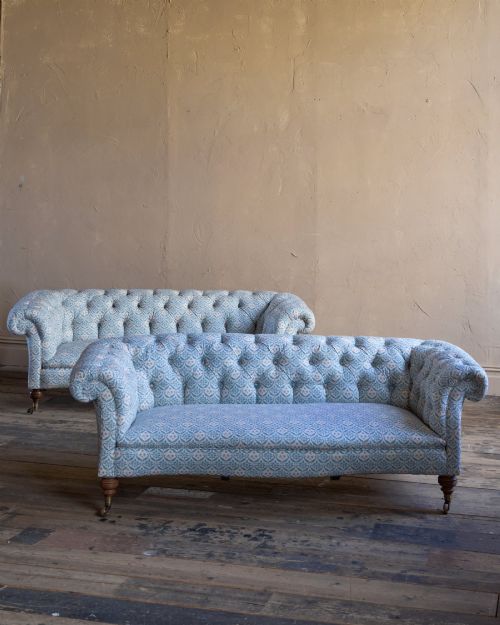
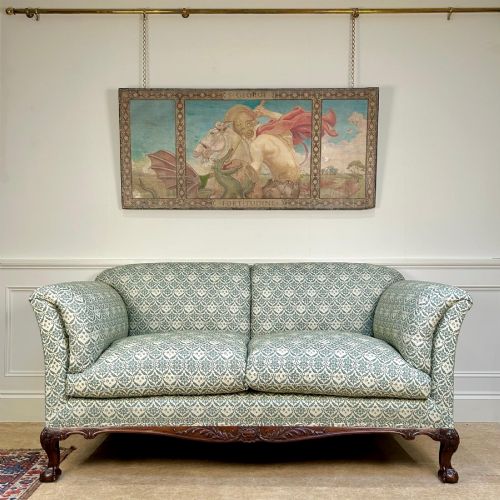
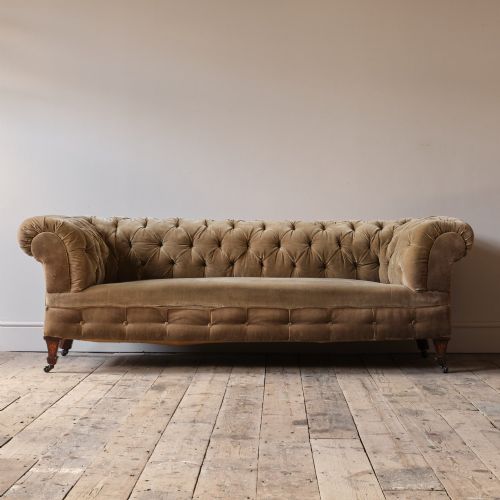
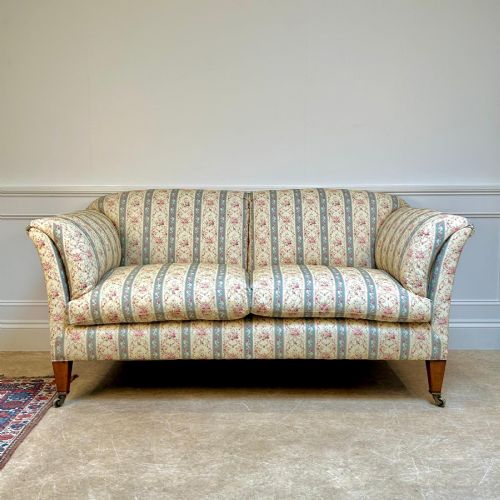
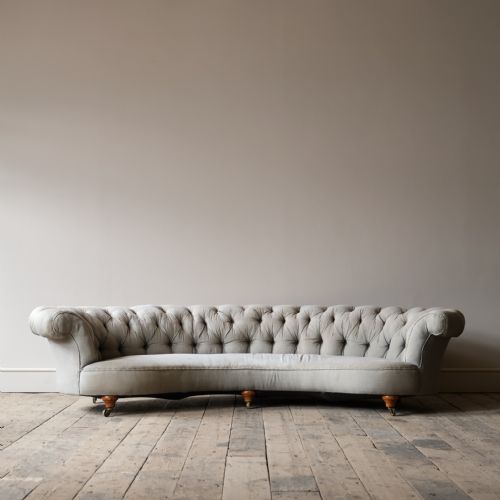
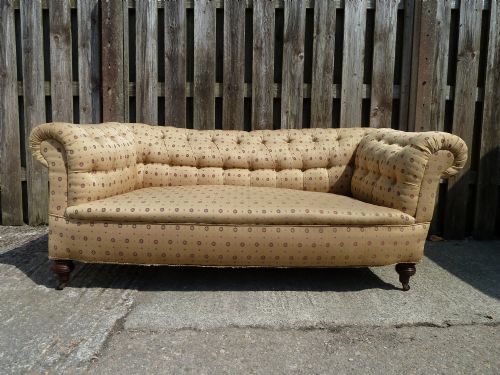
When you search for a victorian country house settee, you encounter large-scale seating designed for drawing rooms and libraries, predominantly represented here by deep-sprung Chesterfields and scroll-arm sofas. These pieces date chiefly from the nineteenth century, spanning periods from Regency survivals to Edwardian examples.
Makers such as Howard and Sons dominate the selection, alongside firms like Miles and Edwards, Hampton and Sons, and Morison and Co of Edinburgh. Forms range from camel backs and serpentine shapes to leather-upholstered frames and pieces in original ticking or calico.
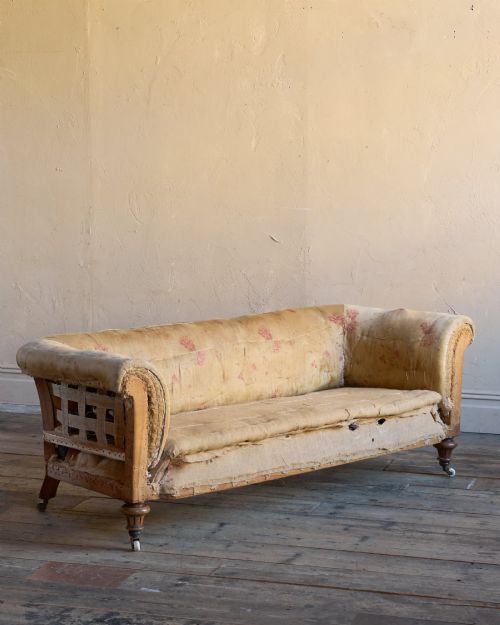
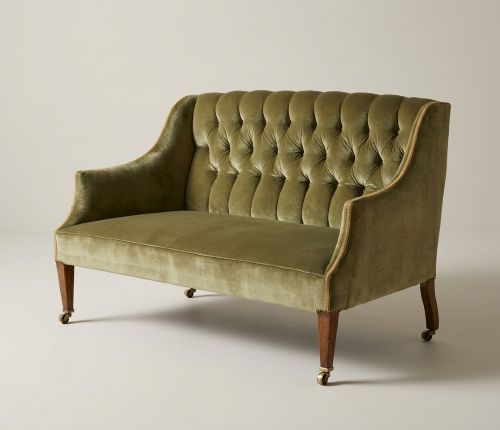
The aesthetic leans heavily on English country house comfort, encompassing Victorian Chippendale revivals and substantial hardwood frames. You find everything from unrestored frames ready for reupholstering to fully finished leather and velvet pieces.
Materials and Construction
The foundational structure relies upon sturdy timbers including mahogany, walnut, and general hardwood, providing the necessary heft for substantial upholstery. Brass often appears in castors or decorative details, while giltwood accents occasional high-status frames.
Upholstery techniques involve traditional stuffing materials layered over complex spring systems, often finished in calico, hessian, or original ticking before top covers of velvet, fabric, or leather are applied. Button backs and scroll arms require precise hand-tackwork to maintain their shape over decades of use.
Victorian Country House Settee Retail Price Guide 2026
Typical asking prices for victorian country house settee among the pieces listed under this phrase on Sellingantiques today, from the lower quarter to the upper quarter. They describe what is for sale here now, not the wider market.
Listings feature eighteenth-century revivals alongside nineteenth-century pieces, incorporating mahogany, walnut, brass, and original ticking.
Separating the Finest Examples
Quality rests significantly on the integrity of the underlying maker's stamp, particularly those bearing recognised London or regional cabinet makers. Original upholstery foundations, such as marked ticking and intact traditional spring work, elevate a piece above later interventions.
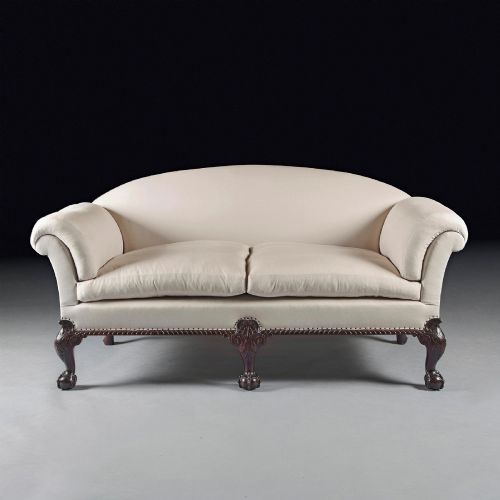
The handling of the timber frame, from carved ball and claw feet to well-proportioned scroll arms and serpentine fronts, distinguishes standard production from exceptional workshop output. Proportion and scale dictate visual presence, where generous, balanced dimensions command greater appreciation.
Howard and Sons·Miles and Edwards·Hampton and Sons·Morison and Co
The Victorian Country House Settee Glossary
- Chesterfield
- A large upholstered sofa traditionally featuring arms and back of the same height. These pieces are characterised by deep buttoning and generous proportions.
- Ticking
- A tightly woven heavy cotton or linen fabric used as the primary lining beneath top upholstery. Original examples often bear maker stamps and stencils.
- Serpentine
- A furniture front or sofa back shaped with a sweeping concave centre flanked by convex curves. This undulating line demands precise carpentry and upholstery skill.
- Scroll arm
- An upholstered sofa arm that rolls outward in a tight spiral. It represents a classic nineteenth-century form designed for reclining comfort.
- Camel back
- A sofa back featuring a graceful, continuous convex curve resembling a camel's hump. This style often draws upon eighteenth-century Chippendale traditions.
Victorian Country House Settee: Frequently Asked Questions
How do I identify a Howard and Sons sofa?
Look for stamped brass castors, maker's marks on the legs, and often signature ticking beneath the loose cushions. These details confirm workshop origin.
Furthermore, examine the density of the deep-sprung upholstery and the distinct proportions of the scroll arms characteristic of their London workshops.
Should I buy a sofa needing reupholstery?
Purchasing a frame in calico or needing restoration allows you to select your own top fabric while preserving the antique springs and webbing. It is a traditional route for bespoke interior schemes.
Ensure the hardwood frame and internal coil system remain structurally sound before committing to a full textile restoration project.
What is the difference between a settee and a Chesterfield?
While settee is a general term for a long upholstered seat, a Chesterfield specifically denotes a fully upholstered design where arms and back match in height, usually with deep buttoning.
Country house examples often blur these lines by offering generous, deep-seated proportions regardless of whether they feature camel backs or scroll arms.
How do I care for antique leather upholstery?
Maintain antique leather by applying appropriate conservation-grade balms periodically to prevent drying and cracking. Avoid placing pieces in direct sunlight or near heat sources.
Dust regularly with a soft, dry cloth to protect the patina built up over a century or more of domestic use.