



Victorian Cottage Scene Art
Victorian cottage scene art captures rural domestic life on canvas and paper, offering a nostalgic window into nineteenth-century country living that collectors covet.
Victorian Cottage Scene Art
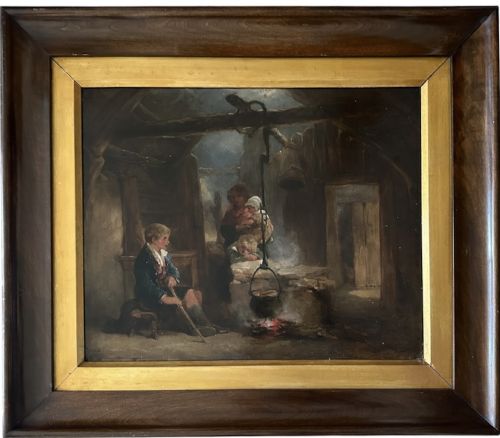
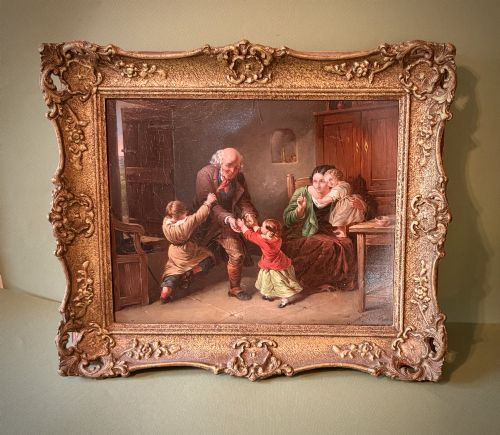
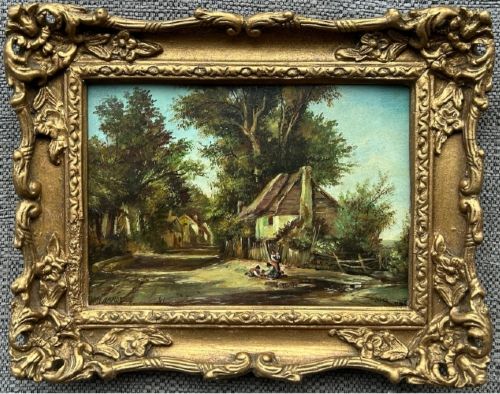
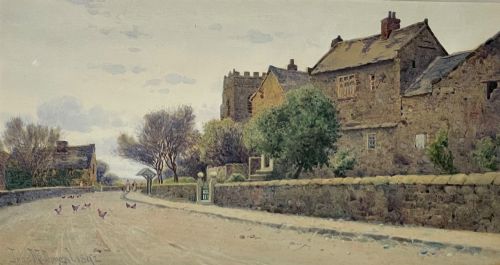
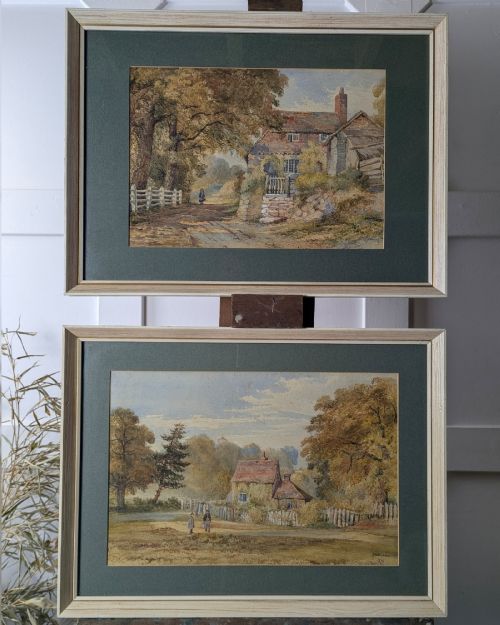
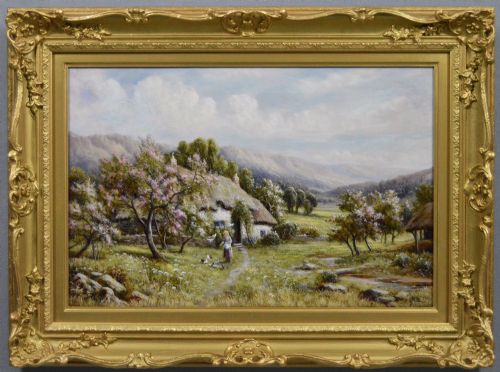
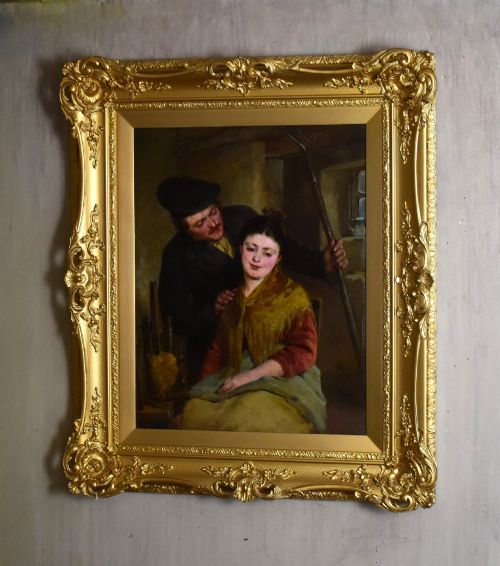
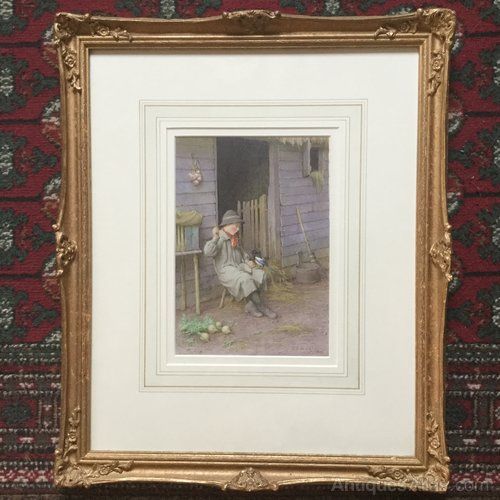
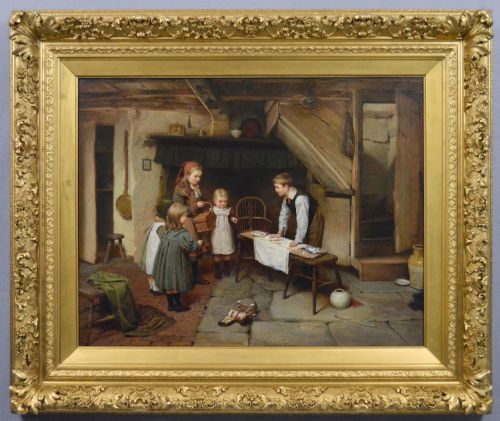
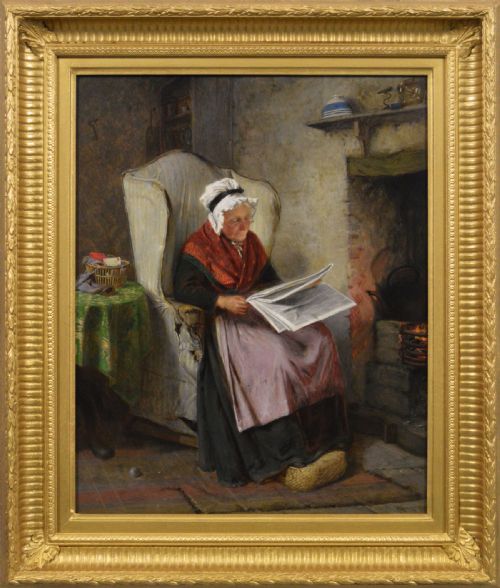
Victorian cottage scene art encompasses paintings and watercolours depicting rural dwellings, domestic interiors, and pastoral daily life. These works capture figures tending gardens, children playing, or elderly residents resting by firesides in settings across England, Scotland, Wales, and Ireland. The most common examples on this page are oil paintings and watercolours originating from the nineteenth and early twentieth centuries.
The genre often blends landscape with genre painting, focusing closely on human activity against a rural backdrop. Scenes range from exterior views of thatched cottages beside streams to intimate interior portraits of spinning maids or families at tea time. Rural realism and pastoral themes dominate the works available here, reflecting contemporary artistic interest in traditional country life.
Materials and technique
Artists of this period worked primarily with oil paint on canvas or panel, and watercolour on paper, frequently framing the finished pieces in gilt wood. Oil on canvas allowed for rich textures and deep tonal ranges in interior fireside scenes and sweeping pastoral landscapes. Watercolour offered a fluid medium suited to capturing the soft light of village streets, country gardens, and coastal inns.
Support materials varied according to the medium and scale of the work, with panel used for smaller, detailed cabinet paintings and larger canvases reserved for expansive farming landscapes. Pigments were applied with careful brushwork to render the subtle details of thatch, stonework, fabrics, and foliage. Many surviving works retain their original or period-appropriate gilt wood frames, which complement the traditional subject matter.
The listings span from 1860 through the Edwardian period, executed in oil on canvas, panel, and watercolour on paper.
Quality and execution
Quality in these works rests on the artist's ability to render light, narrative detail, and human anatomy convincingly. Superior examples demonstrate skilled handling of facial expressions and interior lighting, particularly in complex fireside or domestic groupings. Weaker pieces often display stiffer figures and more formulaic background foliage.
Composition and atmosphere further distinguish the range, with stronger paintings drawing the viewer into a coherent narrative moment, such as children feeding geese or a woman tending calves. The preservation of the paint surface and the quality of the surrounding gilt wood frame also contribute to the overall standing of an individual piece.
William Howard Hardy·John McDougal·Robert A. Nottingham·Robert John Hammond·Howard Helmick·Charles Edward Wilson·Harry Brooker·Alexander Rosell·Haynes King·James Kyd·James Hardy Junior·Frederick James Knowles·George Smith·Charles Vickers·William Henry Knight·Robert Finley McIntyre·Helena Maguire·Harry Sylvester Stannard·Henry Charles Fox·Will Anderson·Robert Hollands Walker·David Woodlock·Henry Spernon Tozer·Harry Pennell·Joseph Kirkpatrick
The Victorian Cottage Scene Art Glossary
- Genre painting
- A style of art depicting scenes from everyday life, typically involving ordinary people in domestic or rural settings. These works often tell a subtle story about social habits or family routines.
- Oil on canvas
- Pigment suspended in drying oil applied to a stretched woven fabric support. This technique allows for blending colours and building rich surface textures.
- Watercolour
- A painting method in which fine pigment is suspended in a water-based solution on paper. It is prized for its translucent qualities and immediacy.
- Panel
- A rigid flat support for painting, commonly made of wood. Artists often utilised panels for smaller, highly detailed works.
- Gilt wood
- Wood that has been coated with a thin layer of gold leaf or metallic gilt finish. It was frequently used to frame Victorian fine art paintings.
Victorian Cottage Scene Art: Frequently Asked Questions
What subjects appear in Victorian cottage scene art?
These works depict rural life, including thatched cottages, farming landscapes, and domestic interiors with figures. Common motifs involve women and children, domestic animals, and quiet village moments.
Artists focused on pastoral realism, recording traditional trades, cottage gardens, and fireside gatherings across the British countryside.
How do I care for antique watercolours and oil paintings?
Oil paintings require stable humidity and temperature to prevent cracking in the paint layer and canvas. Watercolours are sensitive to light and should be hung away from direct sunlight to avoid fading.
Both mediums benefit from professional framing using conservation-grade materials to protect against dust and environmental damage.
How can I tell the difference between an oil painting and a watercolour?
Oil paintings feature textured surfaces with visible brushstrokes and a heavier paint layer on canvas or wood panel. Watercolours appear flat and translucent on paper, often showing the texture of the sheet beneath.
Oils are typically varnished for protection, whereas watercolours require glass glazing for preservation.
Where were these cottage scenes typically painted?
Artists travelled throughout rural England, Scotland, Wales, and Ireland to capture authentic village scenes and agricultural settings. Specific locations range from Surrey farms and Welsh cottages to Scottish crofts.
Many painters drew inspiration from artist colonies or specific regional landscapes that retained traditional rural architecture.