


Victorian Copper Water Jug
These Victorian copper water jug examples combine utilitarian metalwork with period domestic craftsmanship, offering practical service and warm decorative presence.
Victorian Copper Water Jug
When searching for a victorian copper water jug, buyers encounter heavy metal vessels produced across the nineteenth century and into the early twentieth century. These pieces encompass domestic serving containers, large measuring vessels, and regional forms like Jersey cans.
Originating largely from British workshops and domestic settings, these items reflect the practical water carriage and liquid storage needs of the period. Their survival demonstrates the durable nature of heavy-gauge metalwork.
How they were made
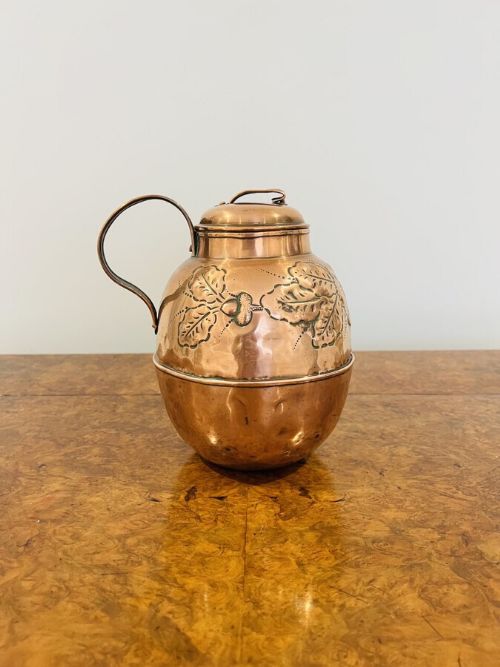
Construction relies heavily on hammered or seamed sheet copper, often joined with visible rivets and reinforced rims. Brass components frequently provide contrast for handles, spouts, and reinforcing bands.
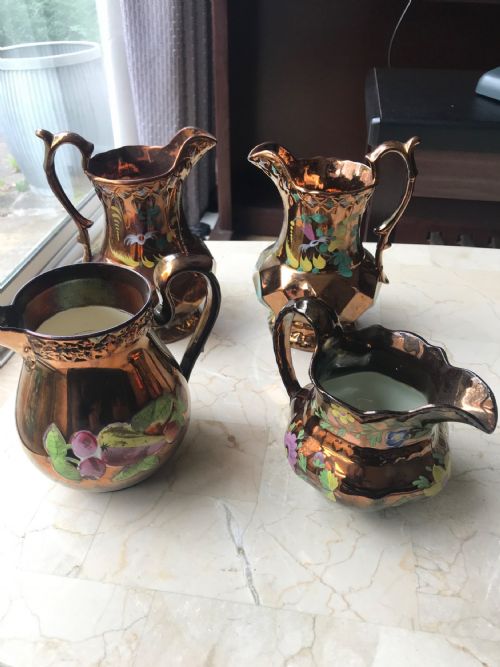
Some examples incorporate ceramic materials, including ironstone china and earthenware finished with metallic or copper lustre glazes. Hand decoration adds painted botanical or fruit motifs to the ceramic variants.
Some heavy measuring jugs bear official VR marks, proving they once settled local pub disputes over accurate liquid measures.
What varies in quality
Quality separates plain utility items from pieces showing substantial weight and deliberate decorative refinement. Heavier gauge metal and balanced proportions indicate superior production standards.
Detailing on handles, spouts, and seams marks the difference between standard production and exceptional workshop output. Surface finish and the crispness of applied marks further distinguish individual pieces.
Livesley Powell & Co
The Victorian Copper Water Jug Glossary
- Jersey can
- A distinctive regional pouring vessel featuring a cylindrical body and a long spout, traditionally used in the Channel Islands for dairy and water service. These cans appear in various capacities from small to large.
- Lustreware
- Earthenware or ironstone pottery finished with a metallic glaze that creates a reflective, iridescent surface sheen. This technique was frequently applied to nineteenth-century jugs featuring hand-decorated motifs.
- Flagon
- A large drinking vessel or pitcher with a handle and sometimes a lid, designed for holding liquids at table. Arts and Crafts examples often display hammered surfaces and simple linear forms.
- Seamed
- Describes metal objects constructed from joined sheets of copper rather than being spun or cast as a single piece. Visible seams and rivets are characteristic of period manufacturing methods.
- Ironstone ceramic
- A durable type of British pottery patented in the nineteenth century, chosen for domestic vessels requiring resistance to daily wear. It frequently serves as a sturdy base for printed or hand-painted patterns.
Victorian Copper Water Jug: Frequently Asked Questions
What were copper water jugs used for?
These vessels served everyday household tasks involving liquid transport, storage, and table service. Larger examples functioned as measuring containers or dairy cans.
In domestic settings, they brought water from a pump or cistern to bedrooms and living areas. Their durable construction suited constant daily handling.
How do I date a victorian copper jug?
Dating relies on manufacturing techniques, style indicators, and any stamped capacity marks or maker details. Heavy seamed construction and specific handle designs help place pieces within the nineteenth century.
Stylistic shifts from plain utilitarian forms to Arts and Crafts designs provide further chronological markers. Comparison with dated regional examples aids verification.
Are these jugs waterproof?
Most metal examples retain their sealed seams and function adequately for holding water today. Regular checks of the base and joints ensure structural integrity remains intact.
Ceramic variants with lustre glazes also hold liquid safely, provided they lack hairline cracks. Gentle handling preserves the original waterproof qualities.
How do I clean antique copper?
Maintenance generally involves gentle washing with mild soap and warm water to remove dust and dirt. Avoid abrasive compounds that might strip the historic surface layer.
Many collectors prefer to leave a natural aged patina rather than achieving a bright polished finish. Regular drying prevents moisture spotting after cleaning.