



Victorian Coopered Bucket
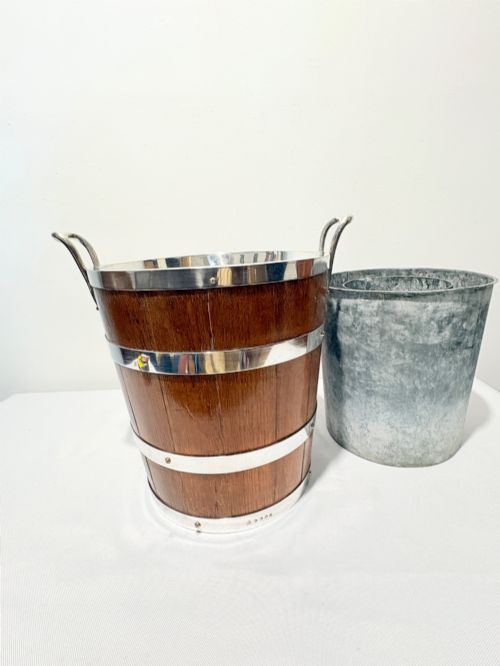
These robust victorian coopered bucket pieces combine stave construction with metal bands, serving practical duties from cooling wine to holding umbrellas.
Victorian Coopered Bucket
When you search for a victorian coopered bucket, you encounter vessel forms built from individual wooden staves bound together by metal hoops, spanning utility and display. The inventory shows pieces designated for varied domestic tasks, including wine cooling, umbrella storage, washing, and peat holding.
Oak and walnut dominate the selection, often augmented by brass or silver plate, aligning with the domestic needs of the nineteenth and early twentieth centuries. Forms range from round champagne coolers and oval stick stands to triangular fireside bins and jardinières.
The objects stem predominantly from the Victorian and Edwardian eras, reflecting rural and country house aesthetics alongside formal revival styles. Buyers most frequently meet oak and walnut examples equipped with metal or ceramic liners designed for moisture retention.
How they were made
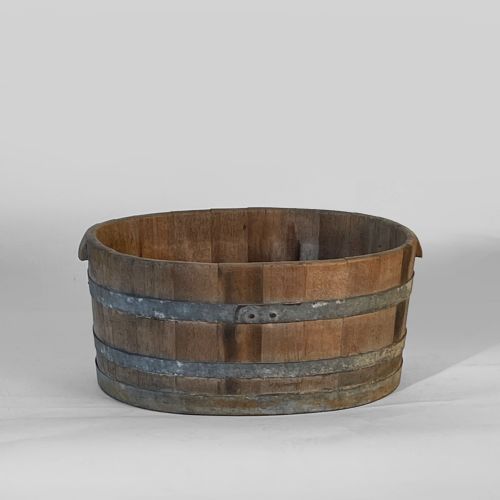
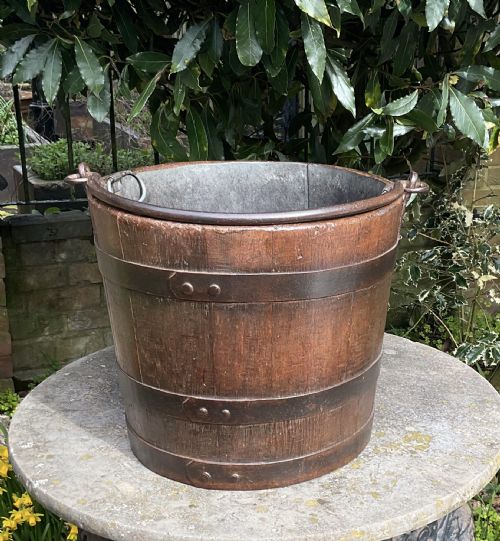
Coopers shaped individual lengths of timber known as staves, tapering them precisely so they joined tightly to form a self-supporting cylinder or oval vessel. These wooden staves were then secured under tension by iron or brass hoops driven firmly into position around the exterior.
Makers integrated internal components such as zinc, silver plated, or ceramic creamware liners to protect the porous wood from damp contents like melting ice or wet umbrellas. Additional hardware, including brass bands and umbrella loops, was fitted to complete the functional design.
Victorian Coopered Bucket Retail Price Guide 2026
Typical asking prices for victorian coopered bucket among the pieces listed under this phrase on Sellingantiques today, from the lower quarter to the upper quarter. They describe what is for sale here now, not the wider market.
Listings feature oak and walnut predominantly, alongside metals like iron, brass, and zinc.
What varies in quality
Quality rests upon the precision of the stave joints and the structural integrity of the timber under tension, separating utilitarian vessels from finer decorative pieces. Superior items display carefully selected grain patterns in woods like oak or walnut, paired with robust metal hoops that maintain uniform pressure.
The presence of original fitted liners, whether in silver plate or creamware, elevates a piece by demonstrating its complete and intended state for holding wine, ice, or peat. Finer craftsmanship also appears in decorative brass mounts and well-proportioned handles that complement the coopered body.
The Victorian Coopered Bucket Glossary
- Coopered
- Constructed from wooden staves joined edge-to-edge and bound with exterior hoops, following traditional barrel-making techniques. This method provides natural strength for holding liquids or heavy contents without adhesives.
- Stave
- An individually shaped vertical strip of wood that forms the curved wall of a bucket or barrel. The tight fit between adjacent staves creates the watertight or solid body.
- Jardiniere
- An ornamental pot or stand designed to hold growing plants or flowers. In coopered pieces, these often feature waterproof liners to protect the timber.
- Cellaret
- A lockable container used for storing bottles of wine or spirits near the dining table. They frequently employ coopered construction to mirror small casks.
- Creamware
- A fine earthenware developed in England featuring a pale yellowish-cream glaze. It appears as protective interior lining within ice and wine buckets.
Victorian Coopered Bucket: Frequently Asked Questions
What were coopered buckets used for?
These vessels served diverse household roles, functioning as champagne coolers, umbrella stands, washing tubs, and fireside peat bins. Their sturdy stave construction made them ideal for holding heavy or damp items.
In grander settings, they kept wine chilled at the dining table or organised walking sticks in the entrance hall. Smaller variations held fuel by the fireplace or acted as decorative plant holders.
How do I care for a wooden bucket?
Keep wooden pieces away from direct heat sources and sudden temperature shifts to prevent the timber staves from shrinking and loosening the metal hoops. Periodic dusting with a dry cloth preserves the finish.
Ensure that any internal metal or ceramic liners are dried thoroughly after use if exposed to moisture. Avoid using harsh chemical cleaners on the exterior wood.
Are these buckets waterproof?
Many historic coopered vessels rely on internal liners made of zinc, silver plate, or ceramic creamware to contain liquids safely. The wood itself may swell when wet, but relying solely on unlined historic staves for holding water is generally unwise.
Check whether an individual piece retains its original liner if you intend to use it for ice, wine, or fresh flora. Liners protect the structural integrity of the surrounding wood.
How are Victorian pieces identified?
Dating relies on timber selection, hardware styles, and construction methods characteristic of the nineteenth century. Oak and walnut were favoured, often paired with hand-forged iron or turned brass bands.
Stylistic cues such as George III revival details or specific liner materials help narrow the period of origin. Comparing the proportion and joinery to dated examples confirms the era.