


Victorian Converted Oil Lamps
Victorian converted oil lamps are former paraffin burners adapted for electricity, prized for bringing period character and warm illumination to modern rooms.
Victorian Converted Oil Lamps
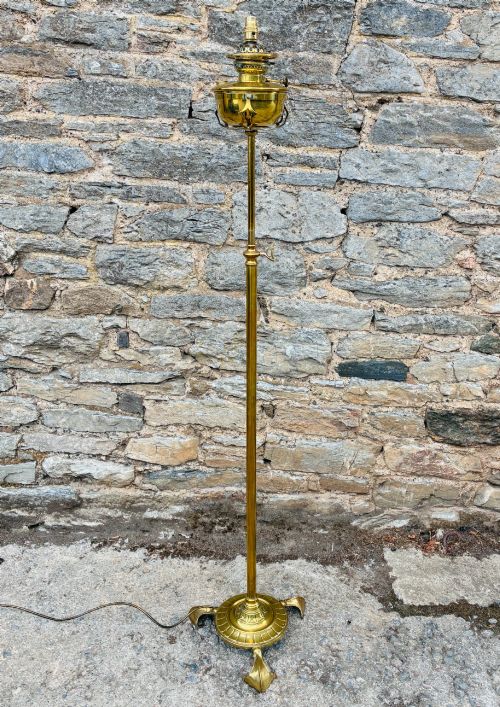
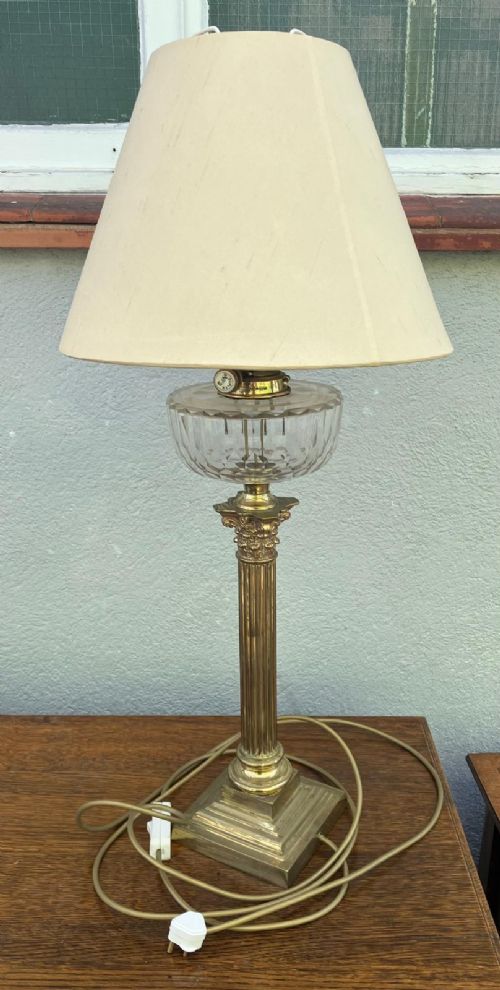
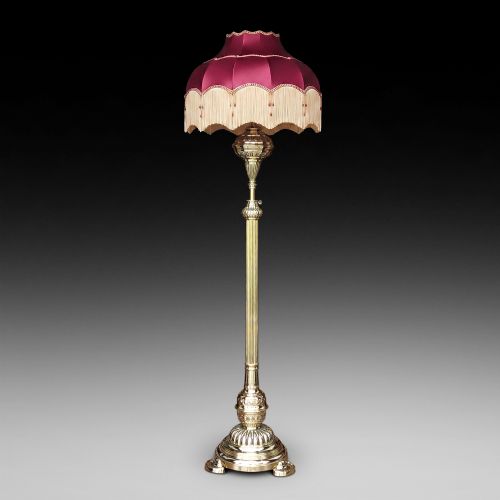
Victorian converted oil lamps are standard or table lighting items originating in the nineteenth century, most frequently taking the form of tall brass columns or glass fonts adapted for modern electricity. These pieces range from compact table models to floor-standing standard lamps designed to illuminate nineteenth-century interiors.
The selections on this page span several decades of the nineteenth century and the Edwardian period, incorporating styles such as Art Nouveau, Rococo Revival, and Neoclassical. Brass and copper bodies appear alongside opaline glass, cut glass, and porcelain components.
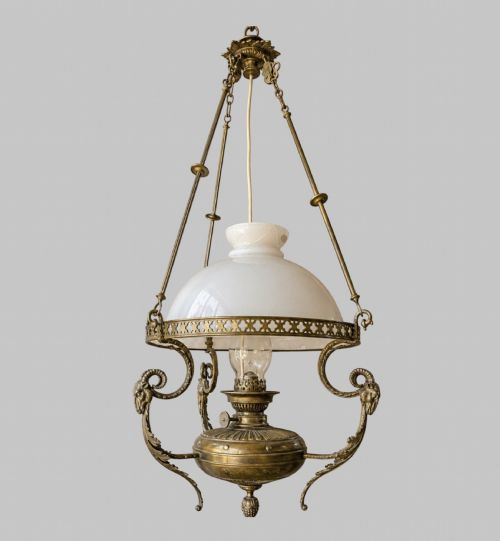
Table lamps and standard lamps dominate the offerings, though ceiling lights, wall sconces, and floor lamps also emerge. Many retain their original telescopic mechanisms or burners alongside contemporary wiring.
How they were made
Makers constructed these lamps using combinations of cast and spun brass, copper, and wrought iron, often incorporating lead crystal, cranberry glass, and milk glass for the fonts. Metal components were frequently stamped, repoussé, or gilt to achieve decorative surface textures.
Designers utilised ceramic and porcelain elements, including Sevres vases, alongside opaline and enamelled glass to add colour and pattern to the body of the lamp. Burners and reservoirs were engineered to hold paraffin before modern workshops adapted the interiors for electrical wiring.
Some floor lamps retain their original steamer designations, built sturdy enough to withstand the motion of a nineteenth-century ocean liner.
What varies in quality
The standard of these lamps is determined by the crispness of the cast brass enrichment, the weight and clarity of the glass fonts, and the integrity of the original mechanisms. Finer examples display detailed Corinthian capitals, heavy gauge metalwork, and balanced proportions across telescopic standards.
The sophistication of the decorative style, whether restrained neoclassical columns or flowing art nouveau bronze work, distinguishes high-tier objects from standard production. Professional conversion methods that preserve the historic burner assembly also contribute to the desirability of a piece.
Hinks of B'ham·Osler
The Victorian Converted Oil Lamps Glossary
- Corinthian column
- A classical architectural column design featuring ornate acanthus leaves on the capital, frequently used for the stems of nineteenth-century table and standard lamps.
- Telescopic standard
- An adjustable metal floor or table shaft that allows the height of the lamp to be raised or lowered.
- Opaline glass
- An opaque or translucent pale glass developed during the nineteenth century, often seen in white or pastel shades.
- Repoussé
- A metalworking technique where the metal is hammered from the reverse side to form a raised design in relief.
Victorian Converted Oil Lamps: Frequently Asked Questions
How do I wire a converted oil lamp?
Most converted lamps run wiring up through the central channel formerly occupied by the wick tube or down the exterior shaft. Modern electrical components sit within the old burner housing to maintain the exterior appearance.
Professional electricians generally handle the installation of safe modern flex and bulb holders while preserving the historic metal or glass body of the lamp.
Can I adjust the height of a standard lamp?
Many nineteenth-century floor and table lamps feature telescopic brass columns with thumbscrews designed to alter the overall height. This mechanism allowed users to position the light source precisely where required in the room.
Care is needed when adjusting older metal shafts to avoid damaging internal wiring or straining historic joints.
What materials were used for the bodies?
Brass and copper form the primary structure for the majority of these pieces, often paired with cast iron bases for stability. Decorative elements frequently incorporate porcelain, Sevres vases, and various forms of glass.
Glass reservoirs include cranberry glass, milk glass, lead crystal, and opaline glass, providing contrast to the polished or patinated metalwork.
How do I identify an Art Nouveau lamp?
Art Nouveau examples display characteristic flowing lines, organic floral motifs, and stylised natural forms rather than strict classical symmetry. Bronze and brass work from this period often exhibits whiplash curves and enamelled details.
These designs emerged towards the end of the nineteenth century and into the early nineteen hundreds.