




Victorian Communion Chalice
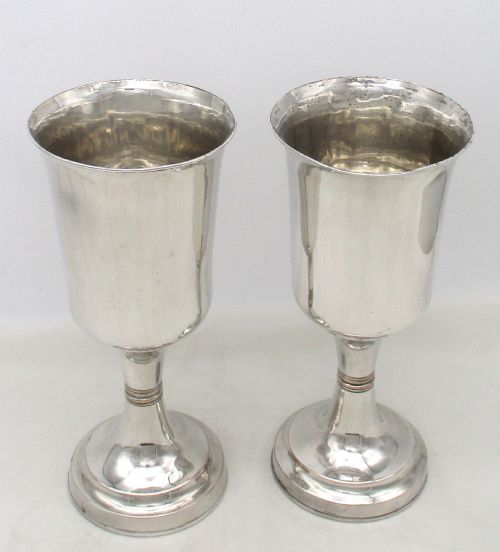
These Victorian communion chalice pieces are solid silver, silver plate and turned walnut vessels created for church services and private devotion.
Victorian Communion Chalice
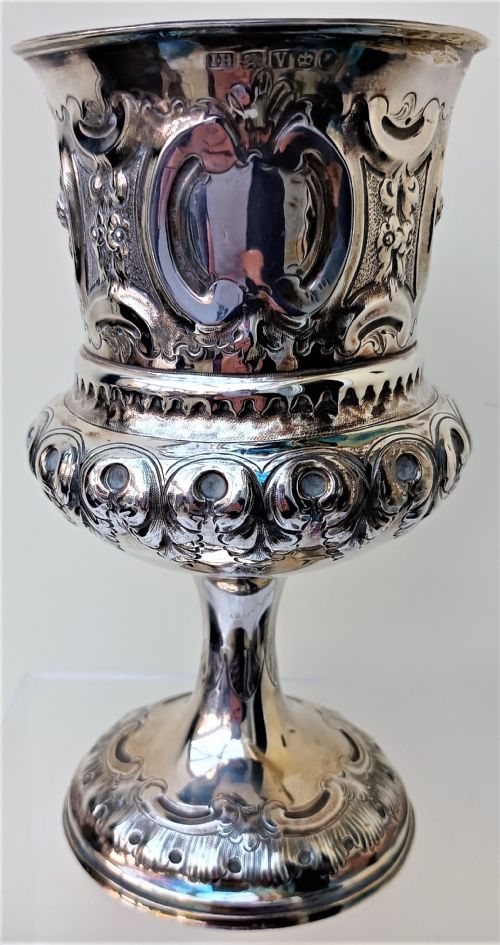
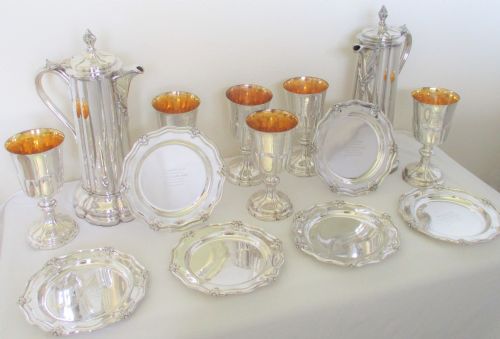
A victorian communion chalice serves sacred ceremonies, appearing here as single vessels, pairs, or complete boxed sets alongside related goblets and travelling communion sets. The forms range from simple parish church plate to decorated parcels gilt silver pieces.
Most examples date across the nineteenth century, including early victorian designs from the eighteen forties through to later decades. Makers utilise materials such as sterling silver, old sheffield plate, copper, glass, leather and velvet.
Buyers encounter distinct stylistic influences, notably victorian and gothic revivals applied to church chalices. Some objects combine functions, listed variously as chalices and goblets or decorative objects.
Materials and construction
Silversmiths constructed these vessels from sterling silver, silver plate, and old sheffield plate over copper bases. Gilding techniques provided gold gilt and gold gilding finishes to the interior bowls and detailed highlights.
Complementary materials include turned walnut for wooden goblets, alongside protective casings lined in velvet and bound in leather. Metal components involve traditional casting, plating, and chasing methods appropriate for ecclesiastical silver.
Victorian Communion Chalice Retail Price Guide 2026
Typical asking prices for victorian communion chalice among the pieces listed under this phrase on Sellingantiques today, from the lower quarter to the upper quarter. They describe what is for sale here now, not the wider market.
Listings demonstrate materials spanning sterling silver, old sheffield plate, copper, gold gilt, glass, leather, and velvet across the nineteenth century.
Distinctions in quality
Quality rests upon the choice of base metal and the application of precious metals, separating solid sterling silver from old sheffield plate and standard silver plate. The presence of parcel gilt finishes and detailed gothic ornament elevates the work.
Complete boxed sets complete with original leather and velvet fitted interiors represent a higher tier of survival than individual chalices. The reputation of makers such as elkington mason or george unite also defines the standing of particular pieces.
George Unite·Elkington Mason
The Victorian Communion Chalice Glossary
- Chalice
- A large cup or goblet used for drinking wine during religious communion services. These vessels typically feature a prominent stem and a wide foot.
- Parcel Gilt
- Silverware that is partially gilded with gold, leaving parts of the silver exposed for contrast. This technique highlights engraved decoration and interior bowls.
- Old Sheffield Plate
- A material made by fusing a thin sheet of sterling silver to a thicker copper base before rolling. This early plating method precedes electroplating.
- Communion Set
- A portable collection of vessels and containers used for administering the sacrament outside a church. Sets often include a chalice, paten, and glass cruets fitted inside a leather box.
- Sterling Silver
- An alloy containing ninety-two point five percent silver and seven point five percent other metals, usually copper. It provides the standard metal purity for fine victorian tableware.
Victorian Communion Chalice: Frequently Asked Questions
What is a victorian communion chalice?
It is a drinking vessel designed specifically for the wine used in christian communion services during the nineteenth century. These objects range from heavy sterling silver church plate to plated copper examples.
They reflect the ecclesiastical tastes of the period, often incorporating gothic revival design elements and gilt interiors.
How were travelling communion sets used?
Clergy utilised these compact, boxed assemblies to administer the sacrament to the sick or housebound outside of regular church services. The fitted leather cases kept the chalice and associated vessels secure during transport.
Such sets typically contain smaller scale chalices alongside containers for bread and wine.
What is the difference between silver plate and sterling silver?
Sterling silver consists of solid precious metal throughout, marked to guarantee its metal purity. Silver plate applies a thin layer of silver over a base metal such as copper or old sheffield plate.
Both materials appear frequently across nineteenth century ecclesiastical metalwork.
How do you date a nineteenth century chalice?
Dating relies upon hallmarks stamped into the metal, which record the assay office, year letter, and maker's mark for silver items. Stylistic clues such as early victorian proportions or gothic decoration also help narrow the period.
Boxed sets often retain contemporary labels or fitted inscriptions that assist with identification.