
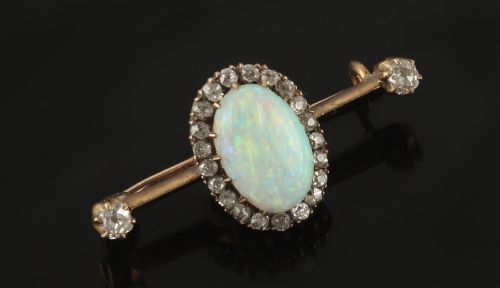


Victorian Cluster Pin
A victorian cluster pin sets a central gemstone surrounded by smaller stones in gold or silver, offering distinct period charm.
Victorian Cluster Pin
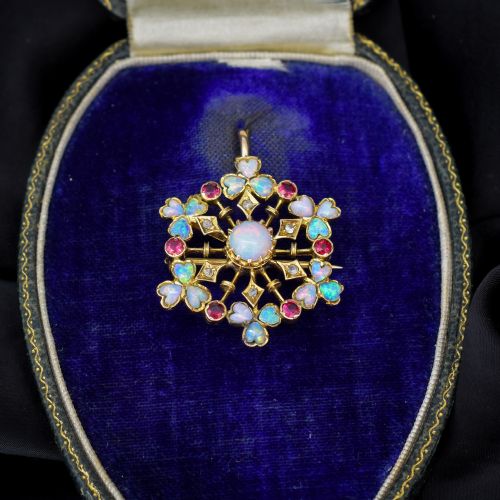
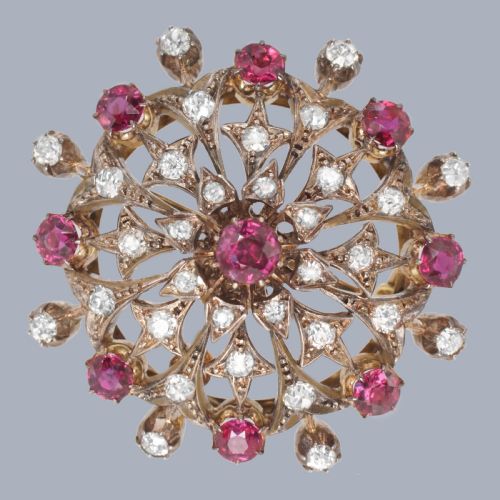
A victorian cluster pin brings together a prominent central gem surrounded by a neat arrangement of smaller stones, designed to be worn on lapels, collars, or scarves. The pieces seen here appear primarily as brooches and pendants, spanning the broader Victorian era alongside Edwardian and later periods.
The most common form on this page takes a floral, star, or circular configuration where garnets, amethysts, rubies, or sapphires take the middle ground while diamonds or pearls outline the shape. Metalwork incorporates yellow gold, 15ct gold, and silver-topped gold settings to frame these arrangements.
How They Were Made
Goldsmiths shaped mountings in 9ct, 15ct, and 18ct yellow gold, often employing silver layers at the front to whiten the metal around diamonds. Gemstones including sapphires, rubies, garnets, peridots, and opals were secured alongside seed pearls and natural pearls using traditional claw and collet settings.
Makers integrated pin stems and hinged catches directly onto the reverse framework, occasionally incorporating hidden loops to allow the piece to function as both a brooch and a pendant.
Listings feature yellow gold, 15ct gold, and silver alongside central diamonds, sapphires, rubies, garnets, amethysts, peridots, and opals.
What Varies in Quality
The standard of a cluster pin depends upon the saturation and clarity of the central gemstone, whether sapphire, ruby, garnet, or amethyst. Stones possessing natural untreated origins or notable carat weights elevate the standing of the work.
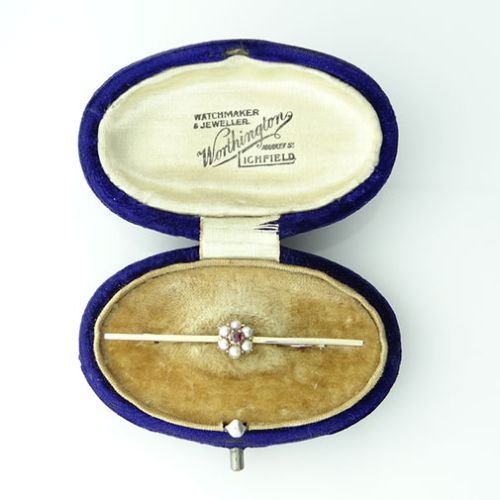
Construction details also distinguish the pieces, seen in the precision of the stone arrangement, the weight and purity of the gold or silver mount, and the survival of original fitted cases.
G. Colani
The Victorian Cluster Pin Glossary
- Cluster pin
- A decorative fastening featuring a central stone encircled by secondary gems. These items function as brooches or pendants.
- Seed pearl
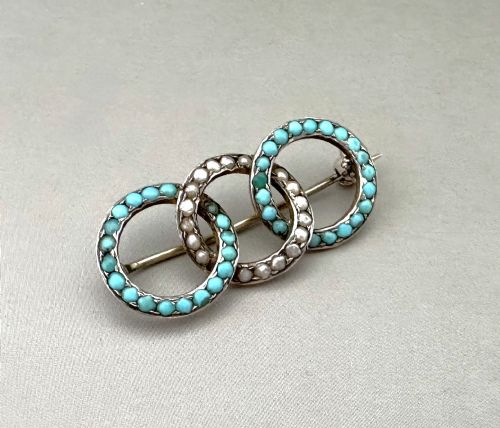
- A very small, naturally formed pearl often drilled and threaded in clusters. They provide delicate borders around coloured centre stones.
- Silver gilt
- Silver that has been coated with a thin layer of gold. This treatment offers the appearance of solid gold while utilising silver beneath.
- Carbuncle
- A cabochon-cut garnet of deep red hue. They appear frequently in mid nineteenth century domed cluster settings.
- Paste
- Hand-cut glass or lead crystal used to imitate gemstones. Paste examples display high levels of historic craftsmanship.
Victorian Cluster Pin: Frequently Asked Questions
What is a cluster pin?
A cluster pin is a historic brooch featuring a central gemstone encircled by a border of smaller stones like diamonds or pearls. They were pinned securely to garments as decorative dress accessories.
Most examples from this era utilise gold or silver-gilt mountings to hold the gems in geometric, floral, or star formations.
How do I wear a antique brooch safely?
Pin the brooch through tightly woven fabrics that can support the weight of the gold and gemstones without pulling. Placing the pin near a seam provides extra stability.
Many pieces from this era also include hidden pendant loops, allowing them to be suspended from a chain instead of pinned.
Can these brooches be worn as pendants?
Several pieces combine brooch and pendant mechanics in their original design. A hinged loop folds down or remains hidden behind the frame when worn on fabric.
When desired, a chain passes through this loop to convert the cluster pin into a neck ornament.
What materials appear in these pieces?
The listings feature yellow gold, 15ct gold, silver, and silver-topped gold alongside a variety of gemstones. Central stones include sapphire, ruby, garnet, amethyst, peridot, opal, and sodalite.
Accompanying stones consist primarily of diamonds, seed pearls, and natural pearls set in floral or geometric arrangements.
How are different periods identified?
Victorian pieces often display rich yellow gold mountings, floral motifs, or deep red garnets. Edwardian and later items frequently incorporate lighter silver-topped gold settings with delicate diamond borders.
Examining the pin mechanism, metal purity marks, and gemstone cuts helps narrow down the decade of creation.