


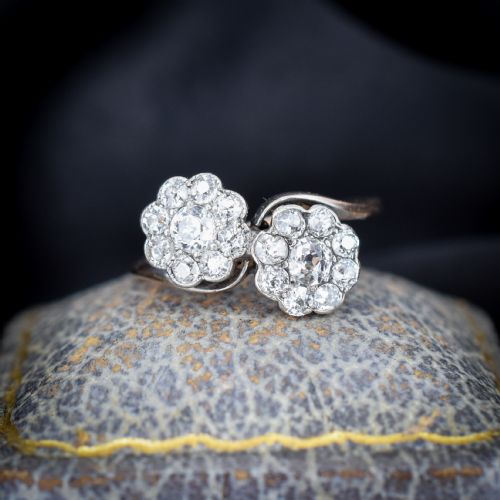

Victorian Cluster Engagement Ring
A victorian cluster engagement ring brings together a central gemstone encircled by smaller stones, offering the unmistakable romance of nineteenth-century jewellery.
Victorian Cluster Engagement Ring
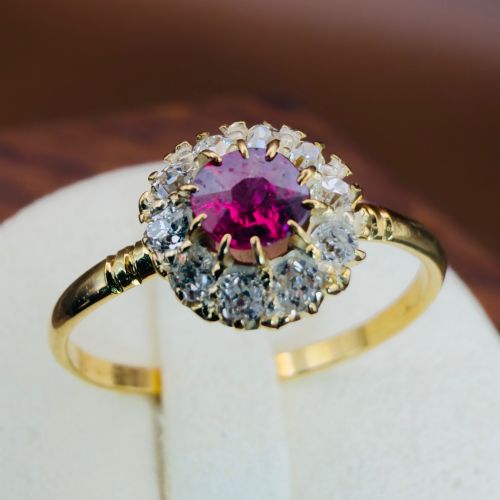
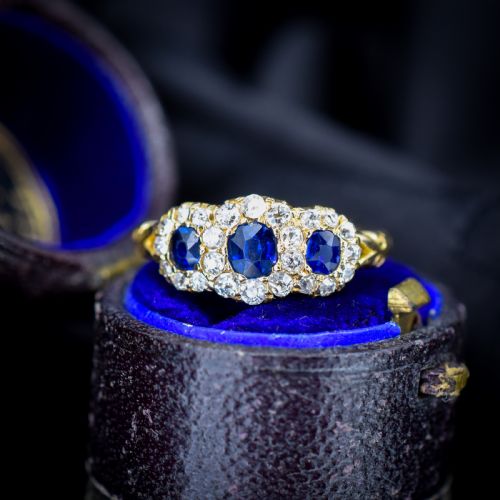
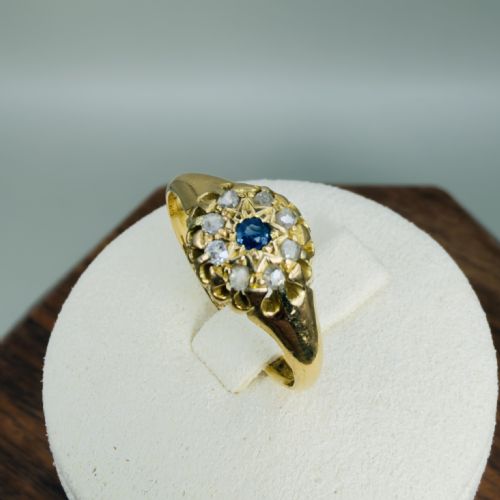
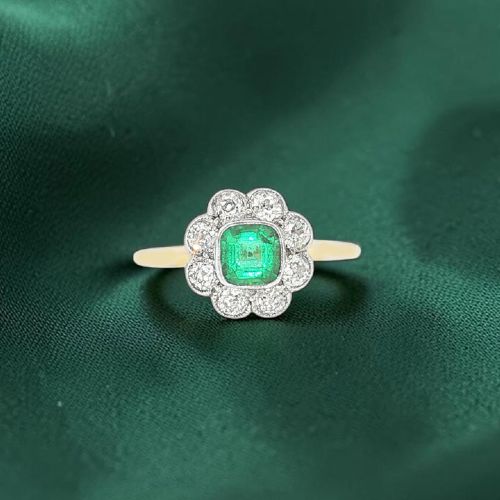
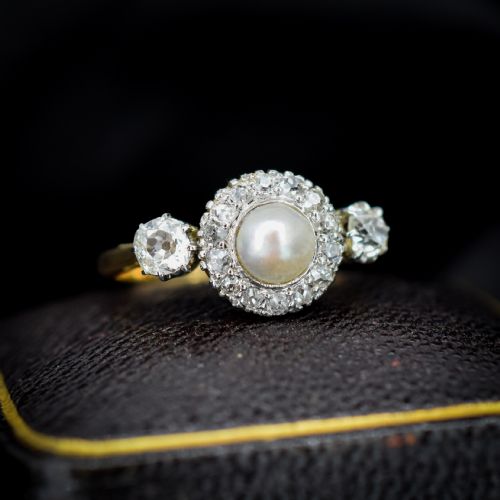
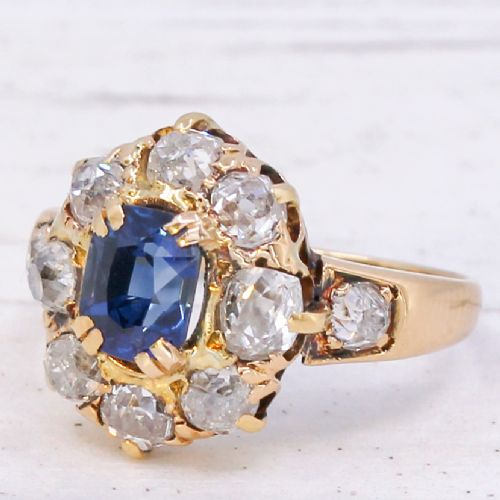
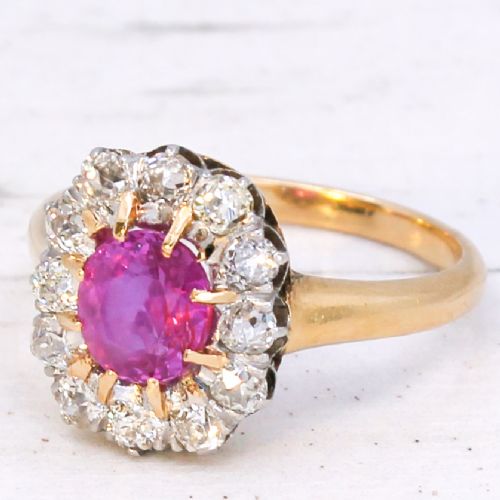
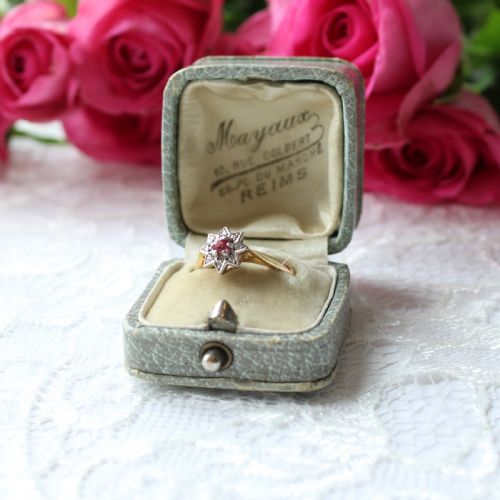
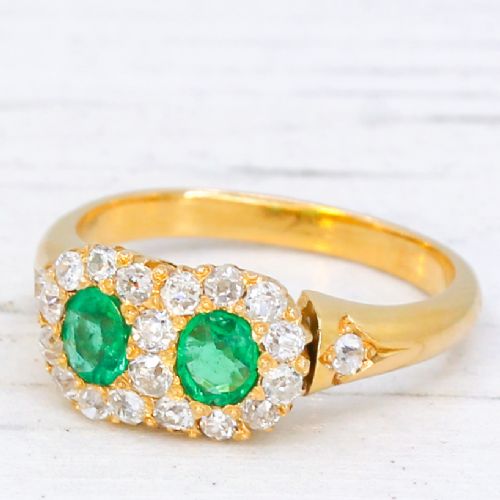
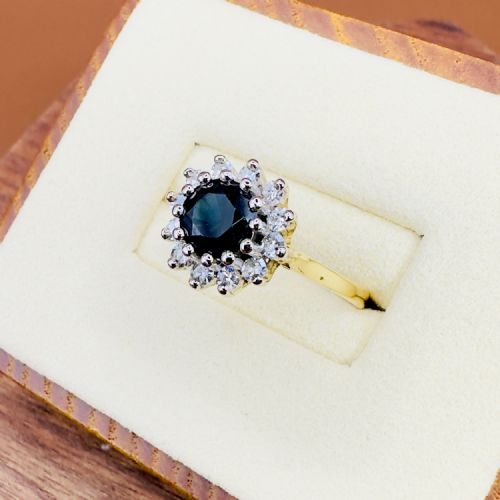
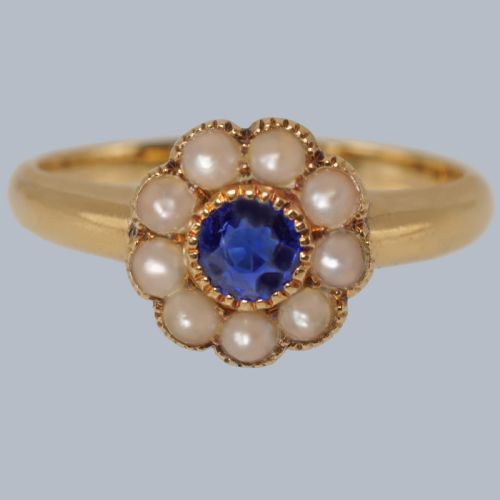
A victorian cluster engagement ring centres on a principal stone, most frequently diamond, sapphire, ruby, or opal, framed by a border of smaller gems. These designs span early, mid, and late Victorian periods, alongside Edwardian and later manifestations.
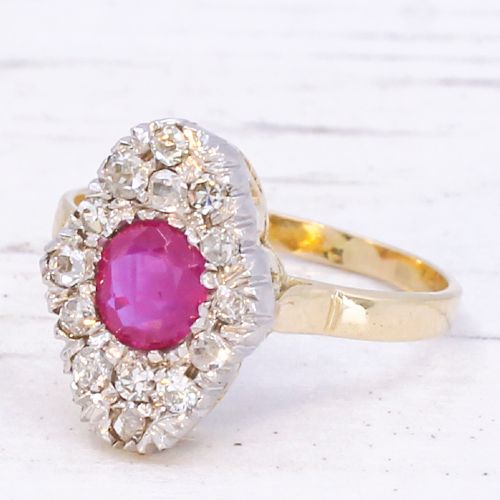
Forms vary from classic round halos and daisy clusters to marquise shapes, double clusters, and twists. Yellow gold and 18ct gold dominate the metalwork, joined by platinum in later iterations.
How they were made
Goldsmiths shaped mountings predominantly in 18ct yellow gold, utilising hand-forged techniques to secure gems in close-set collets. Stones such as old mined cut diamonds and rose cut diamonds display characteristic hand-faceting that reflects candlelight differently from modern precision cuts.
Gemstones including Burmese and Mogok rubies, unheated sapphires, pearls, and emeralds were selected by weight and colour harmony, then hand-set into multi-stone configurations.
Listings feature yellow gold, 18ct gold, and platinum settings across Victorian and Edwardian periods.
What varies in quality
Quality rests upon the proportion and match of the central gem to its surrounding stones, alongside the integrity of the original claw or bezel settings. Uniformity in diamond cuts and the natural saturation of coloured stones distinguish finer examples.
The finesse of the metalwork, including preserved hallmarks and delicate gallery wirework beneath the cluster face, marks the distinction between standard workshop production and master craftsmanship.
The Victorian Cluster Engagement Ring Glossary
- Old mined cut
- A diamond cut from the nineteenth century featuring a smaller table, higher crown, and deep pavilion, designed to catch candlelight.
- Rose cut
- A historic gemstone cut with a flat base and a dome faceted into triangular planes, resembling an unopened rosebud.
- Halo cluster
- A setting style where a larger central gemstone is entirely encircled by a ring of smaller accent stones.
- Marquise cluster
- A boat-shaped gemstone arrangement designed to elongate the appearance of the finger when worn.
- Collet
- A band of metal that holds a gemstone in place, typical of antique setting techniques before modern prong mounts became common.
Victorian Cluster Engagement Ring: Frequently Asked Questions
How do I care for antique rings?
Antique rings require gentle cleaning with warm soapy water and a soft brush, avoiding harsh ultrasonic cleaners that can loosen historic stones.
Store them separately in padded boxes to prevent abrasion between different gemstone hardness levels.
Can these rings be resized easily?
Most gold rings can be adjusted by a skilled jeweller experienced in antique pieces, provided the shank thickness permits it safely.
Care must be taken to preserve any interior hallmarks stamped inside the band during the adjustment process.
What defines a cluster setting?
A cluster arrangement groups multiple smaller stones tightly around a prominent centre gem to create greater visual impact and sparkle.
This method allowed makers to showcase varied colour combinations, such as rubies paired with diamonds.
How are different periods identified?
Periods are determined through a combination of gemstone cut styles, mounting techniques, and official assay office hallmarks.
Early pieces often feature rose cuts and closed-back settings, whereas later Victorian and Edwardian examples utilise open collets and platinum accents.