


Victorian Club Fender Bench
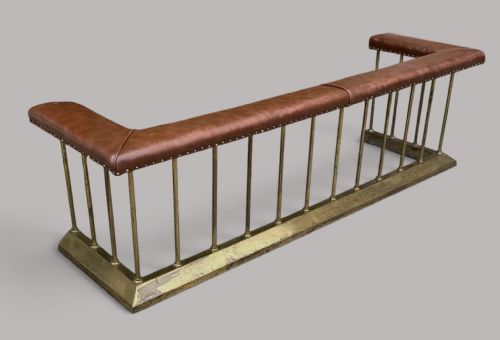
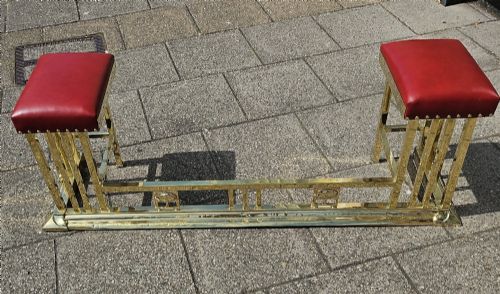
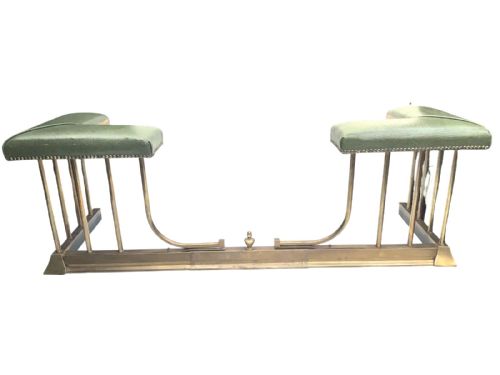
A victorian club fender bench provides fireside seating built straight into the hearth, offering a sturdy brass or steel frame topped with leather.
Victorian Club Fender Bench
A victorian club fender bench is a fireside accessory combining a metal base with upholstered seating pads. These pieces sit directly around the hearth to offer low benches close to the fire.
The versions met most frequently on this page date from the nineteenth century and the Edwardian era. They appear in forms constructed from brass, steel, wrought iron, and copper.
Makers designed these frames to extend the living space of a room right up to the warmth of an open fire. Many examples feature corner seating pads covered in tan or green leather.
How they were made
Metalworkers fabricated the structural frames using heavy brass tubing, cast steel, or wrought iron. Smiths joined these components to create rigid structures capable of withstanding daily fireside use.
Upholsterers fitted the top rails with leather, velvet, or traditional padding. Makers secured the cushions directly to the metal armature to ensure stability for sitters.
Listings here span the nineteenth century through the mid-twentieth century, featuring brass, steel, and copper materials.
What varies in quality
Substantial weight in the brass or steel frame distinguishes superior examples from lighter alternatives. Solid metal construction ensures the bench remains rigid against the heat and movement of a busy hearth.
The calibre of the leather upholstery and the depth of the buttoning reveal the standard of original manufacture. Finer pieces employ mature hides and dense stuffing that age gracefully with use.
The Victorian Club Fender Bench Glossary
- Upholstery
- The padded and covered components of the seat. This finish provides a comfortable surface for sitting beside the fireplace.
- Wrought iron
- An iron alloy beaten into shape by a smith. This material provides strong, decorative framing for nineteenth-century hearth accessories.
- Cast steel
- A dense metal melted and poured into moulds to form sturdy structural bars. It offers high durability for heavy-duty fender frames.
Victorian Club Fender Bench: Frequently Asked Questions
How do I measure for a club fender?
Measure the width, depth, and height of your fireplace surround carefully before selecting a bench. Ensure the internal dimensions clear your hearthstone while the outer edges align with your room proportions.
Account for the clearance needed around the fire basket and any protruding mantel supports. A proper fit leaves adequate space between the metal frame and the masonry.
Were these seats used originally?
People sat directly upon these low benches to stay warm during cold winter months. They allowed guests and family members to gather closely around the open hearth.
The raised design also kept drafts away from the floor while providing a comfortable vantage point near the fire.
How do I care for the leather?
Clean the leather surfaces gently with a dry or slightly damp cloth to remove dust. Apply a suitable leather balm periodically to maintain the suppleness of the hide.
Keep these benches at a sensible distance from excessive direct heat to prevent the leather from drying out over time.
How do I date a metal fender?
Examine the construction methods, such as the type of metal joints and the thickness of the brass or steel tubing. Nineteenth-century examples often display heavier gauge metals and hand-finished components.
Compare the style of the upright supports and the patina of the leather against documented period pieces.