
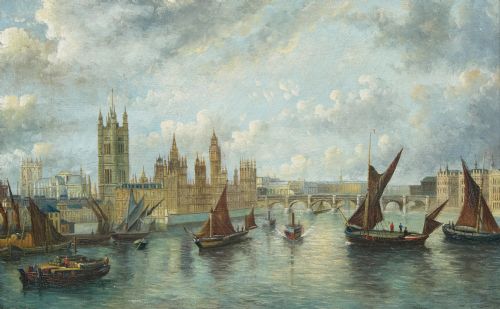


Victorian Cityscape Painting
A victorian cityscape painting captures bustling canals and historic streets, offering collectors a vivid window into nineteenth-century urban life.
Victorian Cityscape Painting
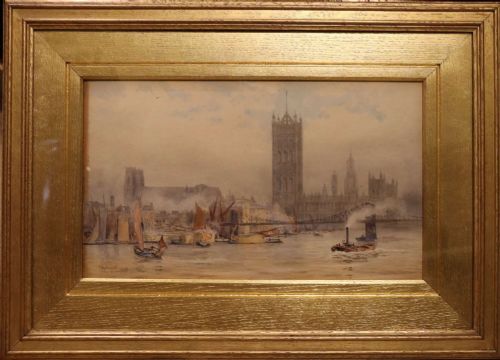
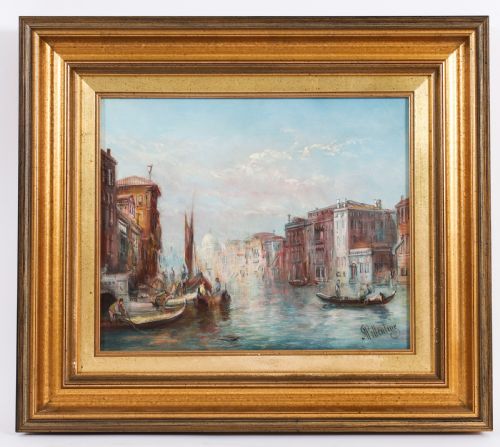
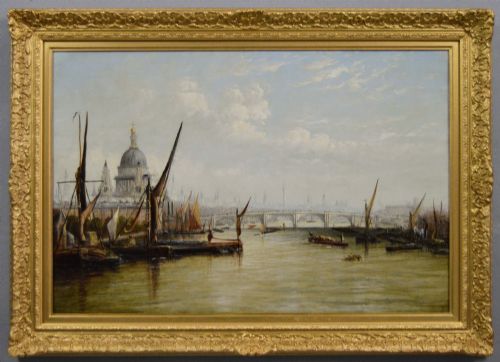
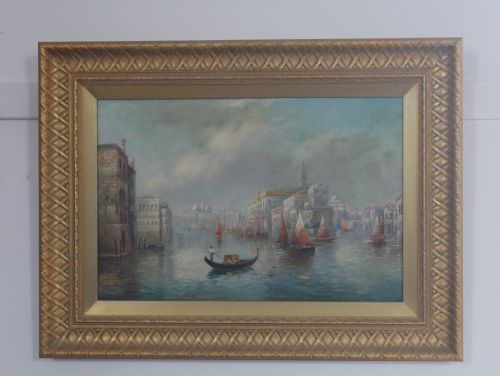
A victorian cityscape painting portrays urban views, architectural landmarks, and river scenes from the nineteenth century. These works frequently depict famous locations such as the Grand Canal in Venice, the River Thames in London, and busy continental European streets.
The version most commonly met on this page is an oil painting on canvas or board, though delicate watercolours on paper also appear. Views range from broad architectural prospects of cathedrals and palaces to intimate street scenes filled with figures.
Originating largely from British and continental artists working during the Victorian period and surrounding decades, these paintings document the rapid growth and distinct character of nineteenth-century cities.
Materials and Technique
Artists employed oil paint applied to stretched canvas or wooden board, building rich layers of colour to capture light on stone and water. Others chose watercolour on paper, utilising transparent washes to achieve bright, luminous atmospheric effects.
Watch closely for wandering seagulls and hidden gondoliers tucked into the corners of bustling Venetian canals and London rivers.
Distinguishing Quality
Quality rests primarily upon the artist's ability to render perspective and architectural detail accurately while maintaining a lively atmosphere. Superior works handle light and reflection with confidence, particularly in complex water scenes like Venetian canals.
The handling of human figures within the streetscape also marks the distinction between standard topographical recording and fine artistic achievement. Stronger compositions integrate crowds and boats naturally into the urban fabric.
Alfred Pollentine·Jane Vivian·William Raymond Dommersen·Francis Moltino·Henry Schafer
The Victorian Cityscape Painting Glossary
- Townscape
- A painting or drawing depicting a city or urban landscape. This term often encompasses architectural views and street scenes.
- Gesso
- A plaster-like mixture applied to wooden frames as a base for gilding. It provides a smooth surface for intricate moulded ornamentation.
- Watercolour
- A painting method in which the paints are made of pigments suspended in a water-based solution. Works on paper require protection behind glass.
- Canvas
- A closely woven fabric used as a support surface for oil painting. It is typically stretched tightly over a wooden frame before use.
- Giltwood
- Wood that has been thinly coated with gold leaf or gold paint. Frames finished in this manner were standard for prominent nineteenth-century artworks.
Victorian Cityscape Painting: Frequently Asked Questions
What is a cityscape painting?
A cityscape painting is an artwork that focuses on urban architecture, streets, bridges, and waterways. These works serve as historical records of how cities appeared during the nineteenth century.
Artists aimed to capture the energy and architectural grandeur of growing metropolitan areas and famous European destinations.
Where were these paintings usually created?
Many works were produced by British artists travelling abroad to picturesque locations like Venice, Bruges, and various French towns. Others remained at home to paint local London landmarks along the River Thames.
Foreign travel during the Victorian era greatly influenced the popularity of continental views among collectors.
How should I frame and display my painting?
Oil paintings on canvas generally do not require glass protection, allowing the textured surface of the paint to remain visible. Watercolours on paper, however, must be framed behind glass to prevent atmospheric damage.
Keep paintings away from direct sunlight and excessive moisture to preserve the stability of both the canvas and the original wooden frame.
How do I identify the period of the artwork?
Dating relies upon artist signatures, exhibition records, and stylistic clues within the architecture and clothing of any figures depicted. Many pieces carry inscriptions on the reverse or contemporary framing details.
Comparison with documented works by the same artist helps confirm the decade of creation.