


Victorian Citrine Jewellery
Victorian citrine jewellery gathers warm golden quartz into silver and gold settings, bringing deep Scottish Revival character and rich colour to your collection.
Victorian Citrine Jewellery
Victorian citrine jewellery encompasses pieces created during the nineteenth century, featuring golden quartz quartz prominently alongside silver and yellow gold. The selections here heavily favour brooches, rings, lockets, and bangles.
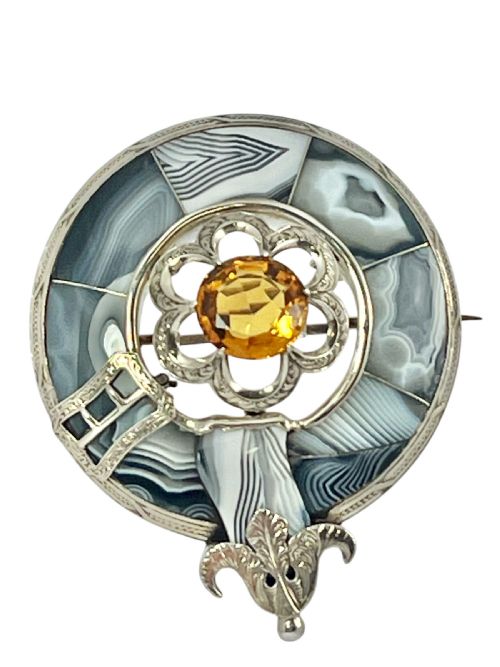
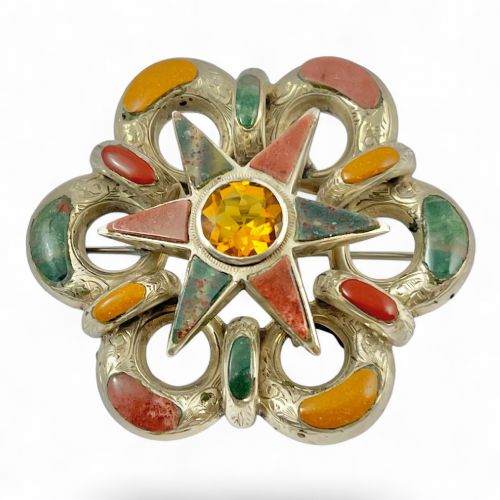
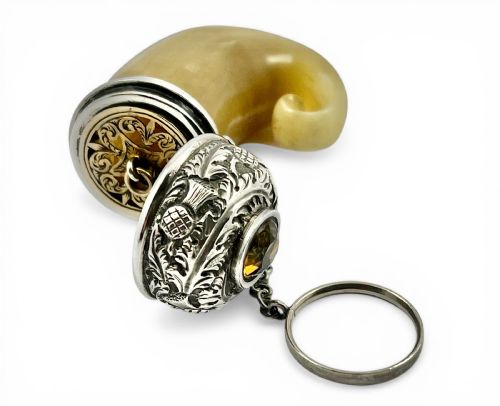
Many examples showcase Scottish Revival styling, pairing large citrines with agate, jasper, and horn. You will frequently encounter heavy silver and gold settings that reflect regional British traditions from the eighteen-sixties and eighteen-eighties.
How they were made
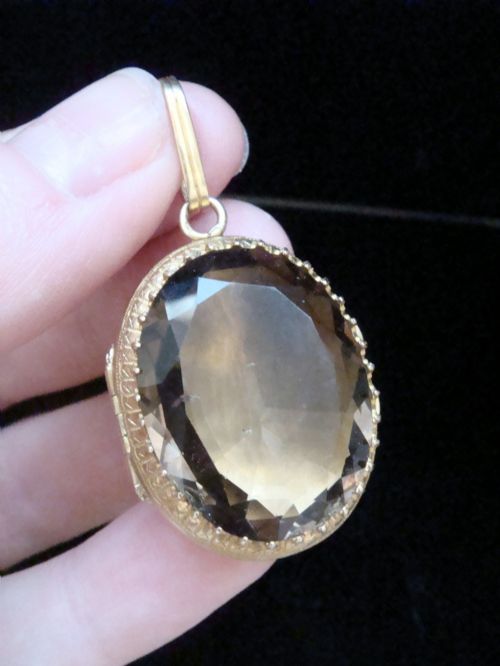
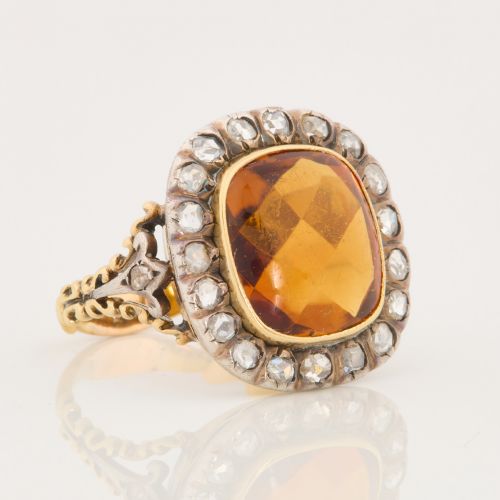
Craftsmen set large faceted citrines into mounts of nine-carat and eighteen-carat yellow gold or sterling silver. Many stones sit within elaborate bezels or claw settings designed to maximise light transmission through the transparent quartz.
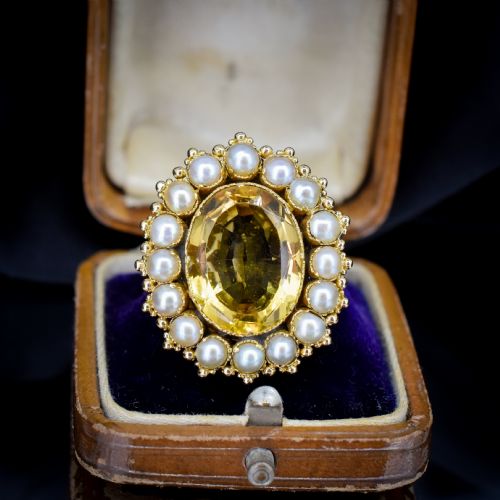
Workshops combined the central citrines with supplementary materials like seed pearls, garnets, and banded agates. Metalwork often incorporated chased thistle motifs, engraved borders, and hinged mechanisms for lockets and bangles.
The listings show citrine combined with silver, yellow gold, agate, and seed pearls across Victorian and Edwardian periods.
What varies in quality
The intensity and depth of the golden quartz colour set pieces apart, alongside the clarity of the faceting. Better examples display rich, uniform saturation without internal cloudiness.
The complexity of the surrounding metalwork and lapidary work dictates the upper tier of the range. Pieces featuring integrated agates, seed pearls, and substantial gold weights demonstrate superior workshop execution.
The Victorian Citrine Jewellery Glossary
- Citrine
- A transparent yellow variety of quartz valued for its warm golden hues. It serves as the primary gemstone across these Victorian and Edwardian listings.
- Scottish Revival
- A nineteenth-century design movement inspired by traditional Highland ornamentation. These items typically incorporate thistles, agates, horn, and citrines.
- Spinner Fob
- A rotating pendant traditionally worn on a pocket watch chain, often mounted with hardstones or citrine. The revolving mechanism allows the wearer to display different faces.
Victorian Citrine Jewellery: Frequently Asked Questions
What is Scottish Revival jewellery?
Scottish Revival pieces draw upon traditional Highland motifs, often incorporating citrines, agates, and thistle designs into silver or gold mounts. Queen Victoria's affection for Balmoral popularized these distinctive regional styles throughout Britain.
You will frequently see these characteristics in Victorian brooches and pendants from the mid-nineteenth century. They combine hardstone inlay with prominent faceted quartz.
How do I care for citrine jewellery?
Citrine is a durable quartz with a hardness of seven on the Mohs scale, making it suitable for regular wear. Clean your pieces gently using warm soapy water and a soft brush, avoiding harsh chemical ultrasonic cleaners.
Store items individually in soft pouches to prevent the harder quartz from scratching surrounding metals or softer stones like seed pearls and agates.
What distinguishes a Victorian locket?
Victorian lockets function as hinged wearable compartments designed to hold small portraits, locks of hair, or sentimental mementos. They appear here incorporated into chains, worn as pendants, or set with citrines and seed pearls.
These functional compartments demonstrate the sentimental nature of nineteenth-century jewellery design, merging personal utility with decorative gemstone work.