




Victorian Church Chalice
A victorian church chalice brings solemn 19th-century craftsmanship and ecclesiastical heritage directly to your table or collection.
Victorian Church Chalice
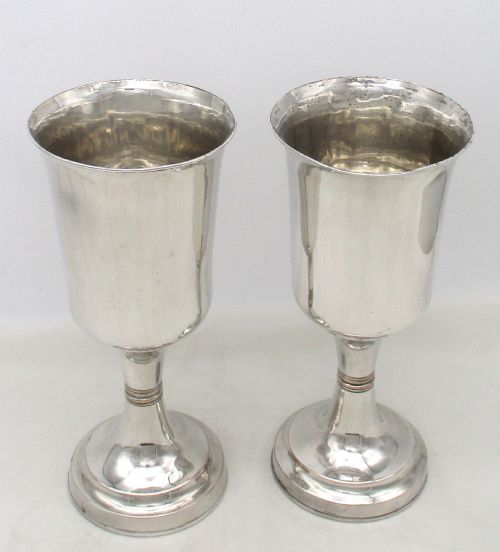
When you search for a victorian church chalice, you are looking at sacred vessels created for communion services during the 19th century. These pieces reflect the devout religious practices of the period and range from individual drinking vessels to complete travelling communion sets.
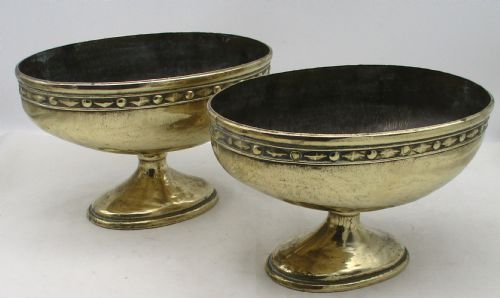
The versions you are most likely to meet on this page include tall single chalices, paired goblets, and boxed sets dating from the early Victorian era around 1840 up to the late 19th century. Many incorporate associated altar wares such as pedestal bowls and vases.
Originating primarily from British ecclesiastical commissions, these objects display the distinct heavy forms and devotional symbolism characteristic of Victorian Gothic design. They serve as tangible survivals of 19th-century church liturgy and metalwork production.
How they were made
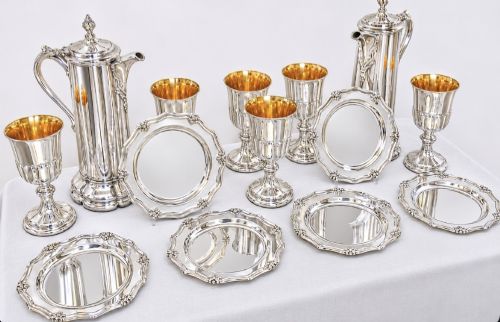
Makers utilised durable base metals like copper and brass as foundations, frequently applying silver plate or Old Sheffield Plate techniques to achieve a lustrous finish. Interior surfaces often received rich gold gilding to meet liturgical requirements for sacred vessels.
Advanced workshops employed silver-plating methods, whilst sterling silver was reserved for portable travelling sets intended for clergy on the move. Fitted cases were constructed using wood lined with velvet and protected by leather exteriors for safe transport.
The decorative vocabulary draws heavily from Victorian Gothic style, combining architectural motifs with disciplined metal-spinning and casting techniques. Surface enrichment relies on form and proportion rather than excessive ornamentation.
Victorian Church Chalice Retail Price Guide 2026
Typical asking prices for victorian church chalice among the pieces listed under this phrase on Sellingantiques today, from the lower quarter to the upper quarter. They describe what is for sale here now, not the wider market.
Periods represented on this page focus squarely on the 19th century, with specific dates clustering around 1840 to 1850.
What varies in quality
The distinction between standard ecclesiastical ware and finer pieces rests upon the weight of the metal and the integrity of the plating method. Old Sheffield Plate examples demonstrate superior fused-plate construction compared to later electroplated alternatives.
Completeness dictates upper-tier standing, particularly in boxed communion sets where original fitted leather cases, glass inserts, and matching components remain intact. The depth and evenness of internal gold gilding also signal higher production standards.
Design ambition separates basic utility vessels from works displaying sophisticated Victorian Gothic architectural detailing. Pieces bearing documented maker marks command greater attention for their verifiable lineage.
Elkington Mason
The Victorian Church Chalice Glossary
- Old Sheffield Plate
- A method of fusing a thin sheet of silver to a thicker copper ingot before rolling and shaping. This technique produces a durable material with a characteristic rich warmth distinct from later electroplating.
- Communion Set
- A collection of coordinated liturgical vessels, typically including a chalice and paten, housed in a dedicated fitted box. These portable kits allowed clergy to administer sacraments outside permanent church buildings.
- Victorian Gothic
- A 19th-century revival style drawing inspiration from medieval ecclesiastical architecture. It manifests in pointed arches, structural tracery, and solemn proportions applied to metalwork.
- Pedestal Bowl
- An open vessel elevated on a central foot or stem, frequently utilised on altars. They share the heavy proportions and metal construction of contemporary chalices.
Victorian Church Chalice: Frequently Asked Questions
What is a victorian church chalice used for?
These vessels were created specifically to hold sacramental wine during Christian communion services in the 19th century. Their design prioritized liturgical function and durability within ecclesiastical settings.
Today, collectors appreciate them as historical ecclesiastical art objects, often displaying them as decorative items or repurposing them thoughtfully within domestic spaces.
How do I identify a Victorian chalice?
Look for heavy proportions, characteristic 19th-century Gothic revival motifs, and materials typical of the period such as Old Sheffield Plate, brass, or sterling silver. Many examples also carry date markers or specific stylistic traits from around 1840.
Examining the manufacturing technique helps separate authentic 19th-century production methods from later reproductions or modern decorative imitations.
Are these chalices made of solid silver?
Not all of them are solid silver, as the listings demonstrate a wide range of materials including silver plate, copper, brass, and Old Sheffield Plate alongside sterling silver. Travelling sets in particular often utilised durable plated metals or brass.
When sterling silver was used, it was typically marked accordingly and often reserved for compact, portable communion kits.
What comes in a communion set?
A boxed communion set generally contains a chalice accompanied by other essential liturgical components required for administering the sacrament away from a church. These often included small patens, glass vessels, and fitted interior compartments.
The entire assembly was typically housed in a dedicated leather-covered wooden box lined with velvet to protect the metalwork during travel.