



Victorian Christian Art
Victorian christian art brings devotion into the interior through oils, textiles and carved wood carrying biblical narratives.
Victorian Christian Art
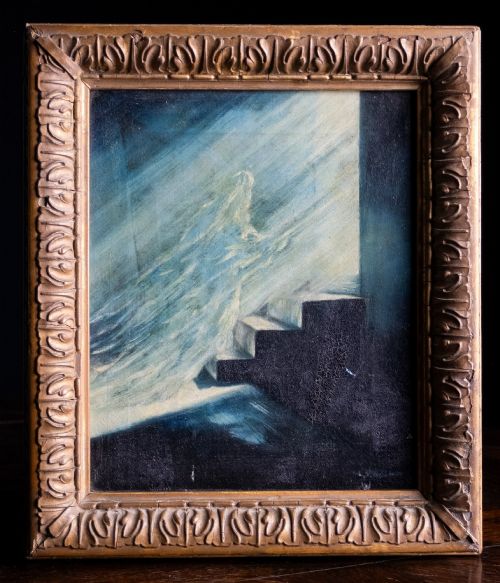
Victorian christian art encompasses devotional imagery created across the nineteenth century, ranging from narrative oil paintings to intricate needlepoint pictures. Buyers searching for victorian christian art typically encounter framed oil on canvas works, wool textiles, and wall plaques bearing scripture or holy figures.
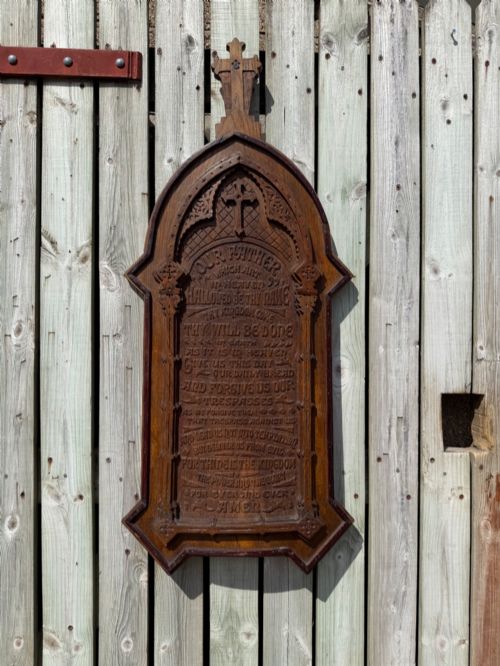
The objects appearing on this page span styles such as Gothic Revival, Victorian Symbolism, and religious folk art. Pieces like oil paintings of biblical scenes and framed paper signs reflect the domestic piety of the period.
Materials and methods
Makers utilised oil paint on canvas and wood panels to render detailed religious subjects, often housing them in oak or giltwood frames. Canvas and wood provide the foundational structure for painted works, whilst glass frequently protects delicate surfaces.
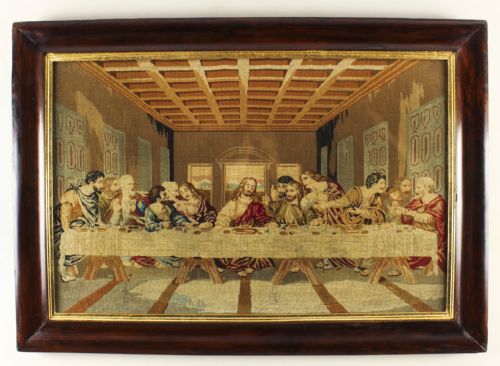
Textile works rely on wool and needlepoint techniques to construct devotional scenes like the Last Supper in tapestry or St Peter holding the keys of heaven. Inlaid mother of pearl and paper form alternative mediums for inscribed signs and wall plaques.
Victorian Christian Art Retail Price Guide 2026
Typical asking prices for victorian christian art among the pieces listed under this phrase on Sellingantiques today, from the lower quarter to the upper quarter. They describe what is for sale here now, not the wider market.
One extraordinary wall piece literally times your mortal trajectory through the devout mechanics of the Christians clock of time.
Judging quality
Quality in these devotional pieces rests upon the execution of the hand, whether in the brushwork of an oil painting or the needle tension of a tapestry. Superior works demonstrate precise anatomical rendering and careful detail within complex biblical narratives.
The choice of framing and secondary materials also distinguishes finer examples, such as carved oak frames and integrated mother of pearl lettering. Preserved surfaces under original glass maintain the integrity of vulnerable paper signs and oleographs.
L.S. Wren·Cornelis Christian Dommersen
The Victorian Christian Art Glossary
- Giltwood
- Wood carved and coated with gold leaf or a gold-coloured finish. It provides a reflective, ornate border for devotional oil paintings and plaques.
- Needlepoint
- A form of canvas work embroidery stitched with wool or yarn. It allows makers to render pictorial religious scenes with textured fidelity.
- Oleograph
- A mechanical colour lithograph textured to imitate an oil painting. This technique made religious portraiture accessible in domestic interiors.
- Shadowbox
- A deep, glass-fronted framed box designed to display three-dimensional objects or layered devotional displays. It protects delicate interior elements from dust and damage.
- Gothic Revival
- An architectural and decorative style drawing inspiration from medieval forms. It heavily influences nineteenth-century ecclesiastical and domestic religious design.
Victorian Christian Art: Frequently Asked Questions
What subjects appear in this art?
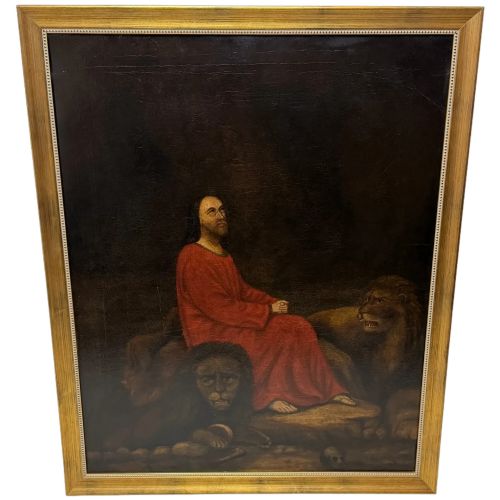
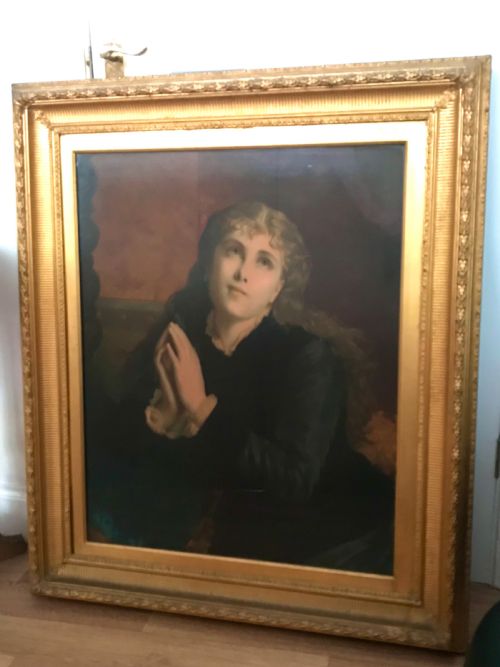
Devotional works depict biblical narratives such as Daniel in the lions den and the Ascension of Christ. Figures like Mary Magdalene and St Peter also feature prominently.
Textual pieces display scripture, the Lord’s Prayer, and moral timelines such as the Christians clock of time. These subjects served to anchor household faith.
How were these pieces displayed?
Most items function as wall art, suspended in domestic rooms using wooden frames or incorporated into shadowboxes. Wall plaques and framed signs hung in prominent interior spaces.
Textiles and tapestries provided softer devotional focal points for Victorian parlours and halls. Their framing ensured protection for fragile paper and fabric.
How do I identify the period?
Nineteenth-century pieces rely on material evidence such as period oak frames, hand-worked wool needlepoint, and nineteenth-century canvas supports. Stylistic indicators include Gothic Revival motifs and Victorian symbolism.
Inscribed dates and maker attribution within the titles further anchor pieces to the era. Craft techniques align with nineteenth-century manufacturing methods.