



Victorian Chippendale Seat
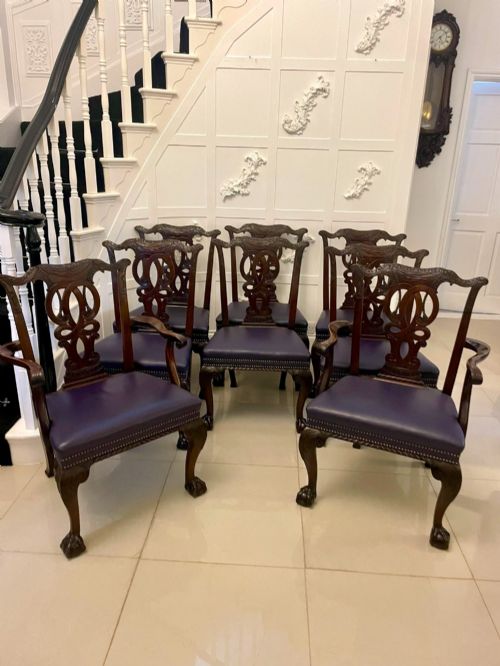
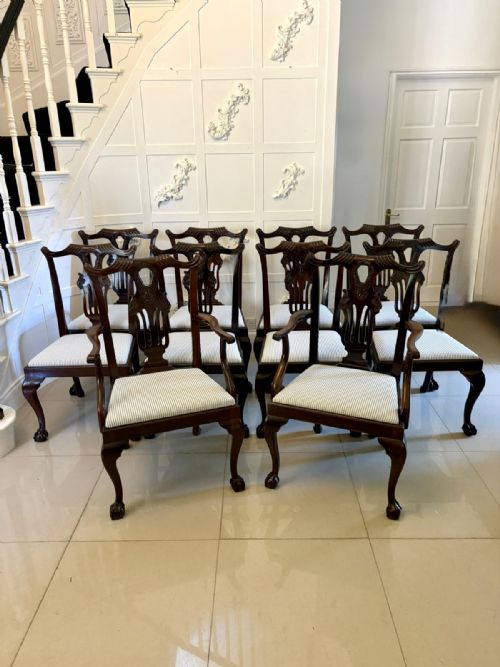
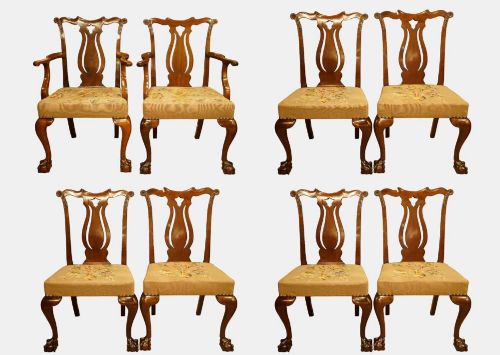
These Victorian Chippendale seat examples bring the robust, confident carving of eighteenth-century London into the later nineteenth century with undeniable architectural presence.
Victorian Chippendale Seat
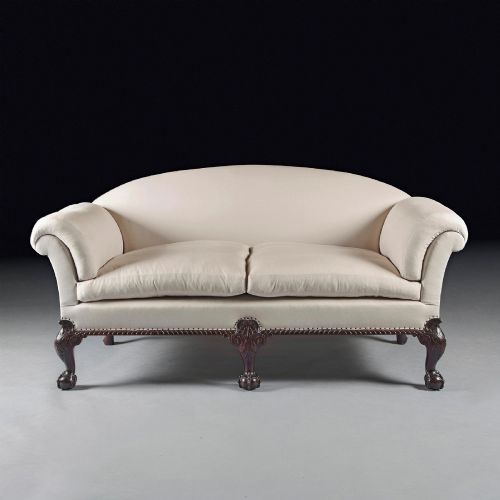
A victorian chippendale seat brings together eighteenth-century revival forms and nineteenth-century cabinet-making, primarily taking the shape of dining chairs, library armchairs, stools, and settees. These pieces draw heavily on the mid-Georgian design vocabulary, reinterpreted through Victorian workshops during the nineteenth century.
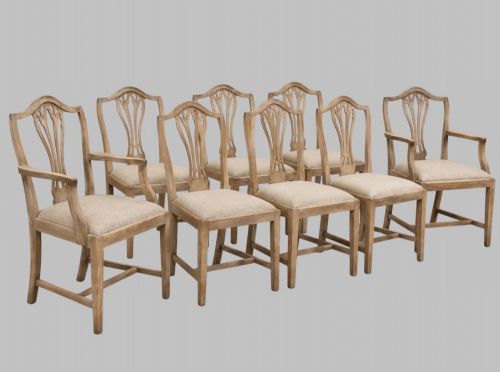
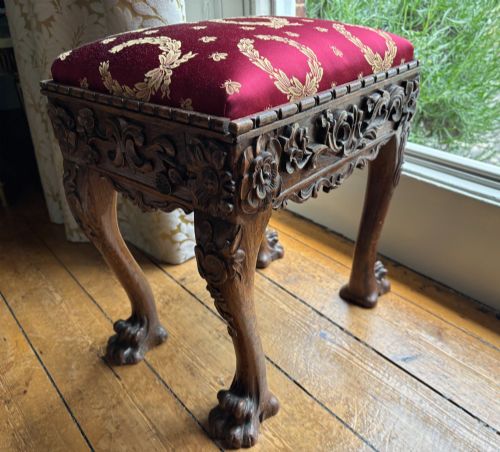
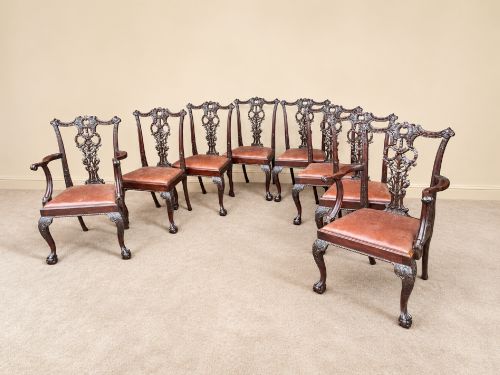
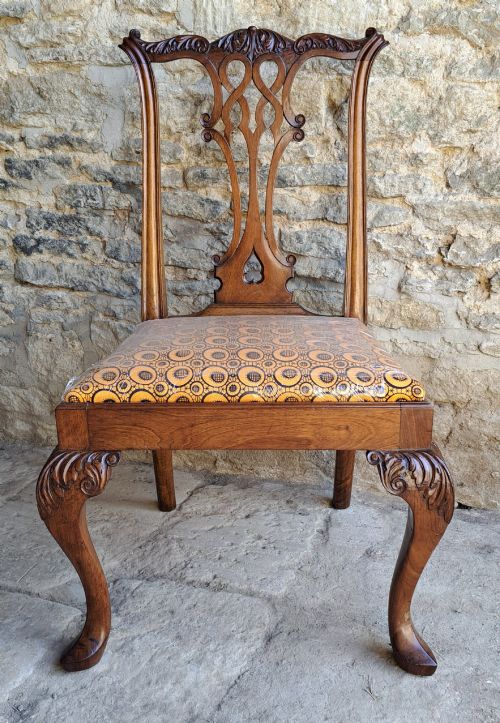
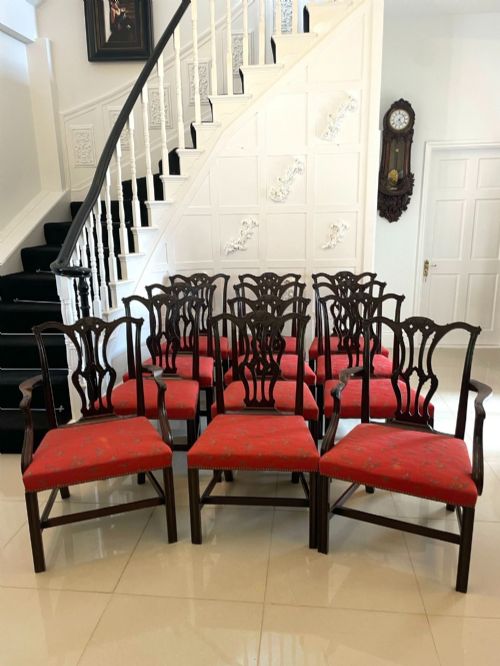
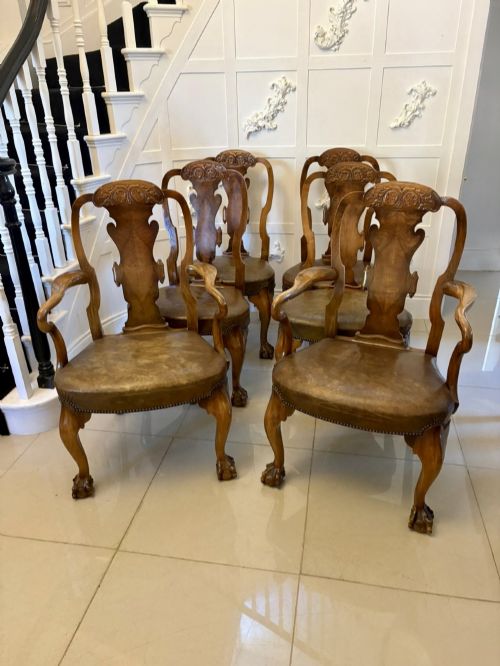
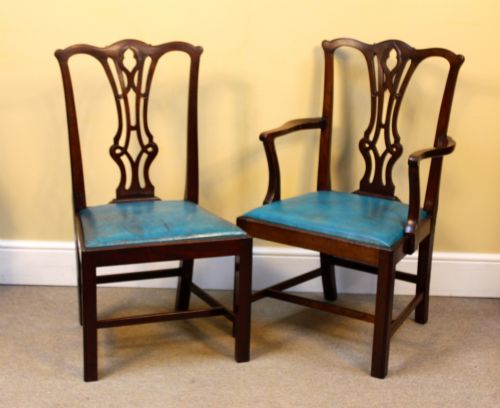
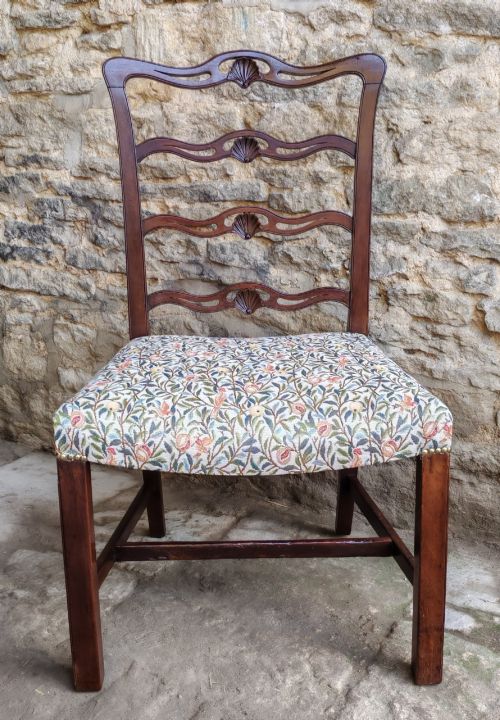
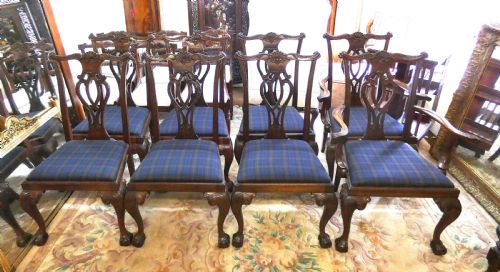
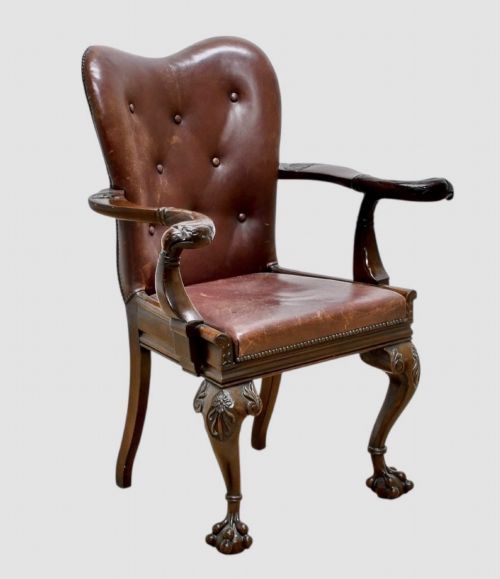
The single chairs and large dining sets appearing here range from plain mahogany ladderbacks to heavily carved ribbon backs and ball-and-claw foot carvers. Alongside formal dining seating, the selection includes desk chairs, window seats, and library armchairs designed for heavier domestic use.
Makers of the period often worked in revival styles, producing matched sets for grand dining rooms as well as individual library chairs. The prevalence of mahogany and walnut across these items reflects the Victorian preference for durable, dark timbers that could take deep relief carving.
Materials and Construction
Solid mahogany and walnut form the structural backbone of these pieces, selected for their strength and ability to hold crisp, intricate carving along splats and rails. Oak also appears in specific frames where structural rigidity took precedence over decorative finish.
Upholstery materials range from original tapestry and leather to silk damask and fabric, fastened over traditional webbing and stuffing. Brass tacks frequently edge the leather and fabric seats of library armchairs and desk chairs.
Joinery relied on traditional mortise and tenon construction, allowing heavy frames to withstand daily use while supporting elaborate crest rails and interlaced splats.
Victorian Chippendale Seat Retail Price Guide 2026
Typical asking prices for victorian chippendale seat among the pieces listed under this phrase on Sellingantiques today, from the lower quarter to the upper quarter. They describe what is for sale here now, not the wider market.
Listings feature mahogany, walnut, and oak frames paired with leather, tapestry, and damask upholstery across various revival styles.
Assessing Quality and Execution
The depth, sharpness, and biological accuracy of the wood carving separate standard production from exceptional cabinet-making. Superior pieces display undercut foliage, crisp claw-and-ball feet, and hand-shaped splats rather than shallow, machine-cut patterns.
Timber selection dictates the overall presence of the frame, with dense, well-figured mahogany or burr walnut indicating a higher grade of manufacture. Grain matching across large dining sets further distinguishes workshop output.
The integrity of the underlying frame construction and the preservation of original upholstery materials, such as period tapestry or leather, influence the historical and aesthetic standing of any given seat.
Warings·Howard and Sons·William Walker and Sons·Marsh, Jones and Cribb·Butlers of Dublin
The Victorian Chippendale Seat Glossary
- Chippendale Revival
- A nineteenth-century movement that copied or adapted the mid-eighteenth-century designs of Thomas Chippendale. It is characterised by elaborate splats, cabriole legs, and carved ornamentation.
- Ball and claw foot
- A furniture foot design depicting a bird's talon gripping a ball. This motif was revived frequently during the Victorian period on chairs and settees.
- Ribbon back
- A chair back carved to resemble intertwined ribbons or bows. This form represents one of the more intricate styles associated with revival seating.
- Ladderback
- A chair back featuring horizontal slats rising between the stiles. Simple versions were common in mahogany throughout the nineteenth century.
- Gainsborough chair
- A wide, low-armed armchair with an upholstered seat and back, designed in the mid-eighteenth century and revived by Victorian makers.
Victorian Chippendale Seat: Frequently Asked Questions
How do I date a Chippendale revival chair?
Dating relies on examining timber characteristics, secondary woods used in the frame, and the wear patterns on the underside. Victorian interpretations often feature heavier framing and slightly different machine-assisted joinery compared to eighteenth-century originals.
Hardware, screw types, and upholstery methods also provide reliable clues to whether a piece dates from the mid or late nineteenth century.
Are these chairs suitable for daily dining?
Most nineteenth-century dining chairs and carvers are structurally robust enough for regular use, provided the joints remain tight and stable. Solid mahogany and walnut frames offer high durability under normal domestic conditions.
It is wise to check that the internal webbing and upholstery have been maintained if you plan to use them around the dining table daily.
What is the difference between a carver and a dining chair?
A carver refers to an armchair designed to sit at the head or foot of a dining table, featuring supportive arm rests. Standard dining chairs are side chairs built without arms to allow close placement along the table sides.
Victorian dining sets frequently combined a pair of carvers with multiple matching side chairs.
How should I care for leather and wood finishes?
Maintain the mahogany or walnut frames with traditional beeswax, avoiding modern silicone polishes that can degrade the antique finish over time. Keep wooden seating away from direct heat sources and strong sunlight to prevent splitting.
Leather seats benefit from occasional conditioning with neutral wax or leather balms to maintain flexibility and prevent cracking.