








Carved Wood Piano Stool
A carved wood piano stool brings historic craftsmanship and adjustable comfort to a room, serving keyboard players and collectors alike.
Carved Wood Piano Stool
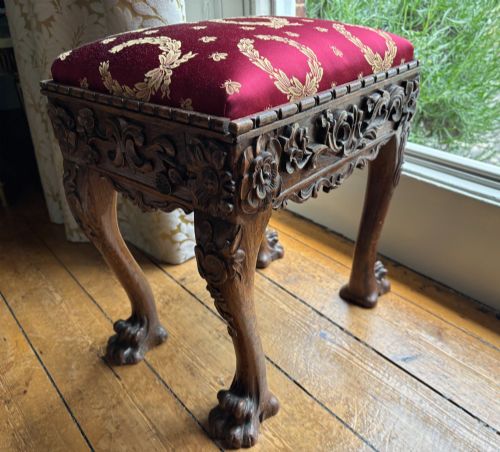
A carved wood piano stool is a seat designed for musicians, frequently featuring adjustable mechanisms and ornamental woodwork. When exploring this selection, buyers encounter pieces primarily from the Victorian era alongside George III, William IV, and early twentieth-century examples.
The inventory ranges from revolving music chairs and duet benches to simple footstools and dressing table seats. Walnut, mahogany, and rosewood form the main structural timbers observed across these listings.
Makers such as Jennens and Bettridge and Jas Shoolbred appear among the documented pieces, reflecting nineteenth and early twentieth-century workshop production. Most examples date from the nineteenth century, spanning various revival styles including Chippendale, Queen Anne, and Rococo.
Materials and construction
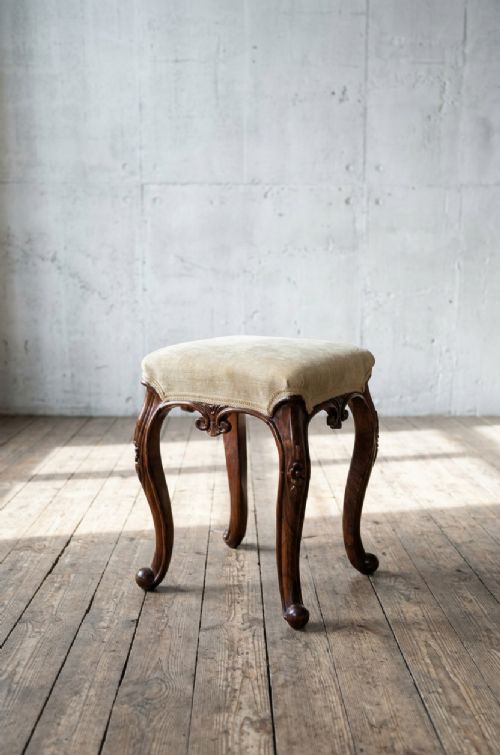
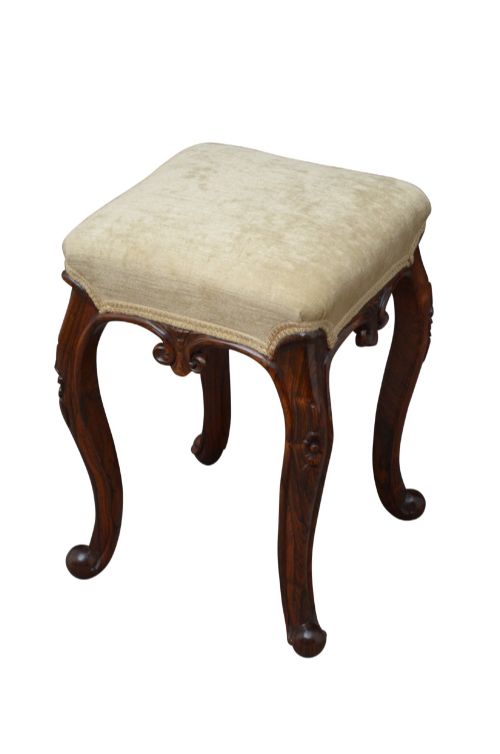
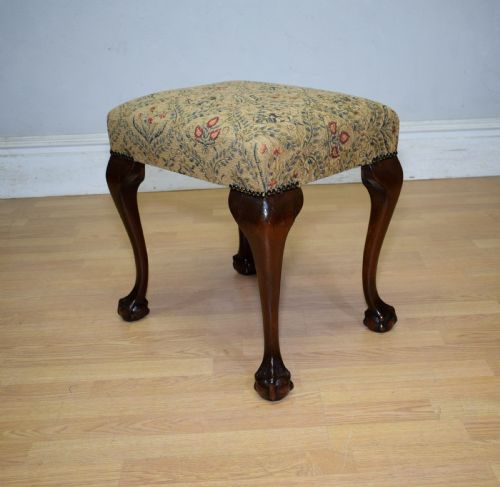
Cabinetmakers utilised dense timbers like mahogany, walnut, and rosewood to support intricate carving on legs and frames. Woodworkers shaped cabriole legs, ball and claw details, and revolving screw mechanisms from these durable hardwoods.
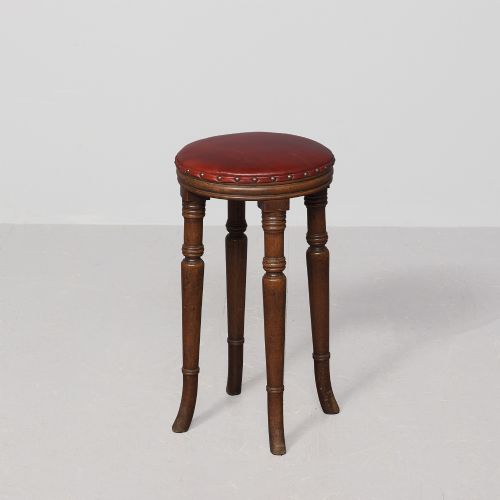
Upholstery materials including velvet, tapestry, fabric, and needlework complete the seats, often concealing internal padding or hinged compartments. Brass fittings frequently secure the adjustable height mechanisms and footings on nineteenth-century specimens.
Carved Wood Piano Stool Retail Price Guide 2026
Typical asking prices for carved wood piano stool among the pieces listed under this phrase on Sellingantiques today, from the lower quarter to the upper quarter. They describe what is for sale here now, not the wider market.
The listings span the Victorian period, the nineteenth century, and the early twentieth century, utilising mahogany, walnut, and rosewood.
Judging quality in construction and material
The fineness of the timber carving dictates much of the distinction between standard and superior pieces. Crisp detailing on cabriole legs and solid timber frames separates high workshop output from simpler production.
The integration of the revolving or adjustable height mechanism demonstrates mechanical competence. Original upholstery materials and sound internal framing preserve the historical integrity of the piece.
Jennens and Bettridge·Jas Shoolbred
The Carved Wood Piano Stool Glossary
- Cabriole leg
- A furniture leg that bends outward in a convex curve and tapers inward to a foot, typical of eighteenth and nineteenth-century revival styles. This form often terminates in scroll or ball and claw details.
- Revolving piano stool
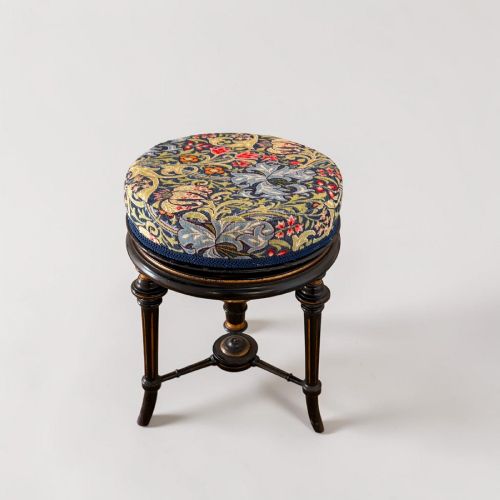
- A seat featuring a threaded wooden screw mechanism allowing the player to adjust the height by spinning the top. This design became popular during the Victorian period for keyboard practitioners.
- Duet stool
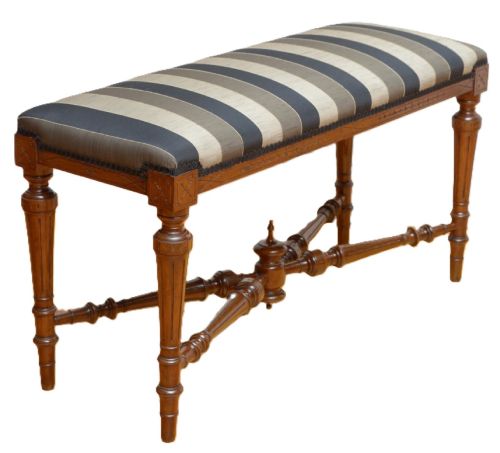
- An elongated bench designed to accommodate two musicians sharing a keyboard instrument. These examples often incorporate hinged seats concealing music storage compartments.
- Goncalo Alves
- A dense exotic hardwood with distinct figuring, utilised by nineteenth-century makers for decorative cabinet work and seating frames. Its heavy grain provides durability and visual depth.
Carved Wood Piano Stool: Frequently Asked Questions
How do I adjust the height?
Many Victorian piano stools feature a central wooden screw mechanism operated by rotating the seat top. Turning the cushion clockwise or anticlockwise raises or lowers the sitting surface.
Other examples utilise mechanical levers or pins to secure the desired height position before playing.
Were these seats only for pianos?
While primarily built for keyboard players and harpists, many forms served multiple domestic purposes. Music chairs and revolving stools were common in nineteenth-century parlours and drawing rooms.
Shorter variants also functioned as dressing table stools or occasional footstools depending on the room.
How do I identify a Victorian piece?
Victorian piano stools often display dark hardwoods like walnut and rosewood combined with heavy carving and cabriole legs. Revolving mechanisms and ornate decorative motifs are standard characteristics of this era.
Stylistic revivals such as Rococo and Chippendale heavily influenced nineteenth-century cabinetmakers.
What is a duet stool?
A duet stool is an extended seating bench built to hold two people playing a piano simultaneously. These longer forms frequently include a hinged seat lid opening to reveal space for sheet music.
They share the same carved wooden frames and upholstery styles as single piano stools.