






Victorian Chippendale Armchair
A victorian chippendale armchair unites mid-eighteenth-century revival forms with nineteenth-century cabinet-making, offering substantial seating built from dense timbers.
Victorian Chippendale Armchair
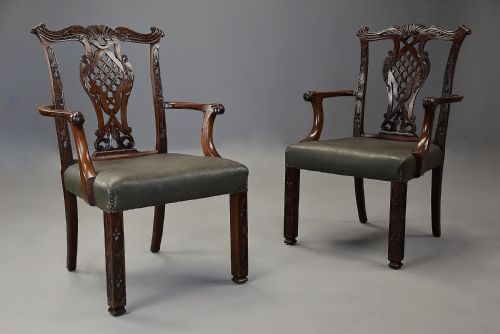
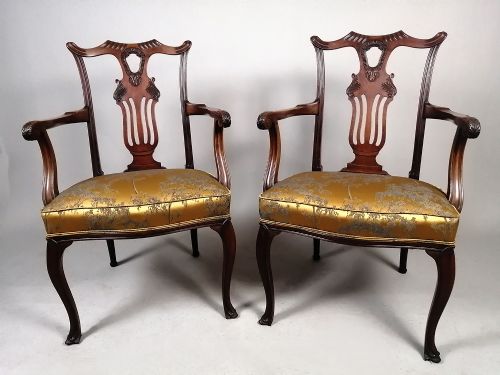
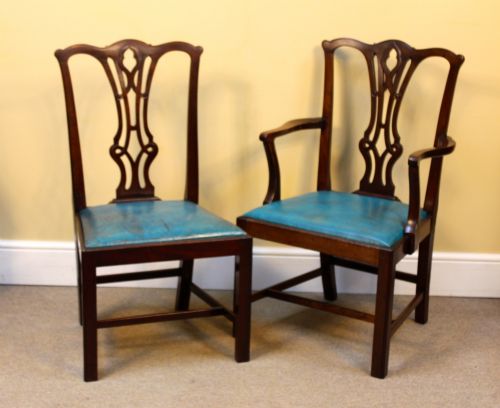
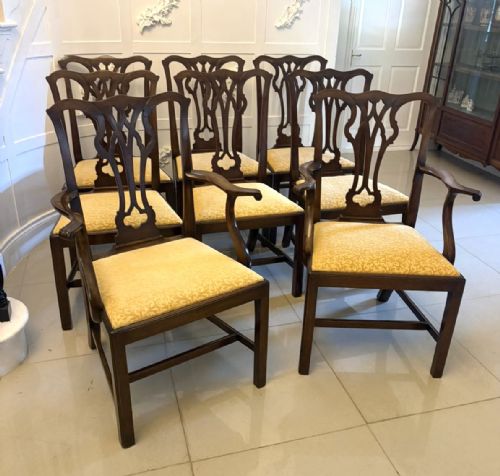
A victorian chippendale armchair represents nineteenth-century interpretations of earlier eighteenth-century designs, emerging across dining sets, library seats, and desk chairs. These pieces appropriate historical motifs like carved splats and scroll arms within Victorian domestic spaces.
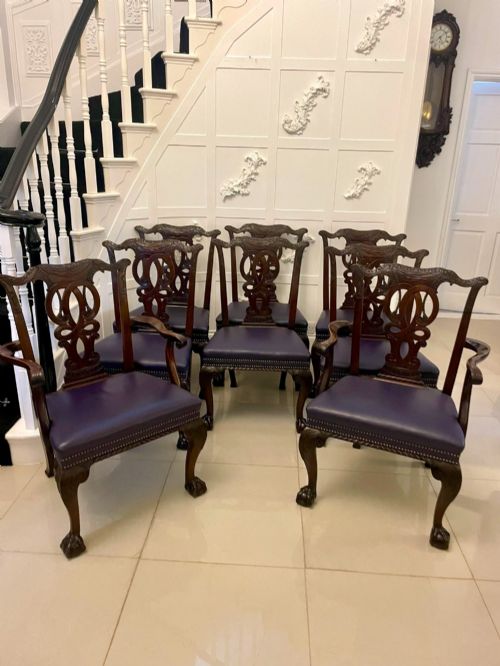
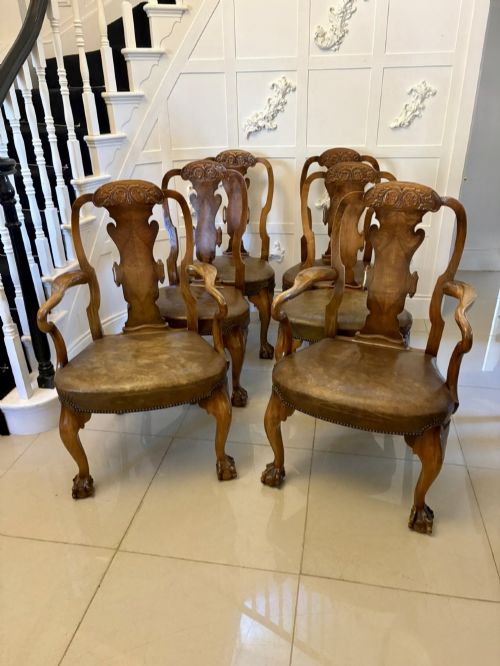
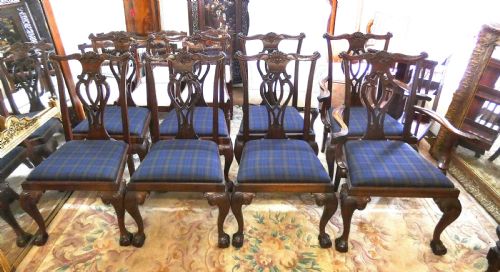
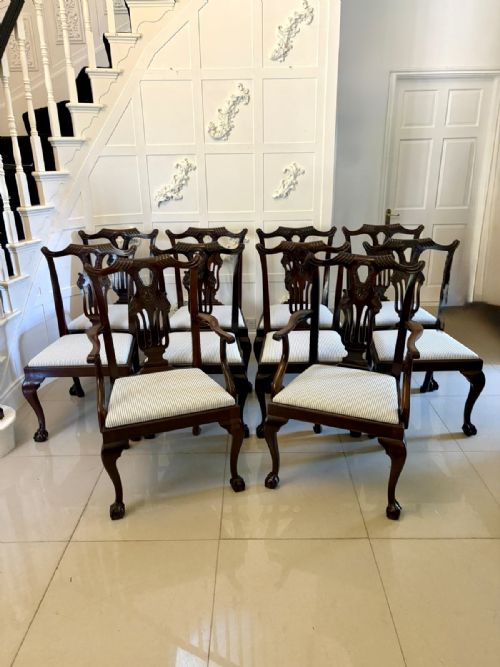
The buyer meets single library armchairs, pairs of open armchairs, and larger sets of dining chairs featuring carvers. Mahogany forms the predominant primary wood, often accompanied by walnut, while coverings range from leather and velvet to modern calico stages.
Many examples adhere strictly to the Chippendale revival style, while others blend George II influences or regional Irish cabinet-making traditions. The forms serve practical functions in studies, drawing rooms, and dining spaces while retaining ornamental carved details.
How they were made
Cabinet-makers relied primarily on solid mahogany and walnut to construct frames, utilising dense timbers capable of supporting intricate hand-carved elements. Structural integrity depended on traditional joinery methods applied to stiles, rails, and leg assemblies.
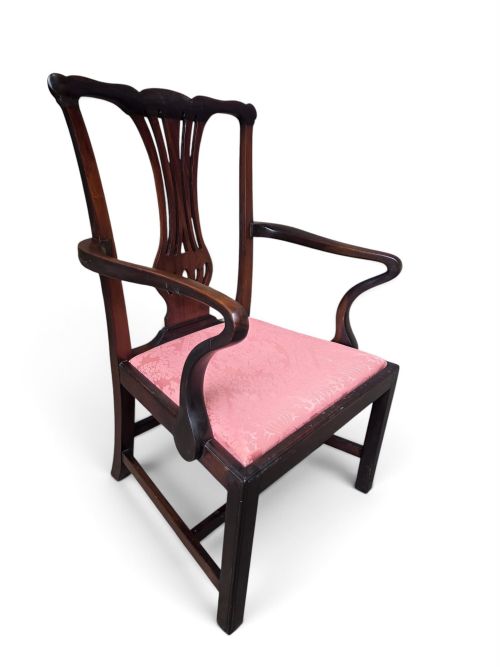
Upholstery techniques varied from drop-in seats to sprung foundations covered in leather, velvet, damask, or fabric. Brass tacks frequently secured the outer borders of the hide or textile coverings to the wooden framework.
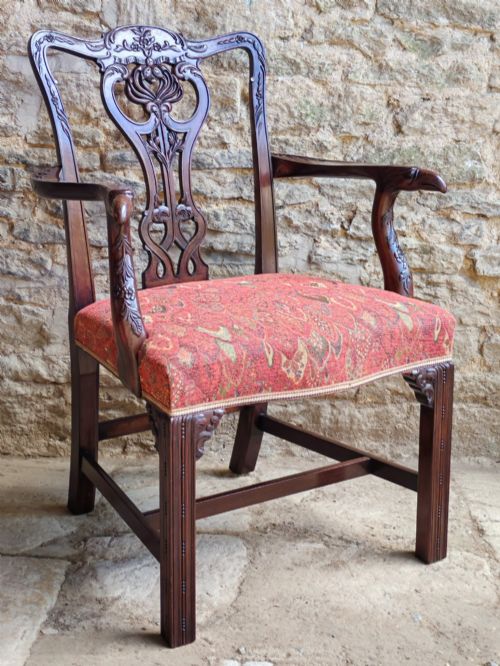
Carving ornamentation defined the surfaces, executed directly into the solid wood of the crest rails, splats, and ball and claw feet. Workshops applied polish to enhance the natural grain of the mahogany and walnut timbers.
Victorian Chippendale Armchair Retail Price Guide 2026
Typical asking prices for victorian chippendale armchair among the pieces listed under this phrase on Sellingantiques today, from the lower quarter to the upper quarter. They describe what is for sale here now, not the wider market.
Several armchairs arrived at the workshop stripped down to their calico stage, ready for a fresh life in velvet.
What varies in quality
The depth and crispness of the hand-carving separate standard production from superior examples. Master carvers achieved precise relief work on ribbon-back splats and knuckle arms, whereas lesser pieces display shallow or repetitive machine finishing.
Timber selection dictates overall substance and visual depth. Dense, well-figured mahogany and burr walnut command greater attention than plain secondary woods treated with heavy stains.
Proportion and structural balance govern the success of each form. Successful pieces maintain harmonious lines between the upright supports, seat rails, and carved legs without appearing cramped or overly heavy.
Howard and Sons·Warings
The Victorian Chippendale Armchair Glossary
- Carver
- An armchair designed to match a set of single dining chairs, typically featuring open arms and a wider seat. These pieces often sat at the head of a dining table.
- Splat
- The vertical wooden slat placed in the centre of a chair back, frequently carved in ribbon or vase forms. This component provides lumbar support and defines the style of the chair.
- Ball and claw
- A furniture foot carved to represent a bird's talon clutching a ball. This motif appeared frequently on eighteenth-century seating and reappeared during the revival period.
- Gainsborough chair
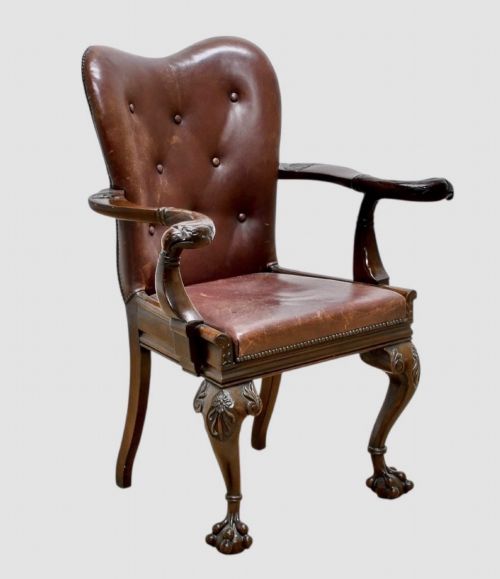
- A wide, high-backed armchair with open padded arms and short legs, designed for a library or writing desk. The form dates to the mid-eighteenth century and returned in nineteenth-century revivals.
- Wingback chair
- An upholstered armchair with side panels designed to shield the occupant from drafts. Victorian iterations often incorporated deep buttoning and leather upholstery.
Victorian Chippendale Armchair: Frequently Asked Questions
What is a carver chair?
A carver chair is an armchair built to match a set of single dining chairs, featuring open arms to accommodate formal clothing. These seats typically stood at the head and foot of a large dining table.
Cabinet-makers styled these arms to flow directly from the back uprights or seat rail, maintaining visual continuity with the rest of the dining set.
How do I date these chairs?
Dating relies on examining secondary woods, construction techniques, and stylistic revivals specific to the nineteenth century. Cabinet-makers of this era frequently blended Georgian motifs with Victorian proportions.
Makers' marks, brass castors, and upholstery foundations also provide clues to the exact decade of manufacture, distinguishing mid-nineteenth-century work from later revival pieces.
Where should I place a library armchair?
Library armchairs suit studies, home offices, and drawing rooms where deep seating and supportive armrests are desirable. Their substantial timber frames anchor the surrounding interior decoration.
Pairing an open armchair with a desk or placing a leather wingback chair beside a fireplace highlights the craftsmanship of the carved mahogany frame.
What wood was used?
Mahogany served as the primary timber for the vast majority of these chairs, providing the strength required for slender carved legs and shaped splats. Walnut and burr walnut also appear frequently in high-end dining and library suites.
Secondary timbers like beech or pine occasionally form internal seat frames, though visible surfaces rely on these richly grained primary hardwoods.