






Victorian Chester Ring
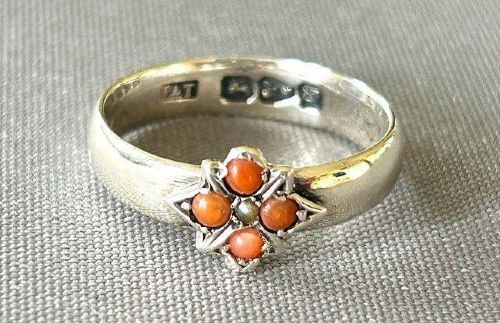
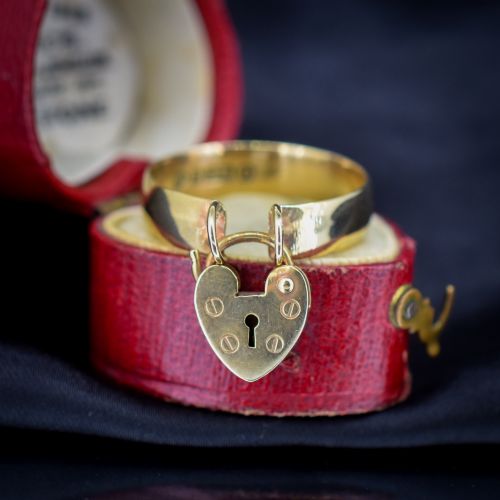
These Victorian chester ring pieces carry the clear punch of provincial assay office marks alongside period stones and gold.
Victorian Chester Ring
A Victorian chester ring brings together the distinctive three sheaves of wheat assay mark of the Chester office with mid-to-late nineteenth century and early twentieth century jewellery design. Most pieces met here span yellow gold bands and multi-stone settings, carrying hallmarks that point directly to northern English workshops of the period.
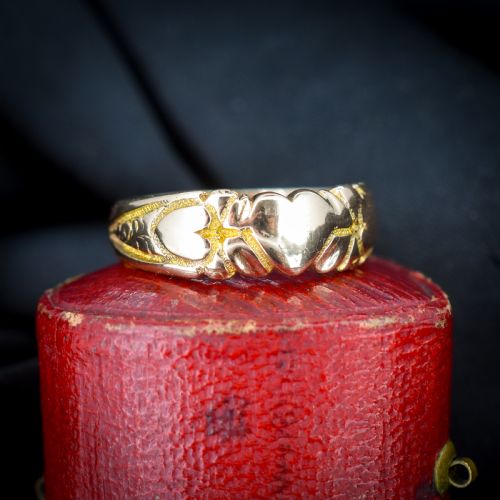
The selection extends beyond standard gemstone rings to include coiled serpent designs set with diamonds or rubies, alongside sentimental band rings bearing motifs like hearts and mizpah inscriptions. Alongside finger rings, related objects from the same geography and era occasionally appear, including silver napkin rings and small domestic items stamped with the Chester town mark.
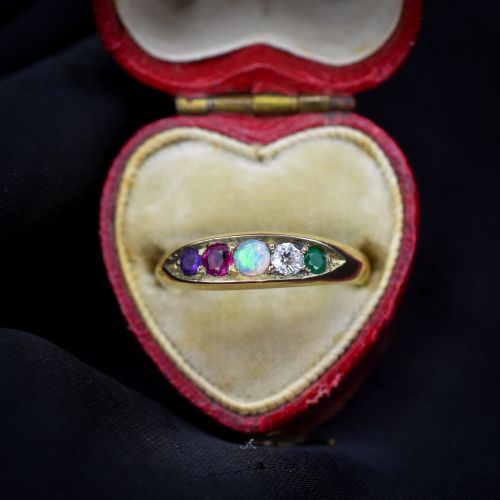
Makers working within the Chester jurisdiction produced robust yellow gold mounts, frequently utilising fifteen or eighteen carat gold to house sapphires, opals, turquoises, and old-cut diamonds. Buyers encounter both Victorian examples from the late eighteen-hundreds and Edwardian pieces from the opening decade of the twentieth century, all sharing that characteristic local provenance.
Materials and construction
Gold forms the primary structural body of these rings, with eighteen carat yellow gold dominating alongside fifteen carat and lower gold variants. Metalworkers shaped these ductile alloys into sturdy shank bands, boat-shaped settings, and coiled serpent bodies that wrap around the finger.
Gemstones including rubies, sapphires, opals, turquoises, and diamonds are secured via claw settings, star settings, or flush gypsy mountings sunk directly into the heavy gold surface. Master goldsmiths then stamped the finished piece with the Chester assay office mark, crown standard, and date letter to certify metal purity.
Victorian Chester Ring Retail Price Guide 2026
Typical asking prices for victorian chester ring among the pieces listed under this phrase on Sellingantiques today, from the lower quarter to the upper quarter. They describe what is for sale here now, not the wider market.
Listings demonstrate a strong presence of eighteen carat yellow gold alongside fifteen carat gold, spanning the Victorian and Edwardian periods.
Assessing quality and execution
The crispness and legibility of the Chester hallmarks directly influence the desirability of a piece, as sharp stamps confirm an unpolished shank and original proportions. Clear date letters and maker marks provide a direct anchor to the exact year of assay in the nineteenth or early twentieth century.
Stone selection and gemstone matching dictate the upper tier of quality, seen in well-matched multi-gemstone five stone arrangements or vibrant old-cut diamonds with clean facets. The complexity of the metalwork, such as finely chased snake scales or intricate scrollwork on boat mounts, separates standard production from superior workshop output.
The Victorian Chester Ring Glossary
- Chester hallmark
- An official stamp featuring three wheat sheaves and a sword, applied by the Chester assay office to guarantee gold or silver purity. This mark identifies the piece as having been tested and struck in the historic Cheshire city before the office closed.
- Gypsy ring
- A ring style featuring gemstones flush-set into a heavy, tapering band where the metal flows smoothly around each stone. This setting became popular during the late Victorian period for both men and women.
- Old-cut diamond
- A hand-faceted diamond cut before modern machinery standardised proportions, typically featuring a smaller table, higher crown, and open culet. These stones catch candlelight with a softer, warmer gleam than modern brilliant cuts.
- Mizpah ring
- A sentimental piece of jewellery bearing the Hebrew word for an emotional bond between people separated by distance. These bands often feature raised lettering and were exchanged as tokens of remembrance.
- Serpent ring
- A jewellery design shaped as a coiled snake, symbolising eternal love and wisdom during the Victorian era. Goldsmiths frequently embedded diamonds or rubies into the reptile's eyes.
Victorian Chester Ring: Frequently Asked Questions
How do I care for antique gold rings?
These historical gold items require gentle handling due to their age and the delicate nature of soft gemstones like opals or turquoises. Warm soapy water and a soft brush remove everyday oils without damaging the metal.
Avoid harsh chemical dips or ultrasonic cleaners, particularly with multi-gemstone rings where stones might be foil-backed or held by fragile historical settings. Storing each piece in a separate fabric pouch prevents scratching against other jewellery.
Are snake rings comfortable to wear?
Coiled serpent bands are generally smooth against the skin because the tail and head overlap or taper neatly into the main shank. The low profile of flush-set diamond or ruby eyes prevents snagging on clothing.
Heavier eighteen carat gold versions have a substantial weight on the hand while remaining balanced across the finger. Their ergonomic wrap design distributes the metal evenly around the knuckle.
How do I date a Victorian ring?
Dating relies heavily on the official assay office letter punches stamped inside the band alongside maker initials and gold purity marks. Comparing the specific font style of the date letter against Chester hallmark tables reveals the exact year of production.
Stylistic clues such as boat settings, starburst flush mounts, or sentimental motifs also help narrow the decade. Victorian pieces span the period from eighteen thirty-seven to nineteen hundred, followed closely by Edwardian designs up to the First World War.