



Victorian Chandelier Drops
Victorian chandelier drops are individual cut glass or crystal pendants that catch and scatter light, bringing genuine period sparkle to any interior.
Victorian Chandelier Drops
Victorian chandelier drops encompass small hanging glass ornaments and pendants originally designed for lighting fixtures, which now frequently appear in various decorative forms. When you examine the selections here, you will find items spanning the nineteenth century alongside related pieces such as lustres, wall or ceiling lights, and drop earrings. These glass and crystal components survive both as remnants of larger light fittings and as complete hanging ornaments designed to refract candlelight or gaslight.
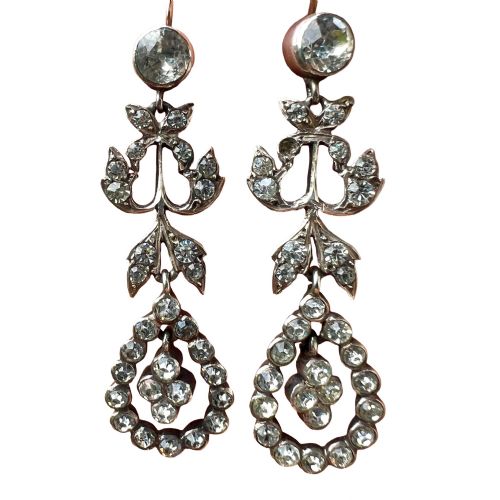
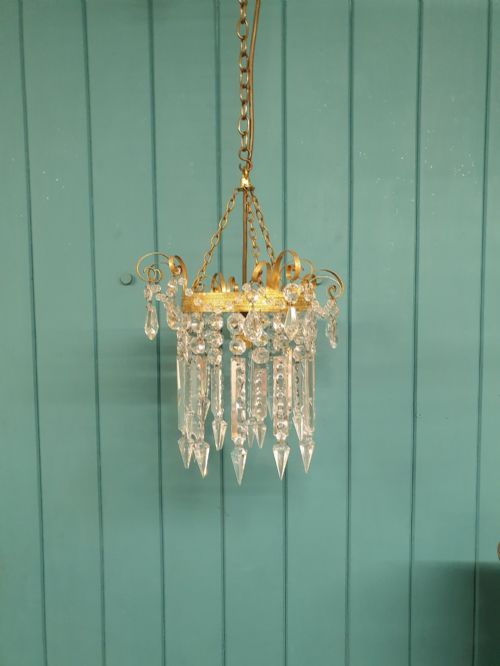
The objects listed range from individual nineteenth century glass drops to substantial multi-branch chandeliers and gilt bronze gasoliers. Alongside traditional lighting fixtures, the inventory includes jewellery items like paste and diamond earrings that utilise similar drop configurations. The materials primarily feature cut glass, crystal, and brass, reflecting the manufacturing standards of the period.
Materials and construction
The manufacture of these pieces relies heavily on cut glass, crystal, and brass, often paired with gilt bronze or silver settings. Artisans shaped the glass through precision cutting and polishing to maximise light refraction, attaching them to metal mounts with wire or pins. Metal components such as brass frames and silver or gold settings provide structural integrity for both the lighting fixtures and the jewellery pendants.
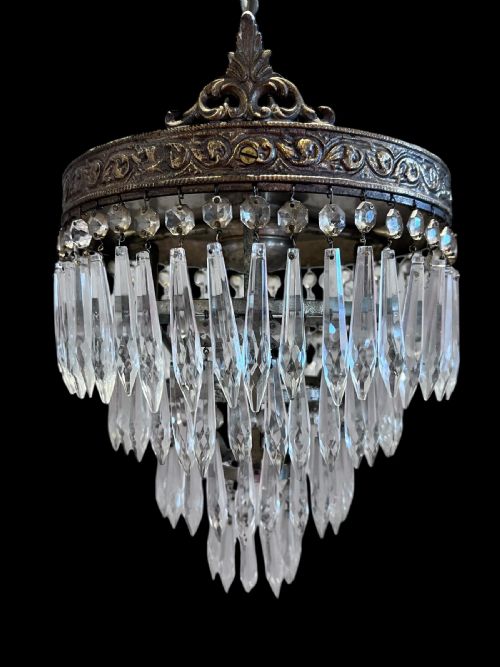
Techniques range from hand-cut crystal facets on large chandeliers to detailed silverwork on drop earrings. The integration of gilt bronze and brass in heavier light fittings demonstrates nineteenth century metalworking capabilities, while delicate glass forming created the sharp spikes and crimped shades seen on various fixtures.
Listings feature items spanning the eighteenth century through to the mid-twentieth century, constructed from cut glass, crystal, brass, and precious metals.
Quality differences
The distinction between standard examples and finer items rests upon the clarity of the glass and the precision of the cutting. Superior pieces display sharp, clean facets that catch the light evenly, whereas lesser examples show softer edges or bubbles within the material. The complexity of the mounting, whether in gilt bronze, brass, or precious metals, further separates standard production from exceptional work.
Workmanship in the metal settings and the uniformity of the glass drops dictate the overall standard of each piece. Heavier bronze structures and older, hand-cut crystal elements generally indicate higher execution standards than later or mass-produced alternatives.
The Victorian Chandelier Drops Glossary
- Lustre
- A decorative tabletop or mantel ornament featuring glass pendants, functioning similarly to a chandelier drop. These pieces rely on upright glass bodies hung with crystal prisms.
- Plafoniere
- A ceiling-mounted light fixture positioned flat against the ceiling surface. These often incorporate crystal drops and waterfall glass arrangements.
- Gasolier
- A multi-branch light fixture originally designed to burn gas before later conversion to electricity. These substantial fittings frequently incorporate gilt bronze and extensive crystal drops.
- Paste
- Hand-cut lead glass used to imitate gemstones in jewellery and decorative items. It was widely utilised during the Victorian period for sparkling drop earrings and pendants.
- Old European cut
- An early form of diamond cutting featuring a round shape with a small table and high crown. This cut appears frequently in antique jewellery drops from the late nineteenth and early twentieth centuries.
Victorian Chandelier Drops: Frequently Asked Questions
What are chandelier drops?
Chandelier drops are individual cut glass or crystal pendants that hang from lighting fixtures to refract and multiply illumination.
They were produced in various shapes, including spikes and teardrops, to enhance the visual brilliance of nineteenth-century gas and candle lighting.
How were lustres used?
Lustres served as decorative mantel or tabletop ornaments that used hanging glass drops to catch the ambient light of the room.
Unlike ceiling fixtures, these standalone pieces placed the sparkling crystal components directly at eye level.
How do I clean antique glass?
Antique glass and crystal require gentle cleaning with warm water and a mild soap solution to preserve the delicate metal connections.
Harsh chemical cleaners should be avoided because they can damage the surrounding brass, silver, or gilt bronze mounts.
How do I identify Victorian pieces?
Victorian pieces are identified through characteristic materials such as hand-cut crystal, heavy brass, and gilt bronze, alongside period-specific construction methods.
Examining the metal pins, wire fixings, and the clarity of the glass helps distinguish nineteenth-century work from later reproductions.