




19th Century Earrings
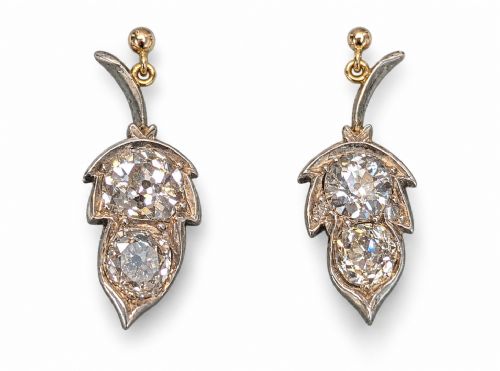
These 19th century earrings bring undeniable period character to the lobe, spanning humble Whitby jet to glittering diamond drops.
19th Century Earrings
When searching for 19th century earrings, you encounter an array of drop designs, dangling teardrops, and substantial hoops shaped by the Victorian era. The selection leans heavily toward Victorian creations, supplemented by occasional Regency and Edwardian pieces that share the same aesthetic vocabulary.
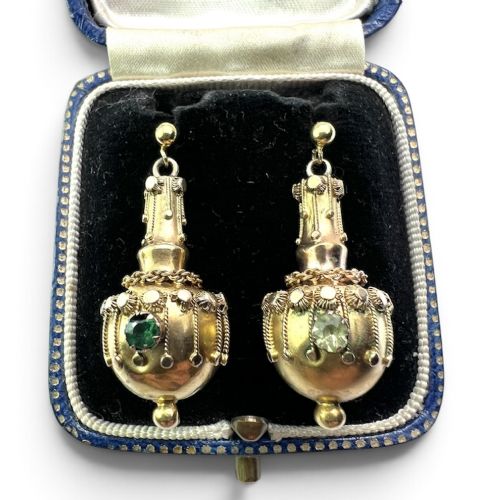
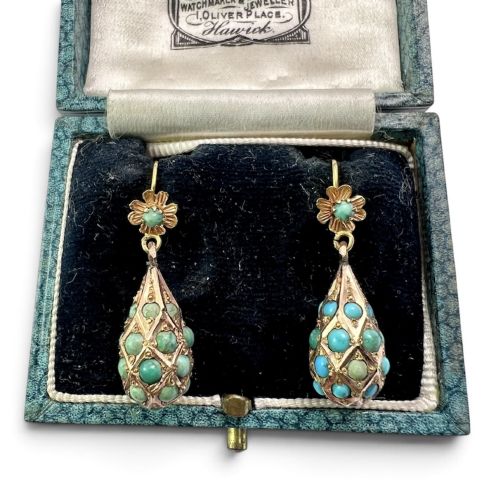
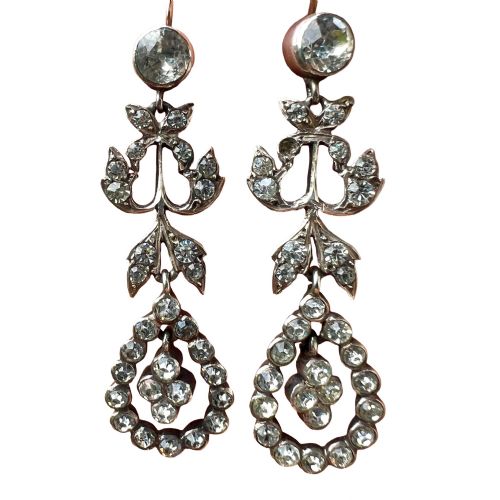
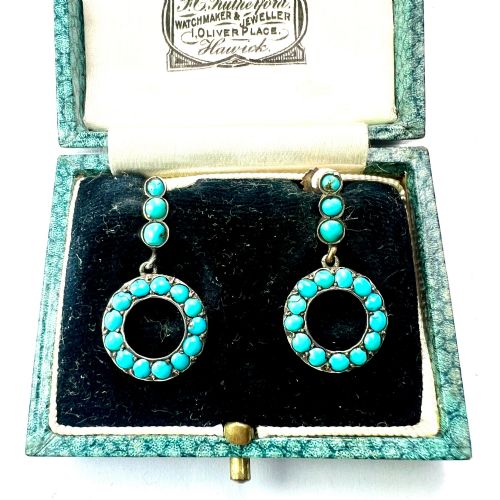
Forms range from intimate carved coral flora and turquoise flower clusters to dramatic chandelier drops and hollow gold hoops. These jewels mirror the shifting tastes of the nineteenth century, moving from early romantic naturalism toward archaeological revivals and bolder late-century statements.
How they were made
Goldsmiths worked primarily in yellow and rose gold of various purities, including 9ct and 15ct, alongside silver settings designed to catch the candlelight. Gemstones like diamonds, garnets, turquoise, amethyst, and pearls were hand-cut and collet-set or foil-backed.
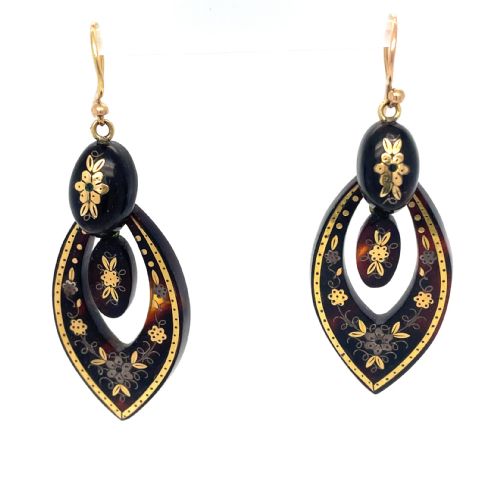
Specialised techniques defined the period, encompassing delicate Etruscan Revival granulation, tortoiseshell pique inlay, and meticulous hand-carving in coral and Whitby jet. Metalwork was frequently cast, hollow-formed for lightweight wear, or assembled into articulated drops.
Tiny carved flies and acorns rub shoulders with solemn jet and brilliant diamonds in the Victorian earscape.
What varies in quality
Quality reveals itself in the crispness of the hand-carved details and the precision of the metal wirework or granulation. Superior examples display thoughtful stone matching and secure, integrated settings rather than clumsy post-factory repairs.
The weight and gauge of the gold or silver contribute significantly to the structural integrity of larger hoops and drops. Finer pieces maintain their original fixings and harmonise the scale of the gemstones with the proportions of the frame.
The 19th Century Earrings Glossary
- Etruscan Revival
- A nineteenth-century design movement inspired by archaeological excavations in Italy, characterised by applied wirework and granulation. Goldsmiths used these classical motifs to create ornate gold earrings.
- Pique
- A technique involving the inlay of tiny gold or silver pins into organic materials like tortoiseshell. This method created intricate geometric or floral patterns on drop earrings.
- Paste
- Hand-cut and polished lead glass used to imitate gemstones in historic jewellery. Coloured paste provided vibrant sparkle in chandelier and tassel drop earrings.
- Cabochon
- A gemstone shaped and polished with a smooth, convex dome rather than faceted edges. Natural garnets and turquoise were frequently cut this way during the Victorian period.
- Parure
- A matched set of jewellery designed to be worn together, such as earrings paired with a matching pendant. These coordinated suites were popular for formal nineteenth-century attire.
19th Century Earrings: Frequently Asked Questions
Are 19th century earrings heavy to wear?
Many nineteenth-century designs, particularly large hoops, utilised hollow gold construction to keep the weight manageable for daily wear. However, substantial gemstone drops and parure elements can have a noticeable heft.
Buyers with sensitive lobes often assess the gram weight and the size of the ear wire before committing to longer-wearing styles.
How do I care for antique coral earrings?
Coral is a delicate organic material that reacts poorly to harsh chemicals, perfumes, cosmetics, and prolonged immersion in water. Cleaning should be limited to a very gentle wipe with a soft, dry cloth.
Storing them away from harder gemstones prevents scratching and preserves the carved details on floral and bell motifs.
Can I wear antique earrings with modern piercings?
Most surviving earrings from this era feature wire hooks, lever-backs, or screw fittings designed for historical ear placements. Many fit comfortably into standard modern piercings, though some wire gauges vary.
A jeweller can occasionally adjust or adapt historic wirework if the drop orientation requires correction for contemporary wear.
What is the difference between early and late Victorian styles?
Early Victorian pieces often embrace romantic naturalism, featuring carved coral and delicate botanical motifs influenced by Regency aesthetics. Late-century examples frequently lean toward bolder statements, including heavy hollow hoops, geometric pique, and prominent turquoise clusters.
Subtle shifts in metal purity and fastening technology also help separate the decades within the wider nineteenth-century span.