





Victorian Ceramic Boy
These ceramic figures of young boys capture nineteenth century sentiment and craft, offering character and decorative charm for any traditional interior.
Victorian Ceramic Boy
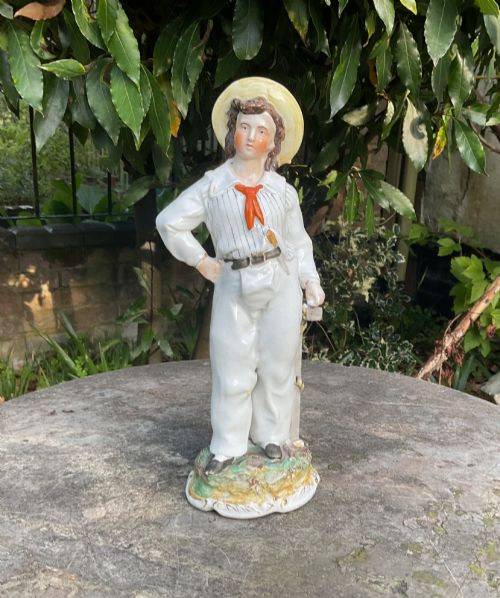
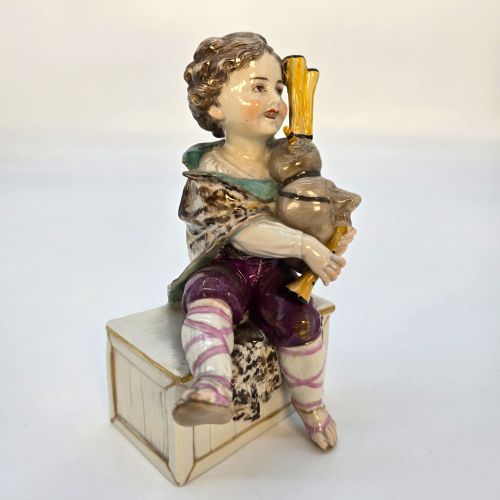
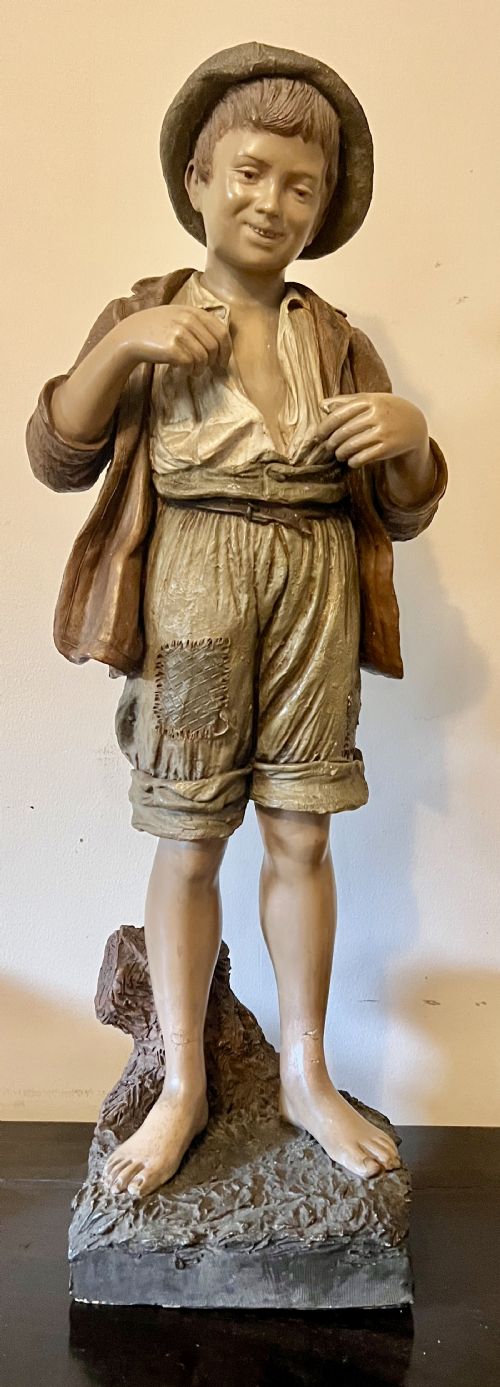
A victorian ceramic boy typically appears as a freestanding figurine, inkwell, or posy holder produced during the nineteenth century or the Edwardian era. These decorative objects portray children in various roles, from sailors and harvesters to skaters and fisher folk, reflecting nineteenth century domestic taste.
The pieces on this page originate from English potteries such as Staffordshire and Royal Worcester, alongside continental factories across Germany and France. Production methods range from earthenware and majolica to fine porcelain and bisque, showing diverse regional styles including Rococo Revival and Chinoiserie.
Most examples function purely as decorative sculpture, though practical forms like inkwells and posy holders combine ornamentation with utility. Makers frequently paired these boy figures with companion girls, milkmaids, or animals to create balanced mantelpiece displays.
Distinguishing quality in figures
The reputation of the manufactory dictates much of the distinction, with established names achieving superior bone china and hard paste bodies compared to unmarked provincial wares. Artisans at prominent factories exercised greater control over kiln temperatures, resulting in fewer surface imperfections and truer colour registration.
Victorian Ceramic Boy Retail Price Guide 2026
Typical asking prices for victorian ceramic boy among the pieces listed under this phrase on Sellingantiques today, from the lower quarter to the upper quarter. They describe what is for sale here now, not the wider market.
The listings feature Victorian and Edwardian figures created in porcelain, earthenware, terracotta, and Parian ware across British and continental European factories.
Edmé Samson·Volkstedt Rudolstadt Factory·Royal Worcester·Krister KPM Waldenburg·C. G. Schierholz·Volkstedt Triebner, Ens & Eckert·Ernst Bohne Söhne·Sitzendorf·Helena Wolfsohn·Joseph Holdcroft
The Victorian Ceramic Boy Glossary
- Bisque porcelain
- Unglazed white porcelain fired once to create a matte, porous surface resembling marble. It is frequently utilised for detailed nineteenth century figurines.
- Majolica
- Earthenware covered with an opaque tin glaze and painted with coloured metallic oxides. This technique produces rich, glossy green, brown and ochre tones popular in Victorian decorative wares.
- Parian ware
- A fine-grained, unglazed white porcelain developed in Britain to imitate carved marble. It is cast in moulds to render neoclassical figures and sentimental child subjects with smooth textures.
- Posy holder
- A small ceramic vessel designed to hold a small bouquet of flowers. These functional decorative pieces often incorporate figures of children or animals beside the receptacle.
- Hard-paste porcelain
- A durable ceramic composition fired at very high temperatures using kaolin and petuntse. It creates a dense, translucent body capable of holding sharp moulded details.
Victorian Ceramic Boy: Frequently Asked Questions
Were these figures meant for children?
Nineteenth century ceramic boy figures served strictly as adult decorative ornaments for parlour mantelpieces, sideboards, and display cabinets. Their delicate materials and detailed hand painting meant they belonged in domestic display rather than nursery playthings.
Victorian households valued them as sentimental depictions of childhood innocence and rural labour.
How can I tell German porcelain from English Staffordshire?
German porcelain figures typically utilise hard paste ceramic bodies with refined facial detailing and intricate hand-painted polychrome or gilt highlights. Continental factories like Volkstedt and Sitzendorf often marked their bases with distinct factory stamps.
English Staffordshire figures tend to employ heavier earthenware bodies with simpler enamel painting, reflecting domestic production traditions.
What is the difference between bisque and glazed porcelain?
Bisque porcelain remains unglazed after firing, offering a matte, porous texture that resembles carved marble. It captures subtle modelling in clothing and skin but attracts dust more readily.
Glazed porcelain receives a glassy coating before its final kiln firing, producing a shiny, sealed surface that resists stains and wipes clean easily.