
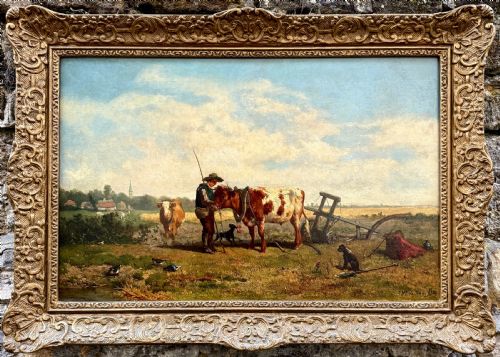


Victorian Cattle Landscape Painting
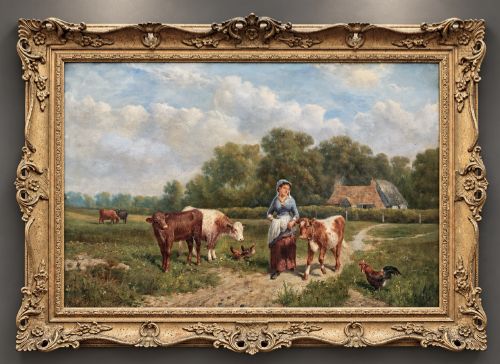
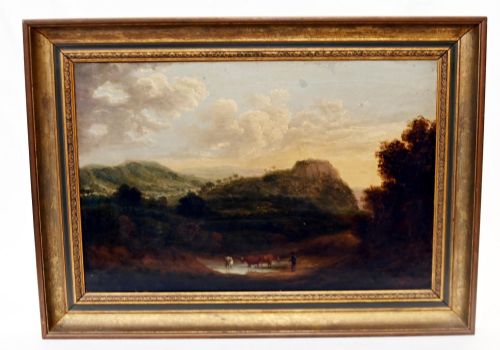
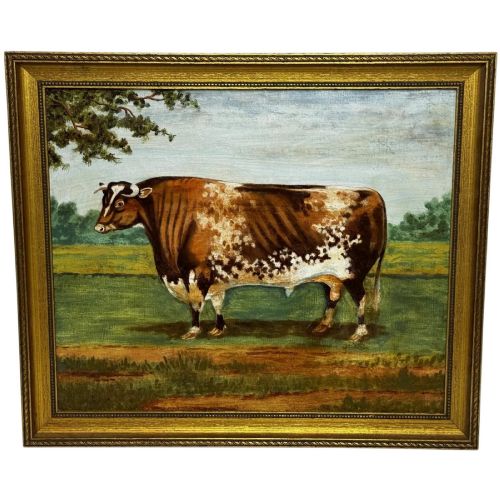
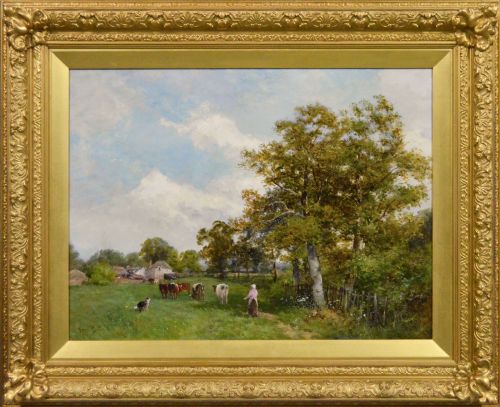
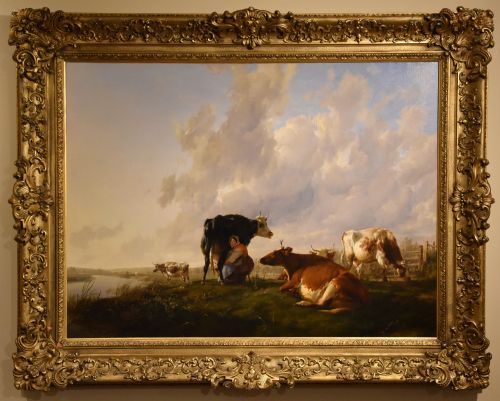
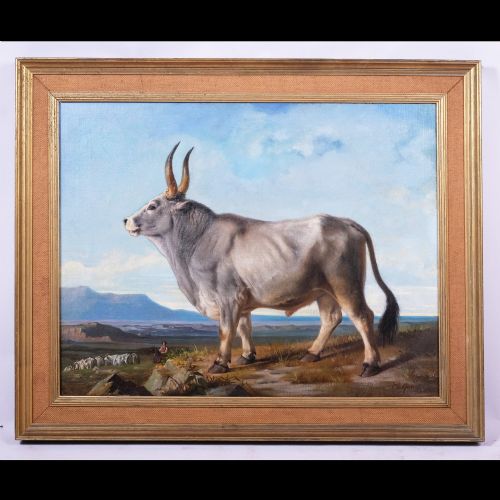
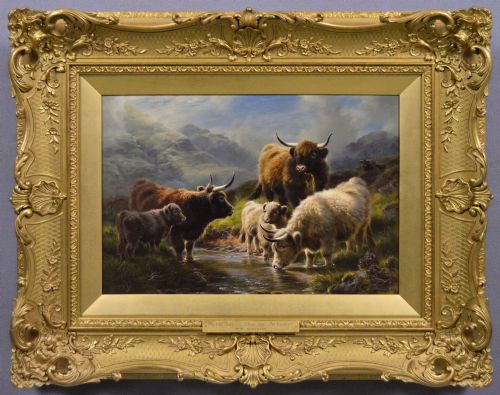
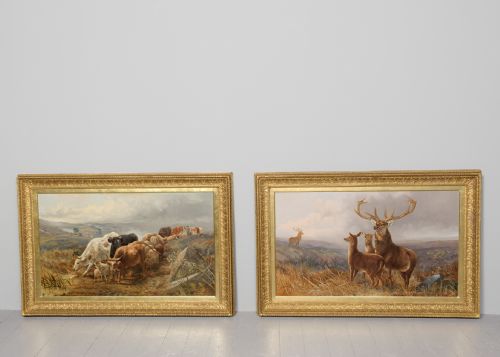
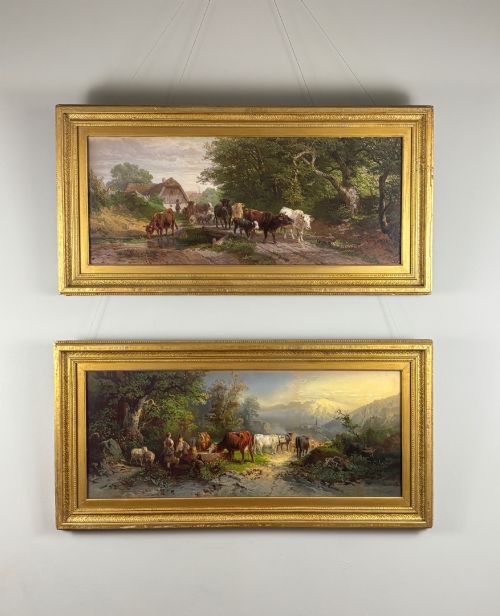
A victorian cattle landscape painting captures pastoral life through detailed portrayals of herds grazing in scenic countryside settings.
Victorian Cattle Landscape Painting
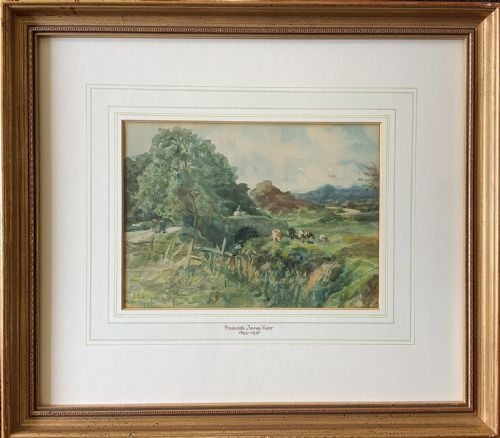
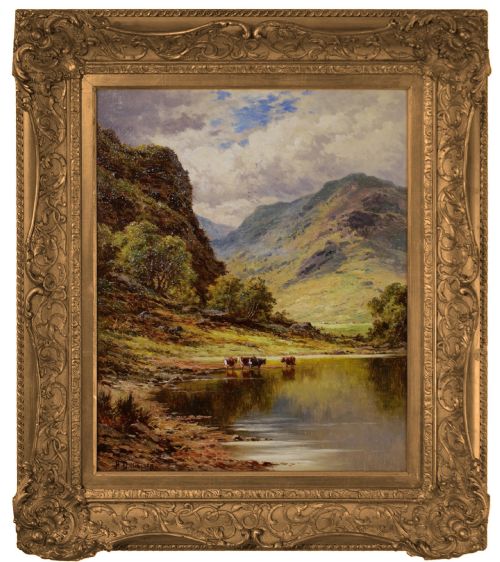
A victorian cattle landscape painting portrays domestic animals within rural, river, or mountain settings across Britain and Europe. The selections available here heavily feature oil paintings on canvas alongside traditional watercolours.
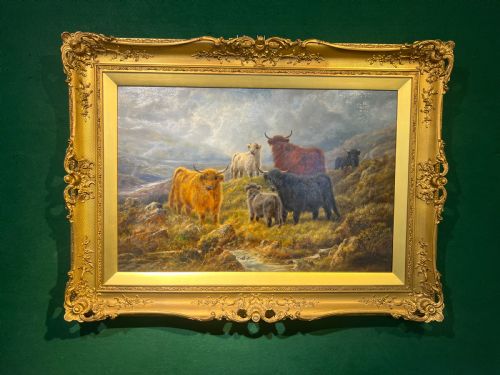
The periods represented stretch across the nineteenth century into the early twentieth century, incorporating Victorian, Edwardian, and British School influences. Common motifs include Highland cattle near lochs, dairy cows by rivers, and pastoral farmyard scenes.
Buyers will encounter both intimate watercolours and large framed oil paintings executed by named artists and regional schools. These artworks reflect a period of immense affection for rural life and agricultural prosperity.
Materials and execution
Artists painted primarily with oil paint on stretched canvas or applied watercolours onto paper, often finishing the works within ornate giltwood and gesso frames. Supporting wooden structures provided stability for large canvases.
Techniques ranged from precise, realist animal portraiture to looser, atmospheric brushwork influenced by British impressionism. The careful application of pigments created naturalistic light effects across water, sky, and animal hides.
Listings feature works created between eighteen-fifty and nineteen-sixty, executed in oil on canvas and watercolour on paper.
Determinants of artistic merit
Anatomical precision in depicting the cattle and the expressive quality of the surrounding landscape distinguish finer works from simpler compositions. Masterful handling of light and atmospheric depth elevates a piece significantly.
The integrity of the original canvas, the preservation of the painted surface, and the presence of period-appropriate giltwood frames influence the overall character of the artwork.
David Bates·Thomas Sidney Cooper·Frederick James Kerr·Henry H. Parker·Robert Watson·William Watson Jnr·Robert Cleminson·Johann Friedrich Voltz·Johannes de Haas·A M Gauci·Henry Robinson Hall·Henry Hillier Parker·Samuel Joseph Clark·William Sydney Cooper·Thomas Hunn·George Vicat Cole·Andre de Moller·Sidney Richard Percy·Frederick James Knowles·Robert Thorne Waite·Alfred Grey·Pierre Emmanuel Dielmans·Harold Lawes·George Cole·Thomas Baker
The Victorian Cattle Landscape Painting Glossary
- Oil on Canvas
- Pigments bound in a drying oil applied to a woven fabric surface stretched across a wooden frame. This medium allowed artists to build rich textures and deep colour tones.
- Watercolour
- Pigments suspended in a water-soluble vehicle applied to paper. This technique yields translucent washes and delicate atmospheric effects.
- Giltwood
- Wood carved and covered with a thin layer of gold leaf or metallic gilt powder. It formed the decorative border for many traditional picture frames.
- Gesso
- A paint mixture consisting of a binder mixed with chalk, gypsum, or pigment. It served as a smooth preparation base for wooden picture frames before gilding.
- British School
- A loose grouping of artists working within Britain who shared stylistic approaches or educational backgrounds. It encompasses landscape and animal painters of the nineteenth century.
Victorian Cattle Landscape Painting: Frequently Asked Questions
What subjects appear in these paintings?
These artworks depict cattle, sheep, and horses situated within river valleys, mountainous terrain, and pastoral farmland. Herds are often shown watering at streams or grazing quietly under changing weather skies.
Scenes frequently incorporate human figures such as milkmaids, herders, or farmers engaged in daily rural tasks alongside their animals.
How do I display these paintings safely?
Hang paintings away from direct sunlight and steady sources of artificial heat to protect the canvas and pigments from fading or cracking. Stable indoor humidity levels help preserve both the wooden stretchers and the original giltwood frames.
Ensure that heavy framed canvases are mounted securely using appropriate wall fixings suited to the weight of the piece.
How can I identify the period of a painting?
Examine the stylistic traits, clothing of any figures, and framing materials for clues regarding the date of creation. Nineteenth-century works often bear signatures, dates, or inscription details on the reverse of the canvas.
Framing styles can also offer a reliable indication of the era, particularly when original giltwood and gesso mouldings remain intact.
Where were these landscape scenes usually painted?
Artists drew inspiration from the British countryside, including Scottish highlands, Welsh river valleys, and pastoral English pastures. Many painters travelled to specific rural regions to capture authentic agricultural settings and local livestock breeds.
Sketches completed outdoors were frequently developed into finished landscape compositions back within the artist's studio.