
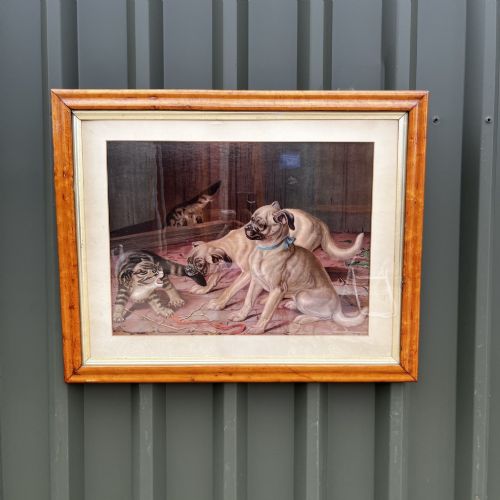
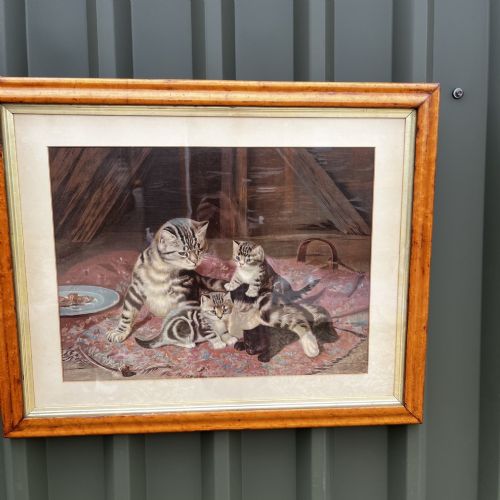


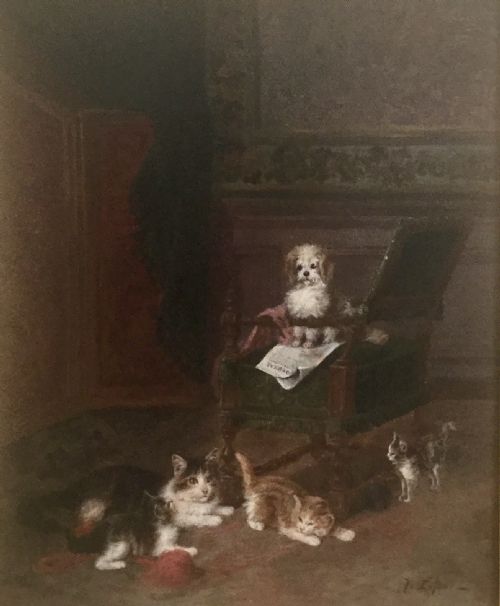
Victorian Cat Print
A victorian cat print brings charm to a wall, offering nineteenth-century feline subjects rendered in chromolithography, etching, and oil painting.
Victorian Cat Print
A victorian cat print captures nineteenth-century domestic and whimsical felines through various graphic mediums. These works range from genre scenes of mother cats and kittens to anthropomorphic animal illustrations.
The versions most commonly met on this page include chromolithographs and artist prints from the late nineteenth and early twentieth centuries. Many examples arrive framed in wood, glass, and giltwood settings that complement the period aesthetic.
How they were made
Makers utilised paper and ink for chromolithographs and etchings, applying multi-colour printing techniques to replicate original artist works. Oil paintings on canvas employed layered pigments to achieve rich textures for animal fur and domestic settings.
Framing often incorporated gesso and gold leaf over wooden moulding to protect and display the artwork. These traditional framing materials reflect standard nineteenth-century craftsmanship.
Cats enjoying a formal tea party proved just as amusing to Edwardian audiences as they are to modern collectors.
What varies in quality
Quality rests upon the clarity of the printed line and the vibrancy of the remaining ink or pigment. Stronger examples maintain crisp details in the animal subjects without excessive fading across the paper surface.
The condition and period suitability of the surrounding frame also influence the overall standard. Original framing materials preserved alongside the print generally indicate a higher level of preservation.
Horatio Henry Couldrey·Louis Wain·Charles Burton Barber·Herbert Dicksee·Agnes Augusta Tallboys·Jules Le Roy
The Victorian Cat Print Glossary
- Chromolithograph
- A multi-coloured print produced through lithographic stones, allowing for rich colour reproduction. This technique was widely utilised for popular art prints in the nineteenth century.
- Etching
- A printmaking process where lines are bitten into a metal plate with acid before being inked and pressed onto paper. This method produces fine, sharp details suitable for miniature animal works.
- Genre painting
- Artwork depicting scenes from everyday life, often featuring domestic animals and children interacting. These subjects were highly popular during the Victorian period.
- Giltwood
- Wood that has been treated with a thin layer of gold leaf or gold paint, frequently used for picture frames. It provides a bright, reflective border around the artwork.
Victorian Cat Print: Frequently Asked Questions
What is a chromolithograph print?
A chromolithograph is a colour print produced using multiple lithographic stones, one for each colour applied. This technique allowed publishers to distribute vibrant reproductions of popular animal paintings to Victorian homes.
Printers built up rich hues through successive press runs on heavy paper stock. Many surviving examples retain their distinct coloration due to this chemical printing process.
How should I frame these prints?
Selecting a frame depends on the period style and whether the piece retains its original housing. Simple wooden or giltwood frames complement nineteenth-century aesthetics without overpowering the delicate paper artwork.
Conservation mounting using acid-free materials protects the paper from degradation over time. Keeping the print behind glass shields the ink from airborne pollutants and moisture.
Who were the notable feline artists?
Several Victorian and Edwardian artists specialised in animal subjects, particularly cats and dogs. Painters and printmakers such as Louis Wain and Horatio Henry Couldrey achieved widespread recognition for their distinctive feline depictions.
Their works were frequently turned into prints to satisfy the Victorian appetite for domestic animal imagery. Signed etchings and original oils by these figures remain sought after by collectors.
Are these works original period pieces?
The listings comprise nineteenth and early twentieth-century prints, etchings, and oil paintings created during the era. Materials such as period paper, ink, and traditional frames help confirm their age.
Some pieces may feature later re-framing while retaining the antique print within. Examining the paper stock and printing technique reveals the manufacturing period.