





Victorian Cat Art
Victorian cat art captures feline character through nineteenth-century oils, chromolithographs and ink drawings that appeal directly to animal painters and collectors.
Victorian Cat Art
Victorian cat art encompasses oil paintings, framed prints, chromolithographs and drawings produced primarily across the nineteenth century and into the early twentieth century. Buyers seeking this phrase encounter depictions ranging from naive school portraits to detailed realism and animalier studies.
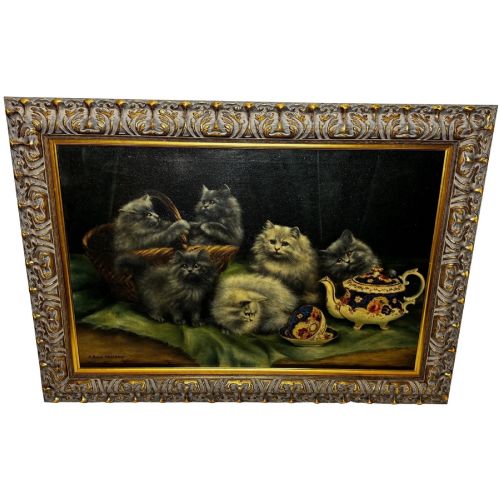
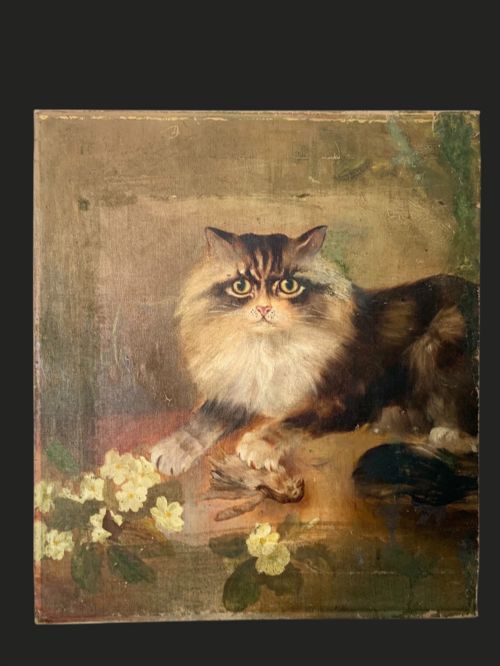
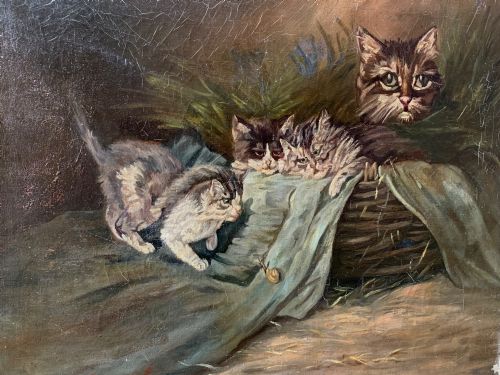
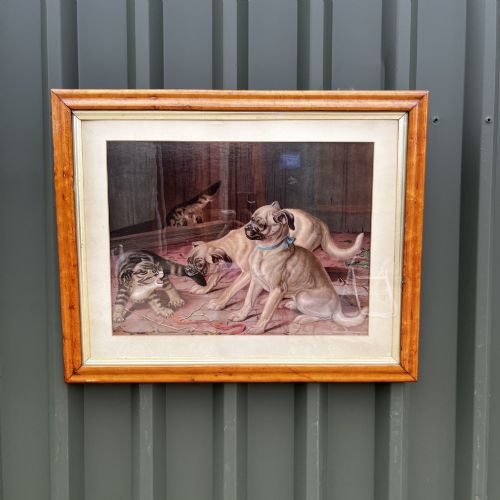
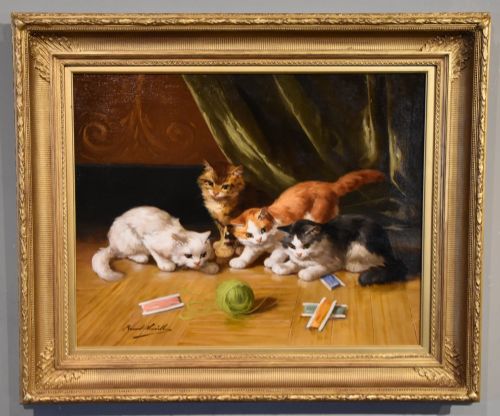
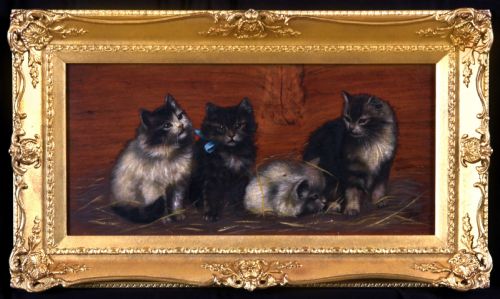
The material on this page spans domestic cats, Persian kittens at play, and larger felines such as lions, leopards and tigers. Domestic scenes predominate, featuring playful kittens, cats with fish, or animals posed alongside children and household figures.
Originating largely from British and French artistic traditions, these works reflect diverse schools from naive and provincial painters to accomplished academic portraitists. Many pieces arrive framed in period wood, gesso and gilt wood settings that complement the imagery.
How they were made
The works rely upon traditional painting media, utilising oil on canvas, oil on board, and oil paint applied with fine brushwork to capture soft fur textures and lifelike expressions. Drawings on paper and pen and ink works record swift compositional studies by notable hands.
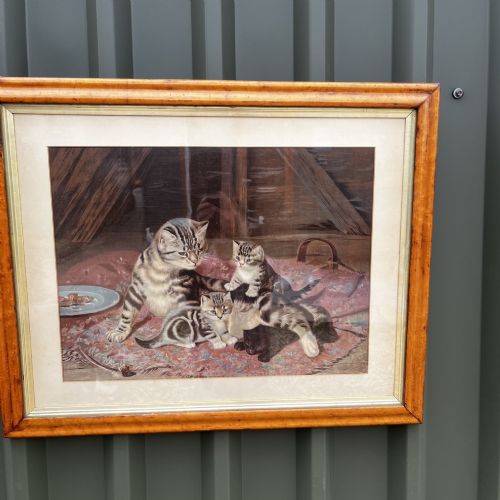
Chromolithography and early print techniques enabled the reproduction of popular animal subjects for wider domestic display, preserving the tonal depth of original compositions. Etchings provide precise linear detail for feline subjects rendered on paper.
Frames employ wood, gesso and gilt wood constructions, often incorporating decorative moulding suited to nineteenth-century domestic interiors.
Victorian Cat Art Retail Price Guide 2026
Typical asking prices for victorian cat art among the pieces listed under this phrase on Sellingantiques today, from the lower quarter to the upper quarter. They describe what is for sale here now, not the wider market.
Materials recorded across current items include oil on canvas, paper, wood, gesso, and gilt wood framing.
What varies in quality
Quality rests upon the artist's command of anatomy, expression and texture, distinguishing skilled academic observation from stiffer naive renderings. Works by established nineteenth-century animalier painters demonstrate superior handling of feline posture and movement.
The integrity of the medium dictates preservation value, separating original oil paintings with stable paint layers from prints or works on paper showing heavy fading or foxing. Original framing in period gilt wood enhances the integrity of the piece.
Vittorio Reggianini·Alfred Arthur Brunel de Neuville·Horatio Henry Couldrey·Louis Wain·Herbert Dicksee·Agnes Augusta Talboys·Henry Weigall·Cuthbert Edmund Swan·Francisco Jose Domingo y Marques·Geza Vastagh·Jules Le Roy·Bessie Bamber·John Macallan Swan·Charles Burton Barber
The Victorian Cat Art Glossary
- Animalier
- Art focusing on the realistic portrayal of animals. This French nineteenth-century term applies particularly to painters and sculptors who specialised in domestic and wild creatures.
- Chromolithography
- A planographic colour printing technique used to produce multi-coloured reproductions. Nineteenth-century publishers utilised this method to distribute popular animal prints to a broad public.
- Naive school
- Art created by painters without formal academic training, characterised by flat perspective and direct charm. These provincial works offer a simpler, unpolished perspective on domestic animals.
- Gilt wood
- Wood coated with a thin layer of gold leaf or gilt paint. Period frames often utilise this material to enhance nineteenth-century oil paintings and prints.
Victorian Cat Art: Frequently Asked Questions
What subjects appear in victorian cat art?
These works depict domestic cats, Persian kittens at play, mother cats with litters, and larger felines including leopards, lions and tigers. Many compositions feature cats interacting with children, fish or domestic objects.
Domestic scenes reflect the Victorian affection for household pets, while wild cat studies demonstrate nineteenth-century animalier interest in exotic anatomy and behaviour.
How do I identify a print from an original painting?
Original works display visible brushstrokes, canvas texture, and the raised application of oil paint under close inspection. Prints and chromolithographs present a flat surface with a dot pattern or uniform ink layer.
Examining the piece out of its frame can reveal paper edges or canvas weave that confirm the medium.
How should I care for nineteenth-century paper works?
Works on paper and prints require placement away from direct sunlight to prevent fading of the inks and discolouration of the paper support. Acid-free backing and UV-filtering glass help preserve the condition over time.
Maintaining stable indoor humidity prevents moisture damage and foxing across older paper surfaces.
Where were these pieces produced?
The listings include works from British, French and Italian artistic traditions, reflecting widespread European interest in animal painting during the nineteenth and early twentieth centuries. Provincial English schools also contributed naive portraits.
Artists often worked within established academic centres before their animal studies were published or exhibited across Europe.