




Victorian Carved Whatnot
A victorian carved whatnot is a multi-tiered display stand for ornaments and books, bringing vertical elegance and rich timber tones into a room.
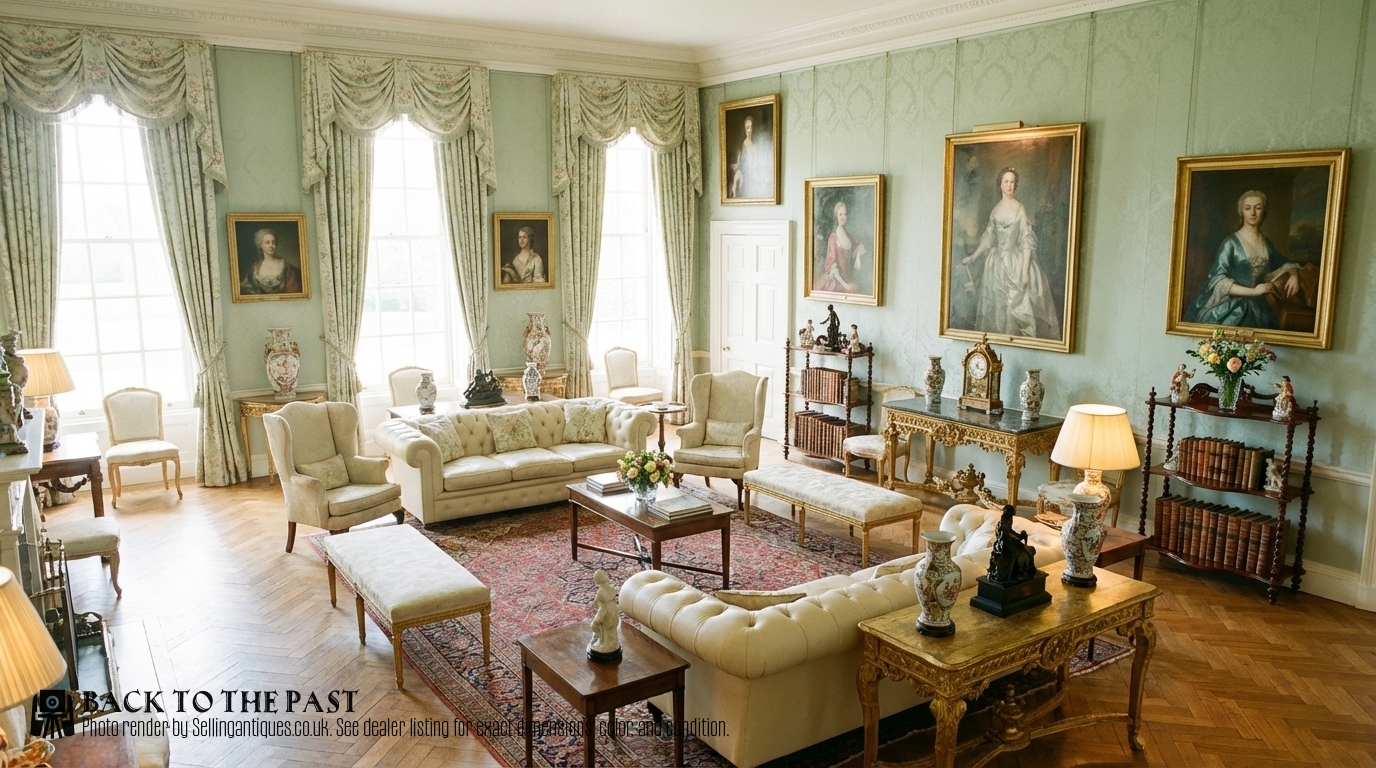
Victorian Carved Whatnot
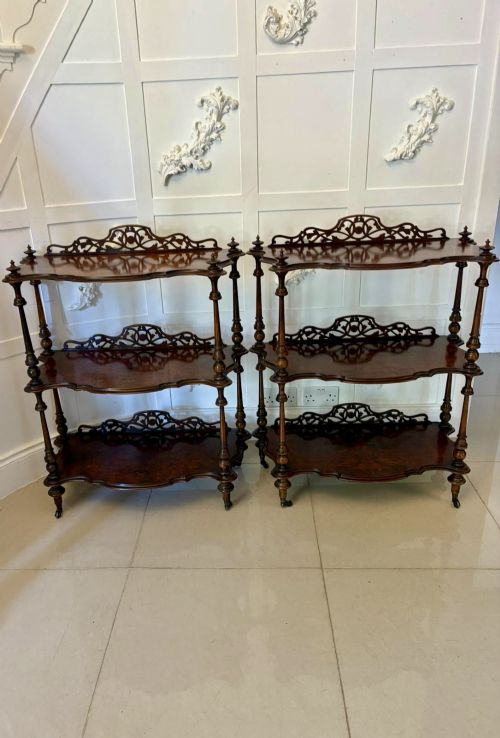
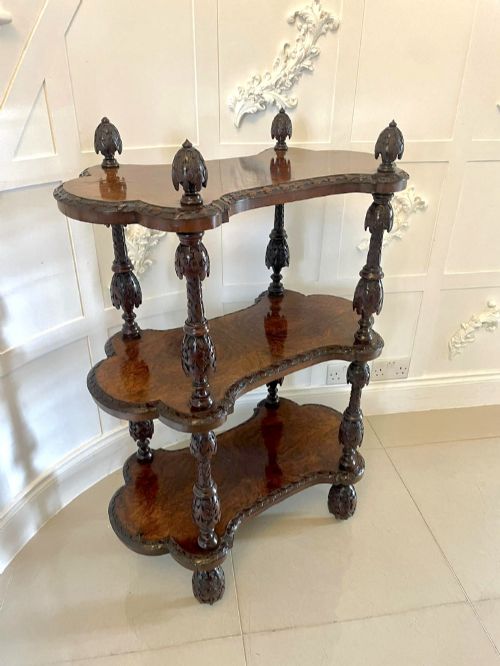
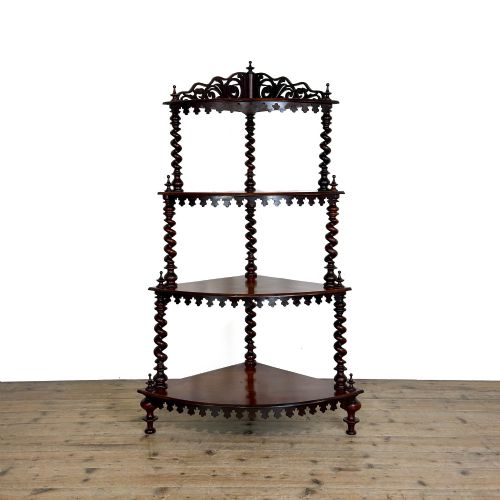
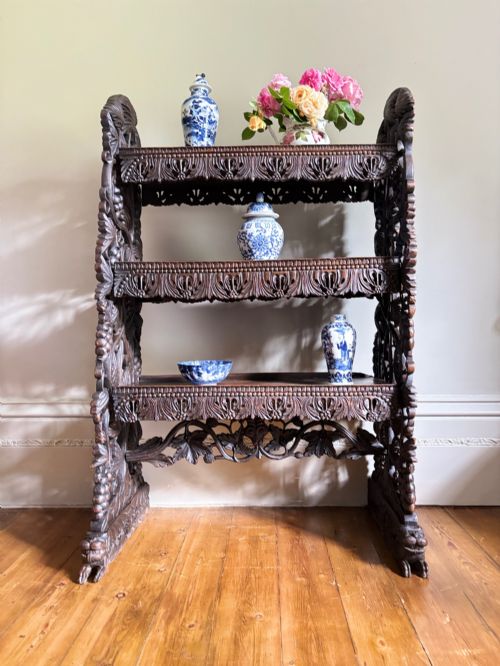
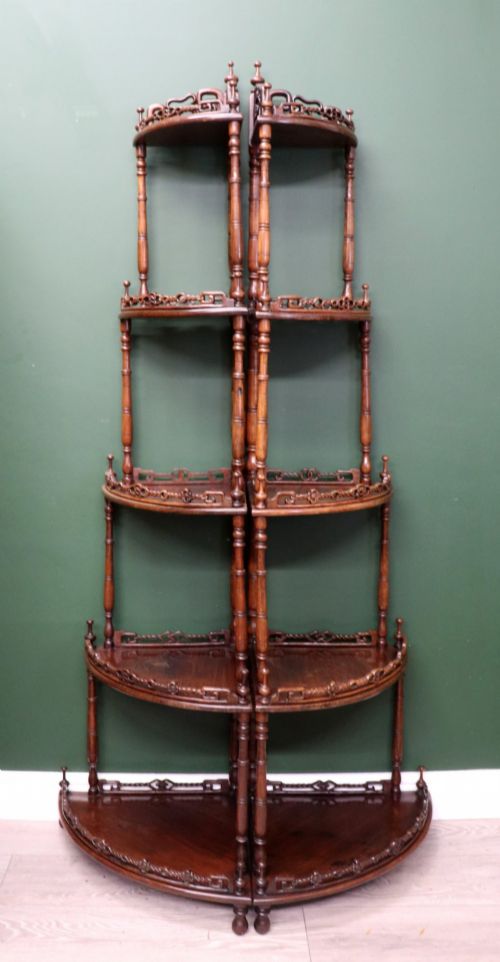
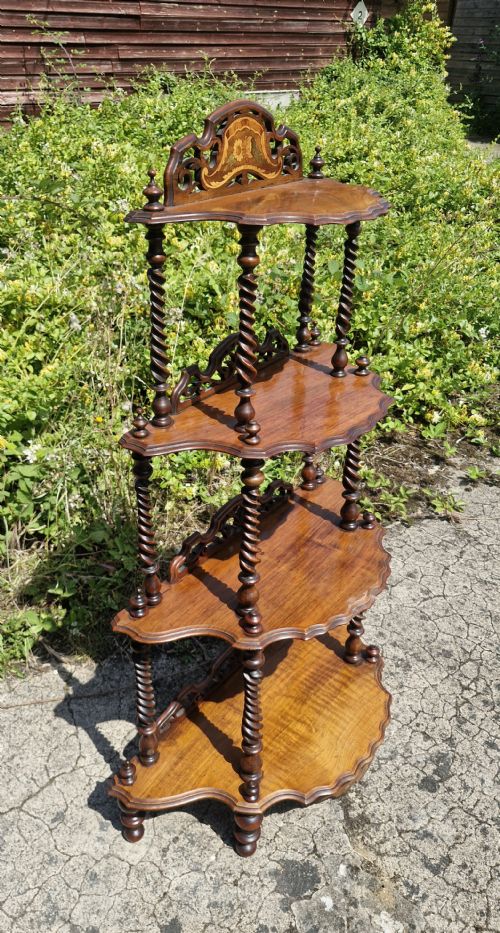
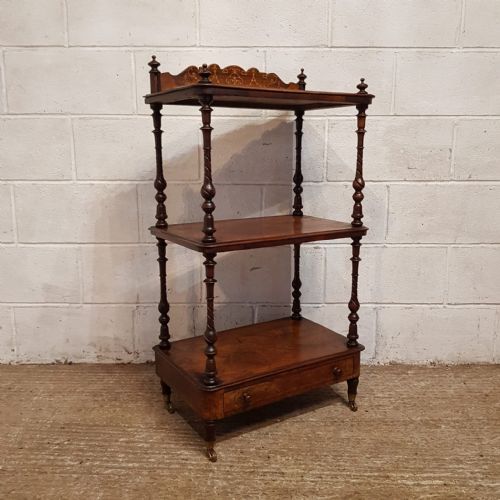
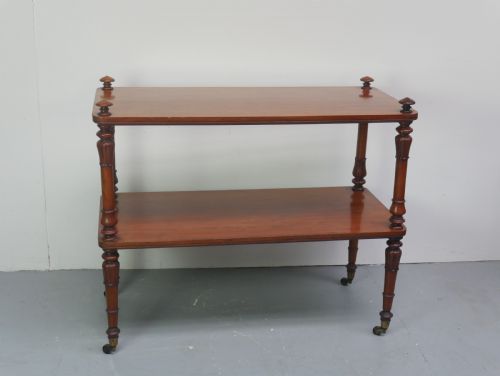
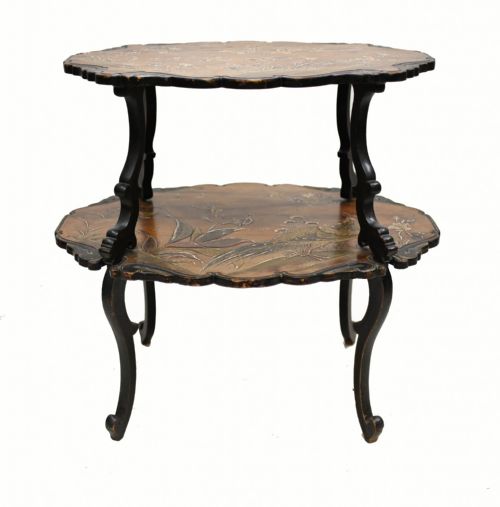
A victorian carved whatnot is an open-shelved display piece designed during the nineteenth century to hold books, ceramics, and ornaments. These tiered furnishings appear in various formats, ranging from freestanding three-tier display units to corner shelves and combined tables.
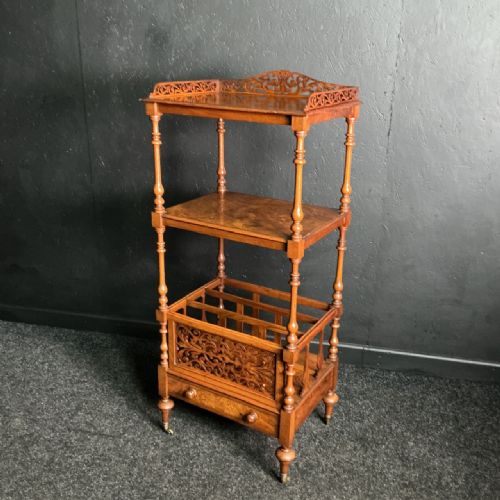
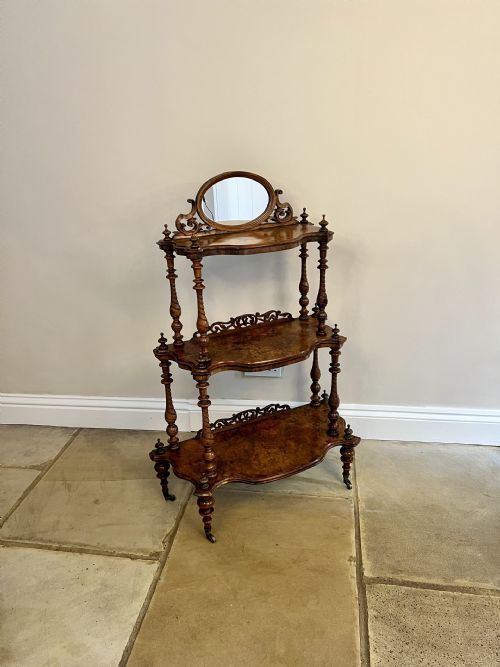
The versions most commonly met on this page are constructed from rich timbers like burr walnut, mahogany, and rosewood. Many incorporate turned supports, mirrors, or small drawers beneath the shelves, balancing decorative appeal with practical utility.
Materials and Construction
Cabinet makers utilised dense hardwoods such as mahogany, rosewood, and burr walnut, often highlighting the natural grain through careful polishing. Structural supports frequently feature turned columns, barley twist pillars, or delicate fretwork galleries.
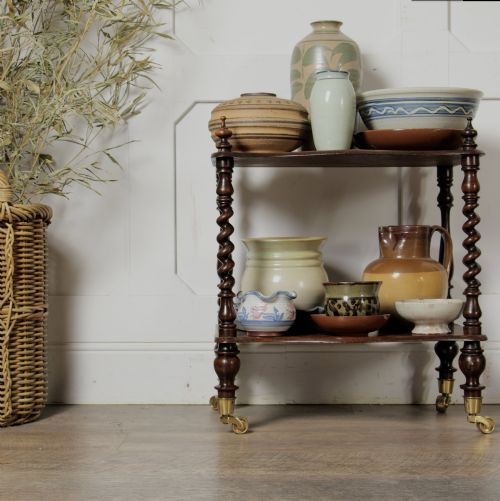
Joinery techniques combined secure shelf fixings with turned uprights, sometimes integrating brass castors or ceramic elements. Finer examples incorporate carved decorative motifs, mirror panels, or inlaid details along the tiers.
Some nineteenth-century makers doubled their efforts by combining book storage with tea displays, ensuring no horizontal surface remained idle.
Distinctions in Quality
Quality rests upon the choice of timber veneer, where figured burr walnut or rich mahogany displays superior grain depth. The crispness of the carved details and the stability of the tiered structure also separate standard items from exhibition pieces.
Design complexity marks the upper tier of pieces, particularly those featuring integrated mirrors, drawers, or matched pairs. The integration of specialist elements like barley twist supports or specific regional carving styles elevates a piece's standing.
The Victorian Carved Whatnot Glossary
- Whatnot
- An open set of shelves used for displaying ornaments and books. These tiers rise in progressive heights from bottom to top.
- Étagère
- A French term for a piece of furniture consisting of a number of open shelves for holding valuables. It shares a similar function to the English whatnot.
- Burr Walnut
- A specialised wood grain obtained from walnut tree growths, prized for its swirling patterns. Cabinet makers utilised this timber for high-status Victorian furniture.
- Barley Twist
- A type of turning resembling a spiralling rope or barley sugar stick. This decorative technique appears frequently on nineteenth-century table legs and furniture supports.
- Canterbury
- A low multi-partitioned stand originally designed for holding sheet music or books. Some Victorian examples combine this storage compartment with topmost whatnot shelves.
Victorian Carved Whatnot: Frequently Asked Questions
What is a whatnot used for?
These tiered furnishings were originally designed to display ornaments, fine ceramics, and books in nineteenth-century drawing rooms. They provide vertical surface space without dominating the floor area of a room.
Today, they serve a similar purpose in modern interiors, holding collections, plants, or daily items while adding distinct period character to a corner or wall.
How do I identify a Victorian piece?
Identification relies on observing the timber choices, construction methods, and stylistic cues characteristic of the nineteenth century. Common woods include mahogany, rosewood, and burr walnut, often paired with turned supports and carved details.
Examining the fixings, timber ageing, and shelf assembly helps confirm the period. Many items also feature distinct revival styles or regional characteristics recorded in their descriptions.
Where should I place a corner whatnot?
A corner whatnot fits neatly into unused room angles, transforming empty space into a functional display area. They work well in living rooms, studies, or hallways where floor space is limited.
Matching the wood tone to existing furniture helps the piece integrate smoothly into the room. Freestanding versions offer more placement flexibility than fixed corner units.
What is the difference between an étagère and a whatnot?
An étagère is primarily a French-derived term for a tiered display stand, while whatnot is the traditional English name for the same furnishing type. Both describe open-shelved units intended for ornamental display.
In practice, makers used the terms interchangeably during the nineteenth century, though étagère often describes pieces with a lighter, more decorative framework.