
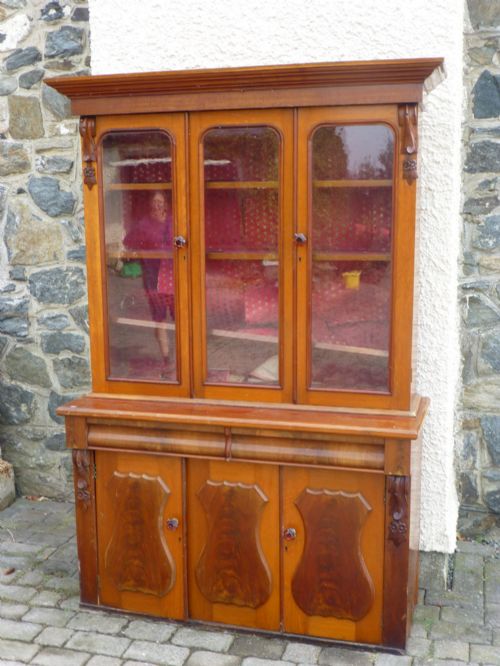
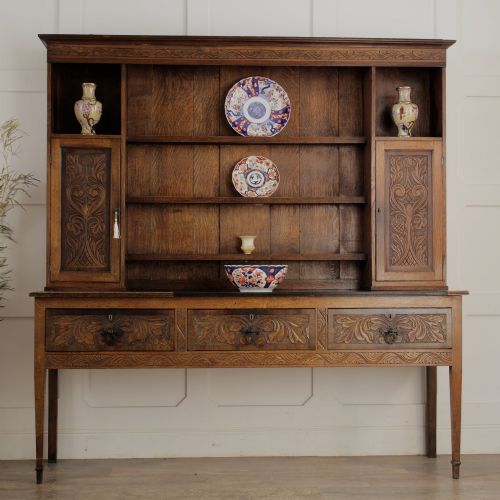
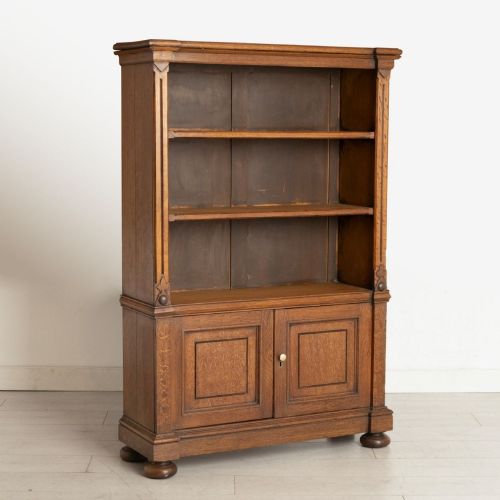
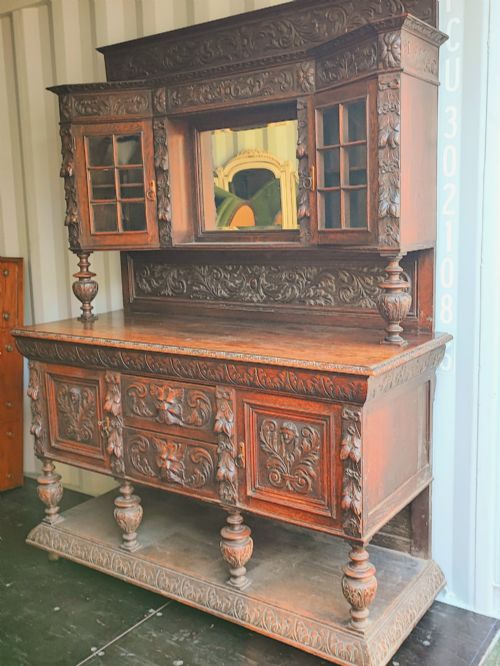


Victorian Carved Oak Display Cabinet
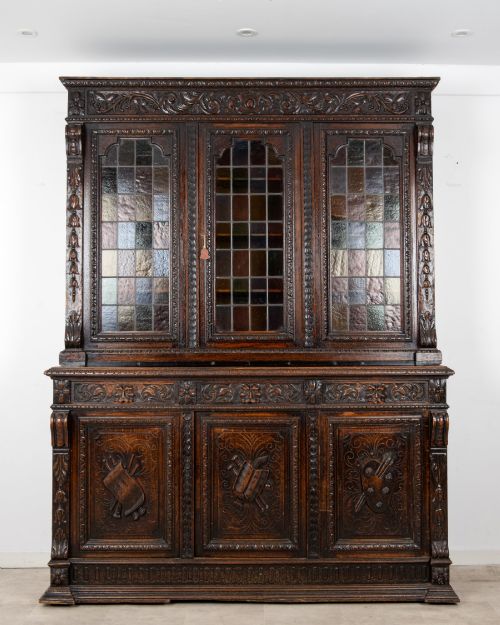
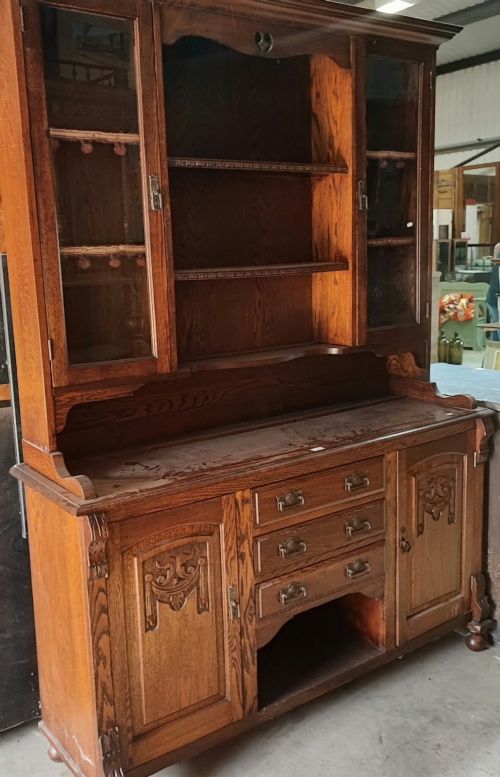
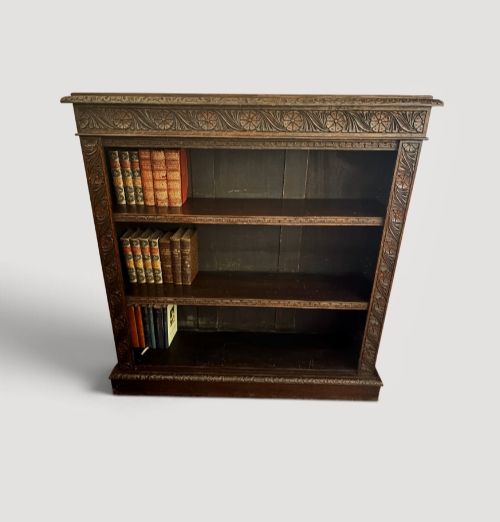
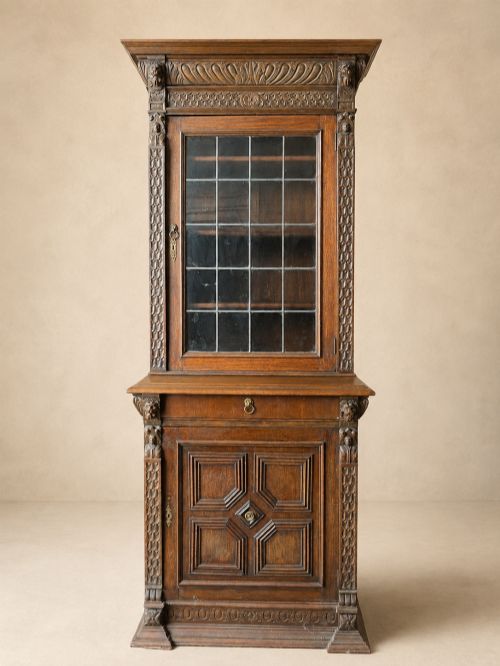
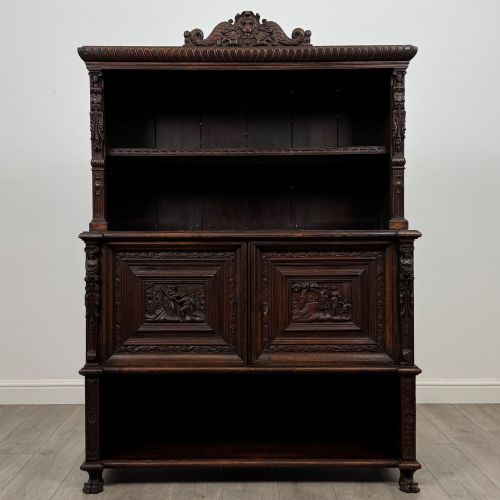
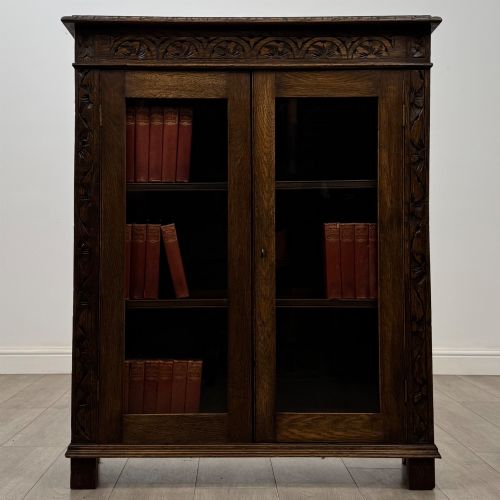
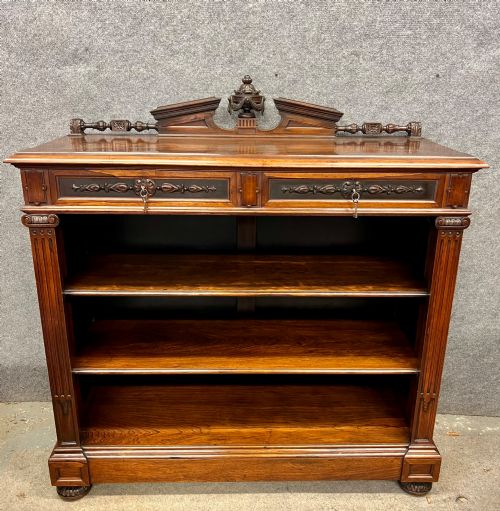
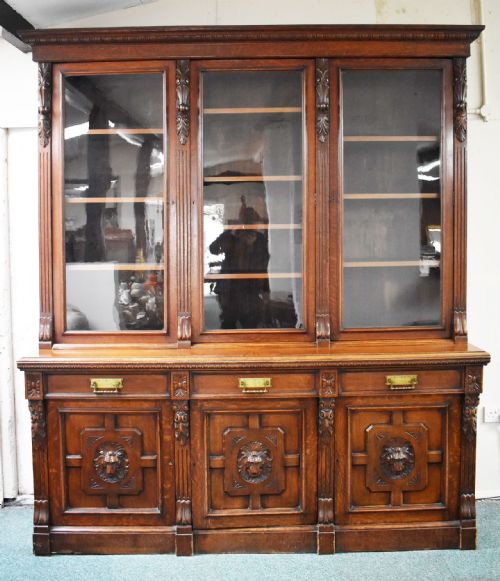
A victorian carved oak display cabinet brings rich timber grain and deep relief carving into a room, offering both storage and presence.
Victorian Carved Oak Display Cabinet
A victorian carved oak display cabinet combines heavy structural timber with glazed doors, open shelving or enclosed cupboard bases. These pieces emerge primarily from the nineteenth century, spanning decades from eighteen fifty to eighteen ninety.
Makers and workshops construct these items as bookcases, library furniture, pier cabinets and dressers. The designs lean heavily into revivalist movements, showing Gothic, Jacobean and Renaissance influences carved directly into the timber.
How They Were Made
Cabinet makers utilise solid oak, sometimes selecting figured timber like pollard oak for decorative impact. Brass hardware, lead framing for stained glass, and iron fixings provide structural support and functional closure.
Relief carving defines the ornamentation, often depicting motifs such as the Green Man alongside geometric and architectural tracery. Glazed sections use clear or stained glass fitted into wooden or leaded frames.
Some late nineteenth-century oak cabinets feature unexpected Green Man carvings peering out from the foliage.
What Varies in Quality
Depth and crispness of the relief carving separate standard production from ambitious workshop pieces. Sharp chisel work on figures and foliage indicates skilled hand labour.
Selection of the timber grain, particularly figured pollard oak or tiger oak variations, alters the visual weight of the cabinet. Proportion and architectural balance within revivalist styles dictate the visual success of the piece.
John Moyr Smith·George W Jack·Manoah Rhodes & Sons Ltd·Morris & Co
The Victorian Carved Oak Display Cabinet Glossary
- Breakfront
- A cabinet design where the central section projects forward from the flanking sides. This layout adds architectural depth to large bookcases.
- Gothic Revival
- An architectural and decorative style drawing on medieval forms. Pieces display pointed arches, tracery and heavy timber framing.
- Pollard Oak
- Timber taken from trees that have been pollarded, producing dense and highly figured grain patterns. Cabinet makers utilise this for decorative panel fronts.
- Green Man
- A sculptural motif showing a human face emerging from or entwined with foliage. Carvers place these details on friezes and cupboard doors.
Victorian Carved Oak Display Cabinet: Frequently Asked Questions
Where were these cabinets placed in a home?
These cabinets served primarily in libraries, reception rooms and formal parlours for storing books and displaying valued objects.
Larger library bookcases often stood against study walls, while smaller pier cabinets occupied narrow wall spaces between windows.
How do I care for nineteenth-century oak furniture?
Maintain stable room humidity and keep timber away from direct heat sources to prevent wood splitting or warping.
Apply traditional beeswax occasionally to nourish the grain and buff gently with a soft cloth to preserve the finish.
What defines Gothic revival oak furniture?
Gothic revival pieces draw inspiration from medieval architecture, incorporating pointed arches, trefoils and heavy structural mouldings.
Carvers execute dense relief work depicting foliage, tracery and symbolic faces directly into the dark oak surfaces.