
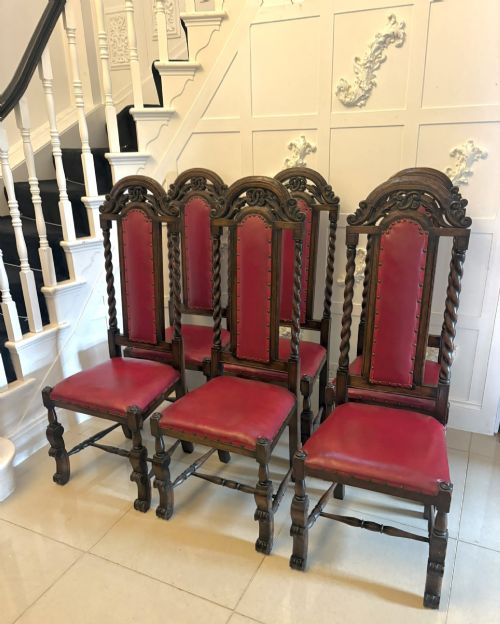
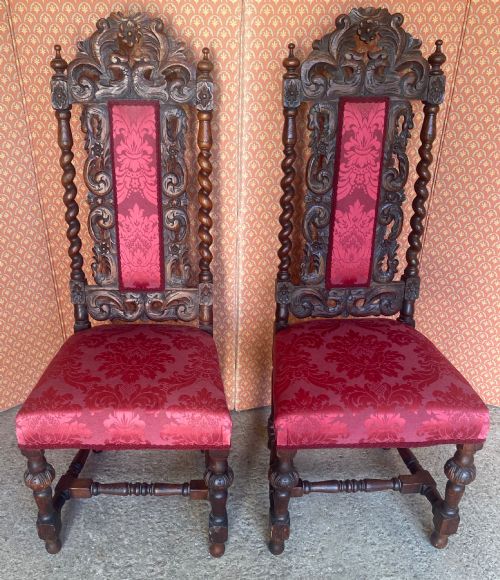
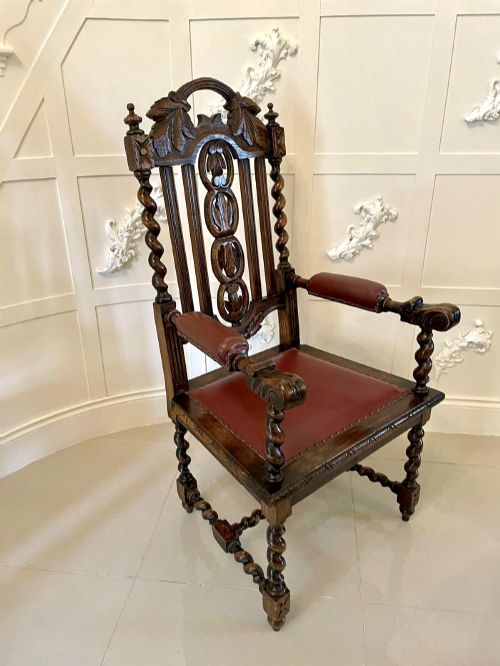
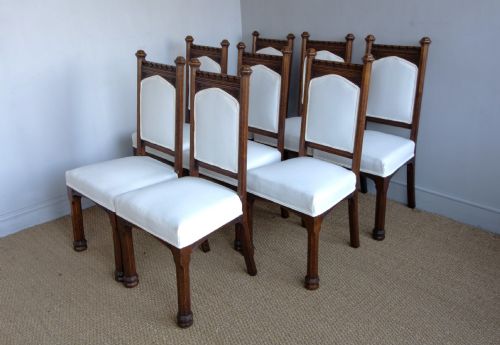
Victorian Carved High Back Chair
A victorian carved high back chair brings commanding vertical proportion and deep relief woodwork into a room, offering both seating and architectural presence.
Victorian Carved High Back Chair
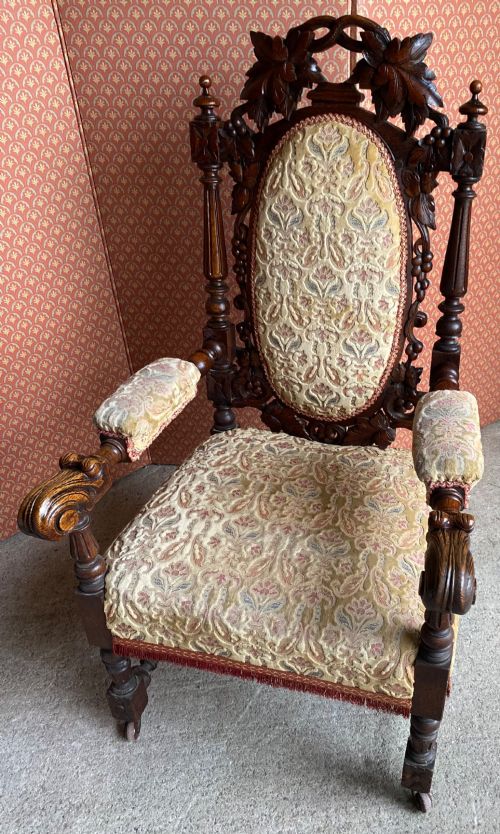
A victorian carved high back chair is a tall seating form designed to draw the eye upward through elaborate crests, splats, and upright stiles. These pieces emerge primarily from the nineteenth century in various iterations, ranging from formal dining sets and hall chairs to robust oak wainscot forms and upholstered parlour seating.
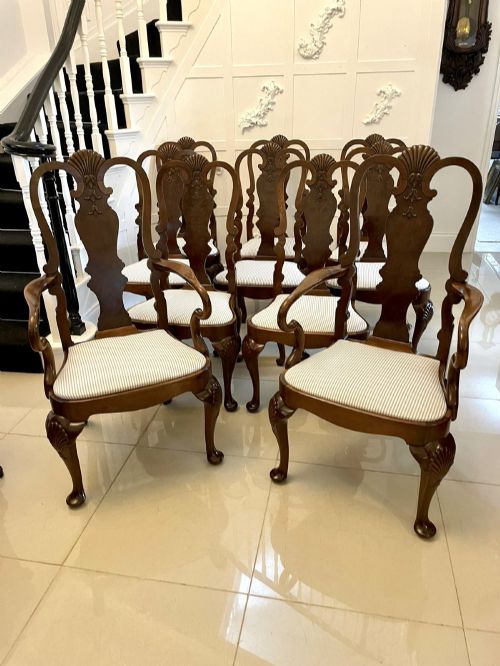
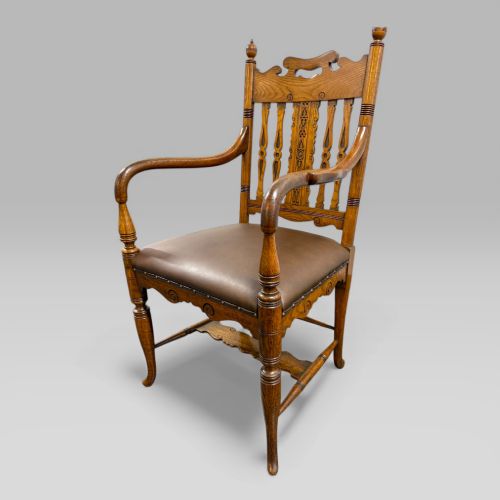
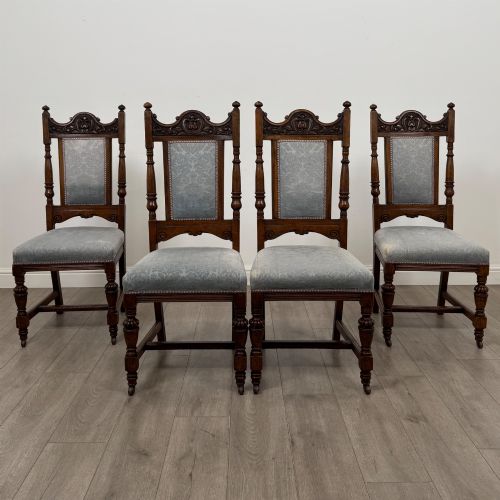
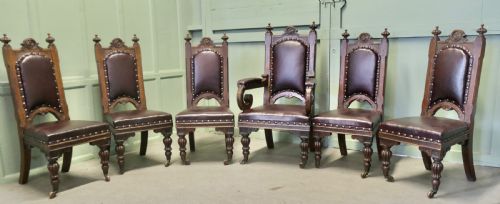
The pieces on this page lean heavily toward dining sets and individual library or hall armchairs produced during the Victorian period. They frequently incorporate revival aesthetics like Gothic, Jacobean, and Carolean styles, alongside substantial timber frames in oak and walnut.
How They Were Made
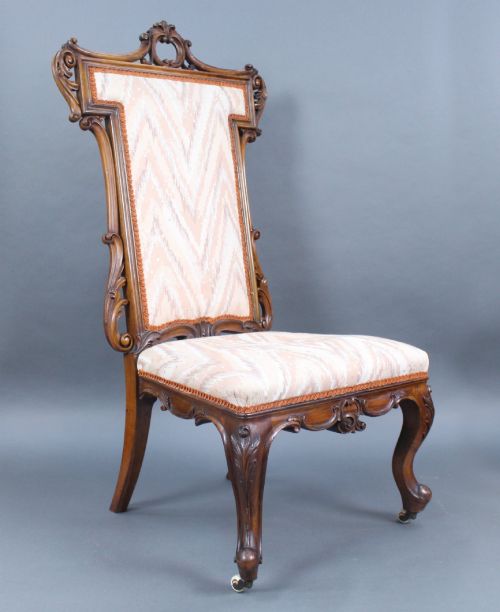
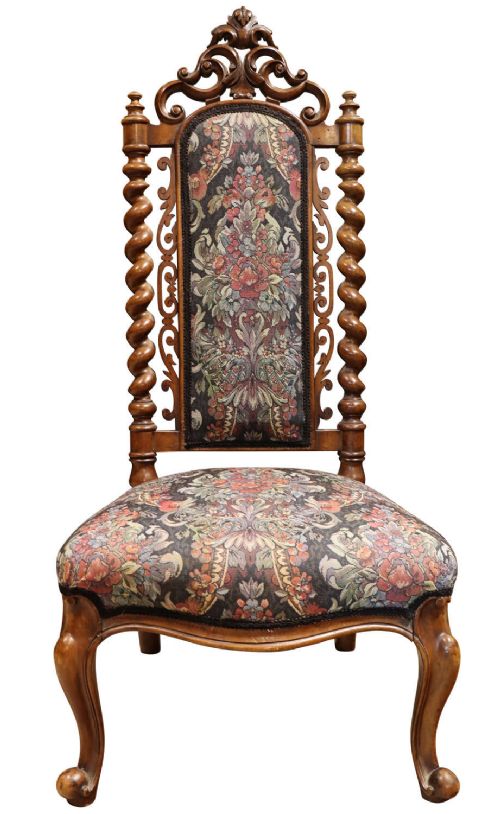
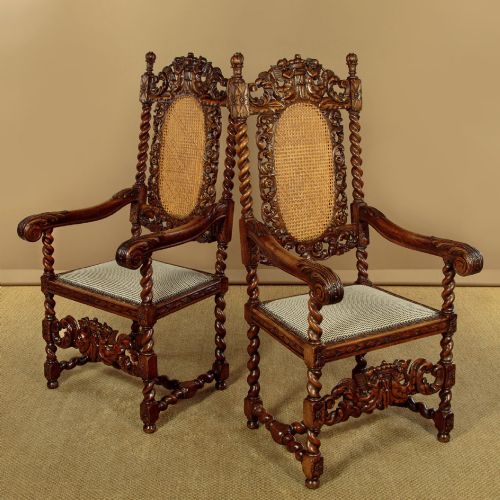
Cabinet makers and joiners utilised dense hardwoods such as oak, walnut, mahogany, and rosewood to support deep, sculptural woodcarving along the crest rails and tall backs. Turned elements like barley twist supports often feature alongside structural joinery.
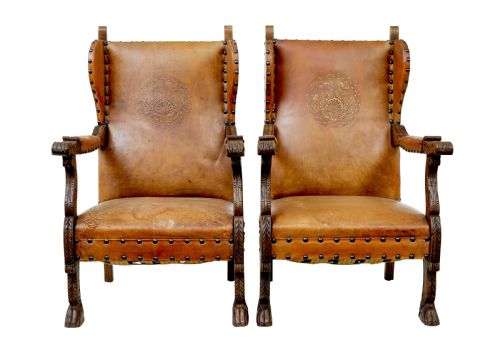
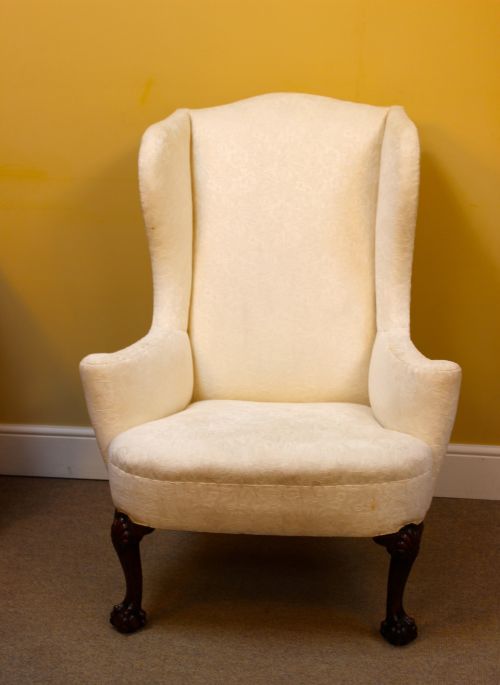
Upholstered variants integrate traditional stuffing methods beneath textiles including leather, tapestry, needlework, and fabric, secured with brass detailing where appropriate.
Several armchairs arrive equipped with prayer rails and needlework designed to keep Victorian knees comfortably off cold floors.
What Varies in Quality
The depth, crispness, and continuity of the hand-carved relief dictate the visual distinction of the frame, separating mass-produced ornamentation from master joinery. Timber selection also matters, particularly figured walnut or quarter-sawn oak with strong medullary rays.
Proportion and structural integrity define the remaining differences, particularly how the tall back integrates securely into the seat rail without timber fatigue over time.
Howard And Sons
The Victorian Carved High Back Chair Glossary
- High Back
- A chair design featuring an elevated backrest that extends significantly above the seat level to provide head support and formal presence. This proportion defines the dominant silhouette of the search phrase.
- Barley Twist
- A cylindrical furniture leg or support carved in a helical spiral resembling twisted barley sugar. It appears frequently on Victorian walnut and oak frames.
- Wainscot Chair
- A heavy, solid wooden armchair with a panelled back, originating in earlier centuries but frequently revived during the Victorian era in oak. These pieces offer rigid structural frames.
- Gothic Revival
- An architectural and decorative style drawing inspiration from medieval forms, featuring pointed arches, tracery, and heavy carved details. This style frequently shapes the tall backs of nineteenth-century dining chairs.
- Stile
- The vertical upright timber forming the outer edge of a chair back. It bears much of the structural stress in taller seating forms.
Victorian Carved High Back Chair: Frequently Asked Questions
Where were high back chairs placed in Victorian homes?
These tall chairs typically served formal functions in dining rooms, libraries, and grand hallways where their vertical lines added architectural gravity. Armchairs often stood by fireplaces or desks, while sets of side chairs lined dining tables.
In domestic spaces, their height communicated status and formality, deliberately contrasting with lower, more relaxed seating forms of the era.
How do I distinguish Gothic Revival from Jacobean revival chairs?
Gothic Revival pieces rely on architectural motifs such as pointed arches, quatrefoils, and ecclesiastical tracery carved into the tall wooden splats. They often utilise oak to echo medieval church furniture.
Jacobean revival furniture instead emphasises geometric mouldings, strapwork, and turned supports like barley twists, drawing on seventeenth-century English design vocabulary.
Are these chairs comfortable for daily seating?
Upholstered variants with padded backs and seats offer comfortable support for extended sitting, particularly library armchairs and parlour chairs. Firm wooden hall chairs and dining chairs prioritize upright posture over soft cushioning.
The tall back provides solid shoulder support, though the lack of recline requires an upright sitting position.
What woods were commonly used for Victorian tall chairs?
Oak and walnut dominate the selection, offering the structural rigidity necessary to support tall backrests without warping. Mahogany and rosewood appear in more formal parlour and dining settings.
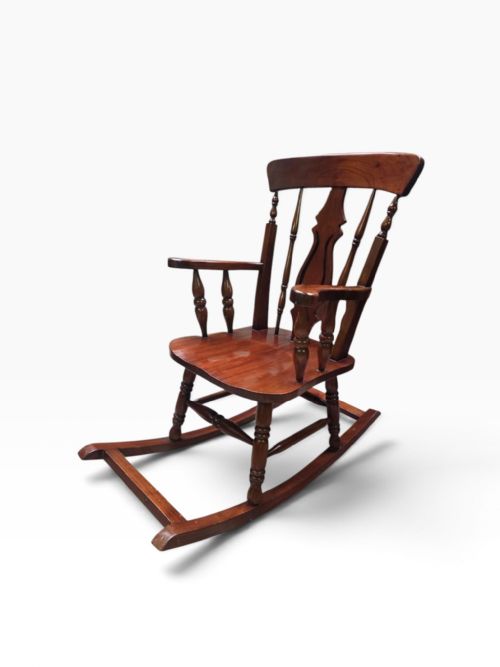
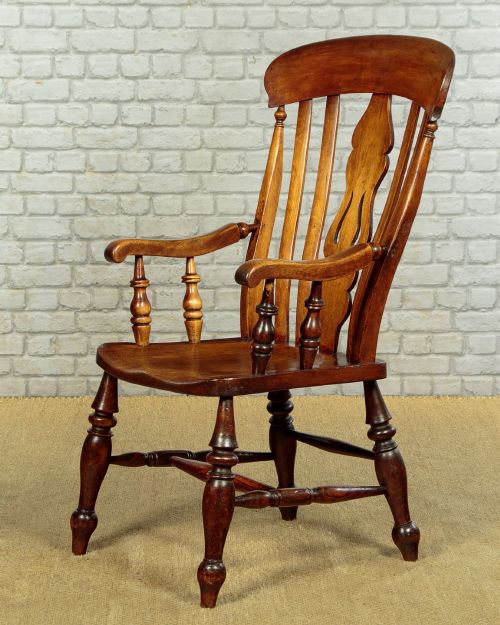
Secondary timbers such as elm and ash occasionally support vernacular seating like Windsor rocking chairs and kitchen armchairs.