
Victorian Carved Foyer Table
A victorian carved foyer table brings architectural presence into an entrance hall, offering a sturdy surface fashioned from rich timber.
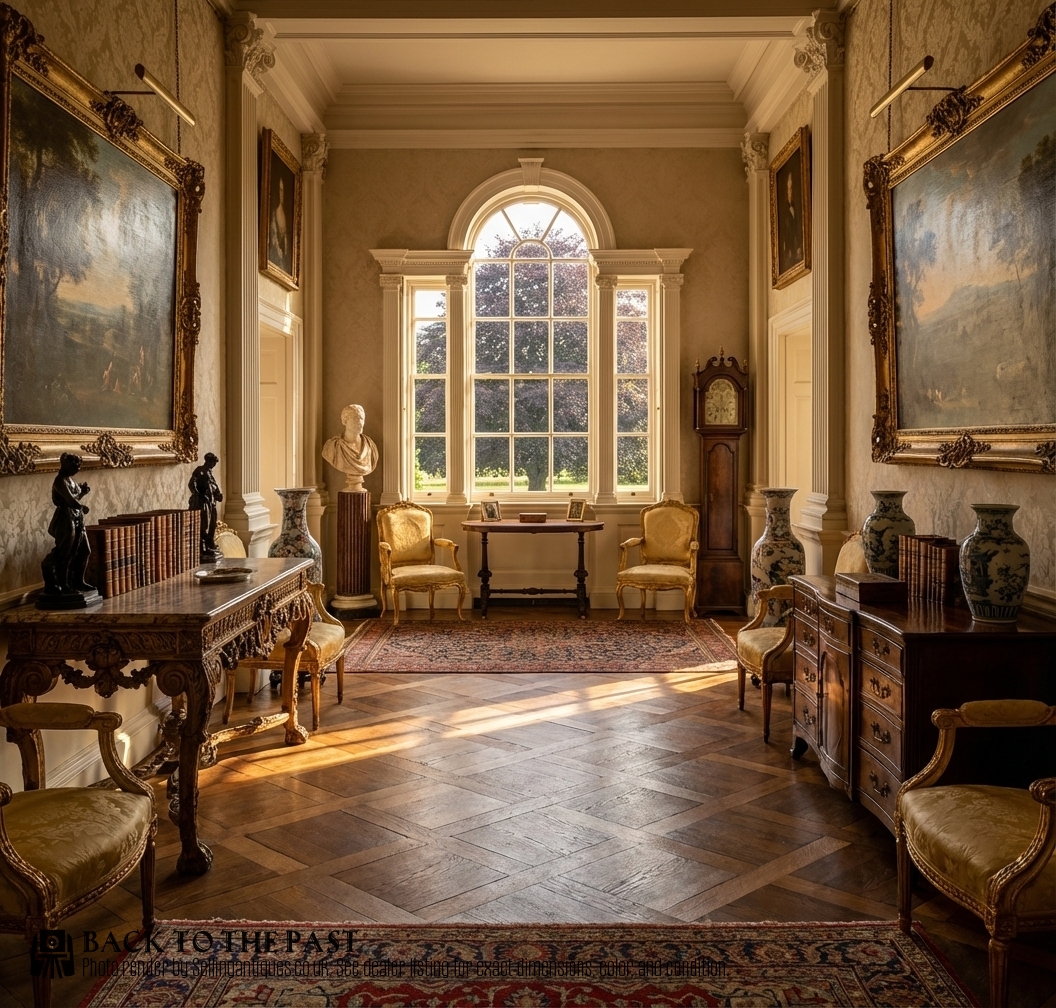
Victorian Carved Foyer Table
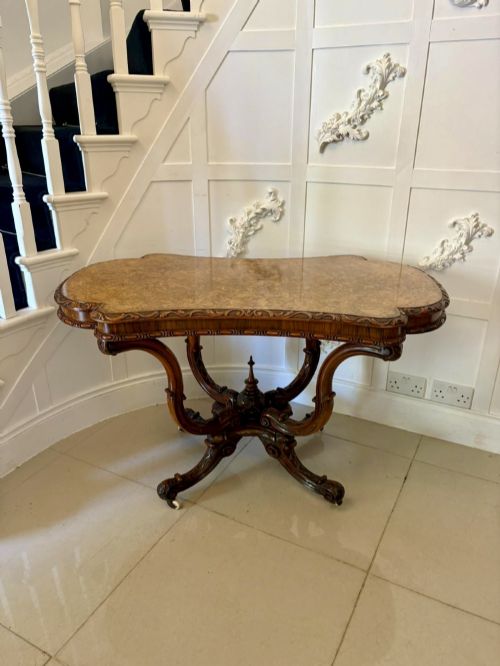
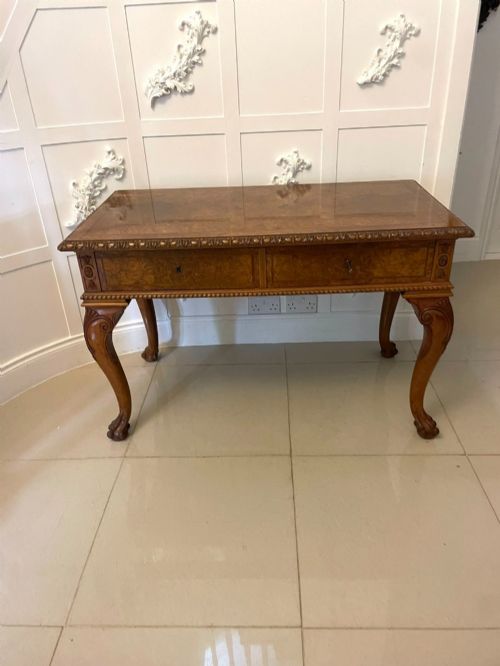
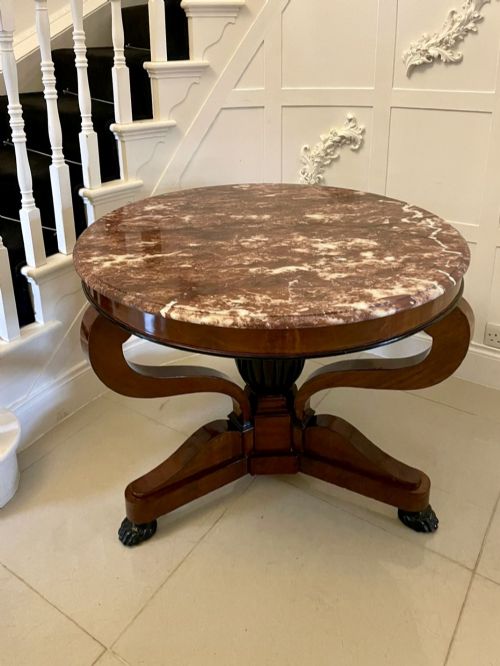
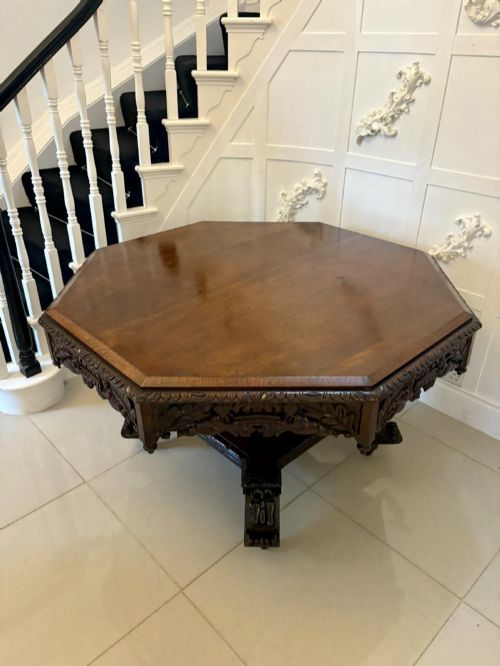
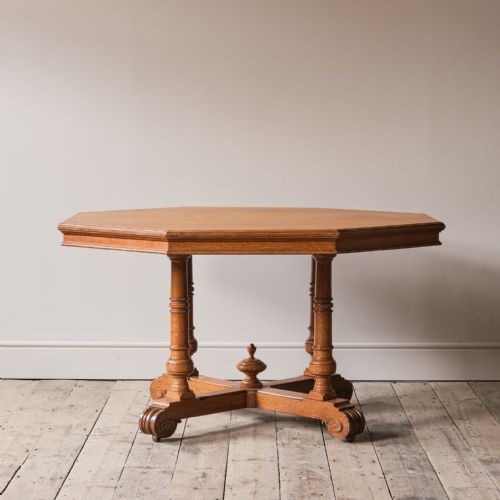
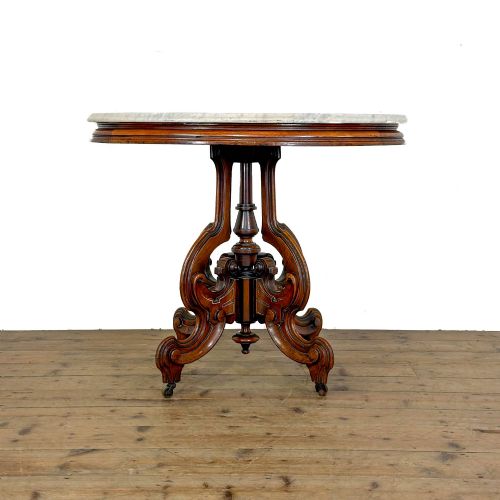
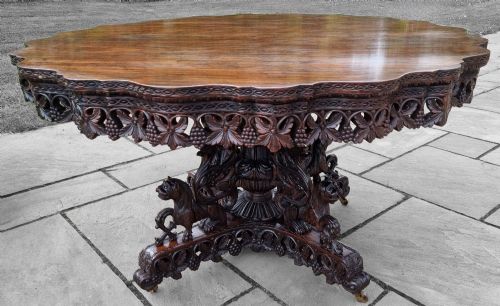
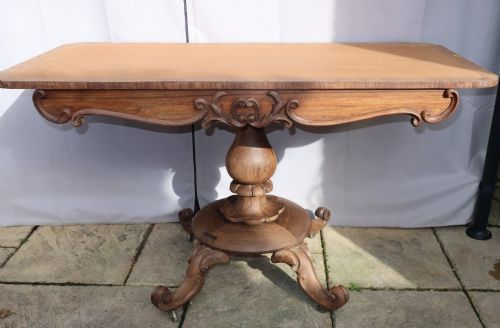
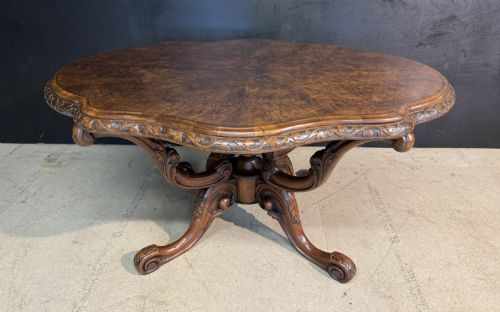
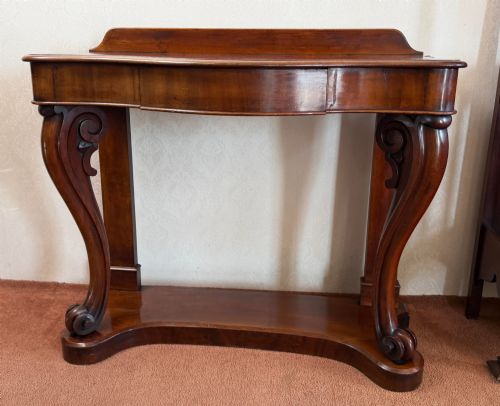
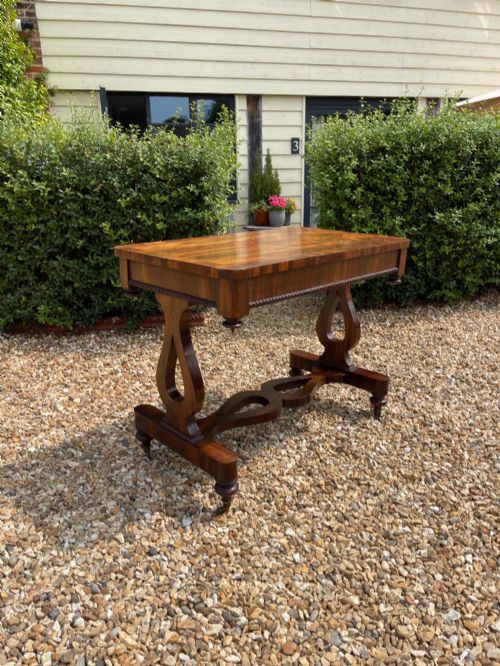
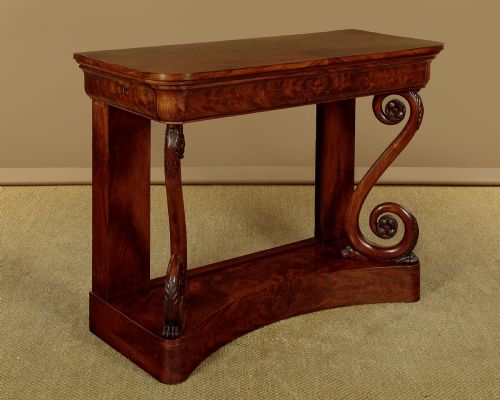
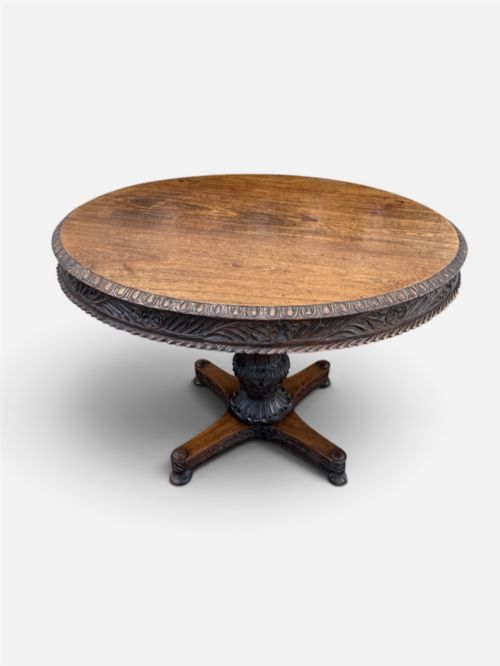
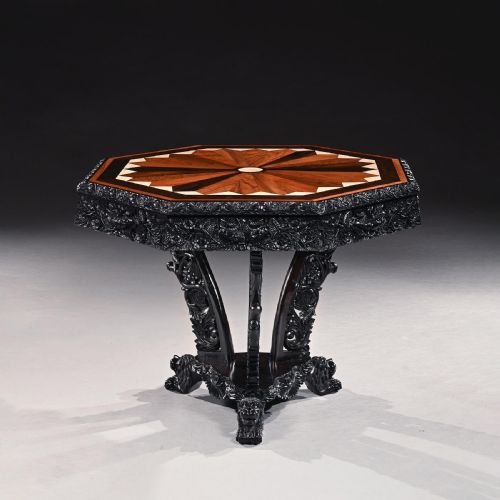
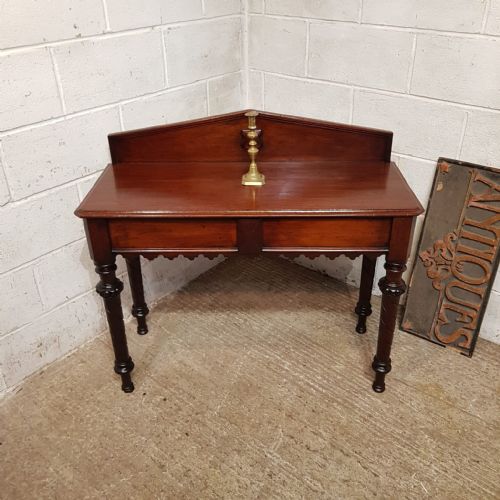
A victorian carved foyer table appears across multiple forms in the evidence, most frequently as centre tables, console tables, and hall tables created during the nineteenth century. These pieces emerge in styles ranging from standard Victorian and William IV to Gothic Revival and Anglo-Indian variants.
Materials and construction
Cabinet makers utilised a palette of solid timbers and veneers including mahogany, walnut, burr walnut, rosewood, oak, ebony, and coromandel. These woods were frequently shaped by hand carving, producing ornate borders, twisted supports, and structural frames.
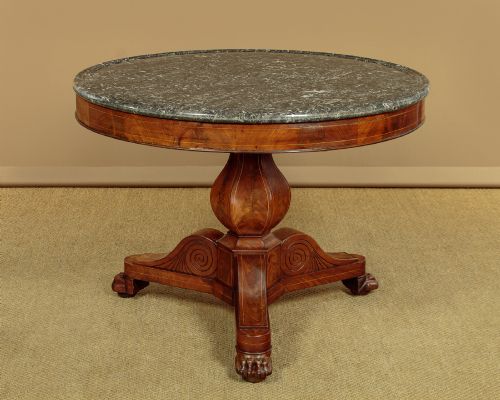
Insets of white or coloured marble provide durable top surfaces on specific console and gueridon forms, whilst marquetry inlay and brass elements furnish decorative contrast across the wooden surfaces.
Several tables feature triple barley twist legs that add an unexpected helical rhythm to the hallway.
Distinctions in quality
The hierarchy of quality rests primarily on the choice of timber and the ambition of the carving. Dense burr veneers, figured mahogany, and exotic woods like coromandel represent a higher tier than plain domestic equivalents.
The crispness and depth of hand carving distinguish superior examples from standard production pieces. Furthermore, the inclusion of integrated marquetry inlay or heavy marble slabs elevates the execution of the design.
The Victorian Carved Foyer Table Glossary
- Centre table
- A freestanding table designed to be viewed from all sides, placed in the middle of a room rather than against a wall.
- Console table
- A table fixed to a wall or supported by front legs, often fitted with a flat top to hold decorative objects in a hallway.
- Marquetry inlay
- Decorative patterns created by fitting different veneers into a prepared wooden surface.
- Burr walnut
- Timber taken from a tree growth that yields swirling, highly figured grain patterns prized for decorative furniture tops.
- Gueridon
- A small round table, frequently supported by a central pillar or figural stem, often topped with marble.
Victorian Carved Foyer Table: Frequently Asked Questions
Where should I place a foyer table?
These tables fit naturally in entrance halls or corridors where their surfaces can receive keys, post, or lamps. Freestanding centre versions also serve as focal points in large open rooms.
Ensure the dimensions match the walkway space so movement remains unobstructed.
How do I care for antique wood surfaces?
Maintain timber surfaces by dusting with a soft cloth and avoiding direct sunlight or excessive heat. Natural oils and traditional waxes help preserve the finish of hardwoods like mahogany and walnut.
Keep marble tops sealed against spills and moisture to protect the stone.
Are these tables suitable for daily use?
Solid construction from dense hardwoods makes these pieces durable for everyday placement in a home. Marble inserts offer practical resistance against water and daily wear.
Consider the specific top material when planning how heavily the surface will be utilised.
How can I tell the period of a table?
Dating relies on observing stylistic markers such as Gothic Revival motifs, William IV proportions, or Victorian carving techniques. Timber selection and construction methods also provide clues to the era of manufacture.
Consult the recorded materials and styles to verify the historical context of each piece.