




Victorian Carved Diamond Band
These pieces combine the enduring weight of 18ct gold with old cut stones, offering a tangible link to the nineteenth and early twentieth centuries.
Victorian Carved Diamond Band
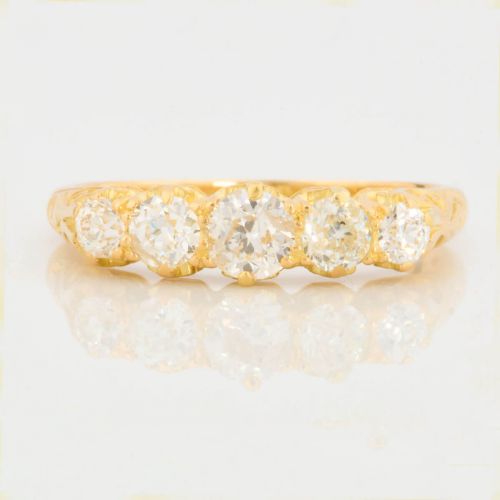
A victorian carved diamond band brings together the dense warmth of 18ct yellow gold and the distinct faceting of old cut stones, often formed as half hoops or boat shapes. These rings emerge primarily from the Victorian and Edwardian periods, carrying the hallmarks of regional assay offices such as Birmingham and Chester.
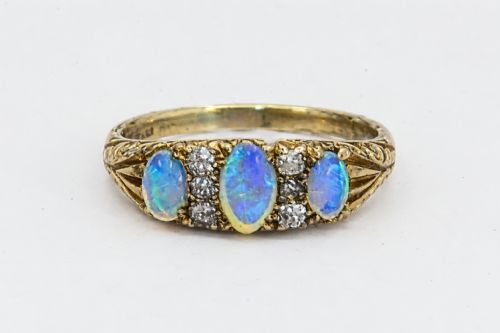
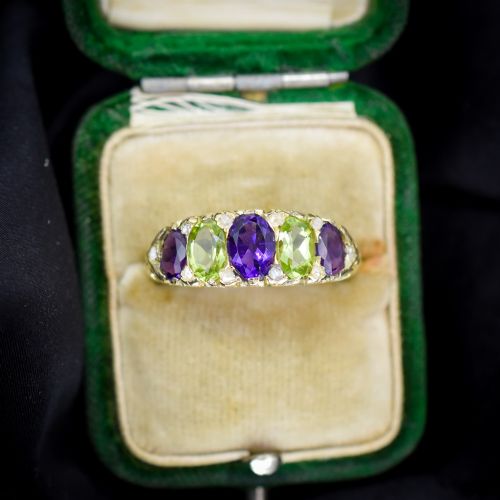
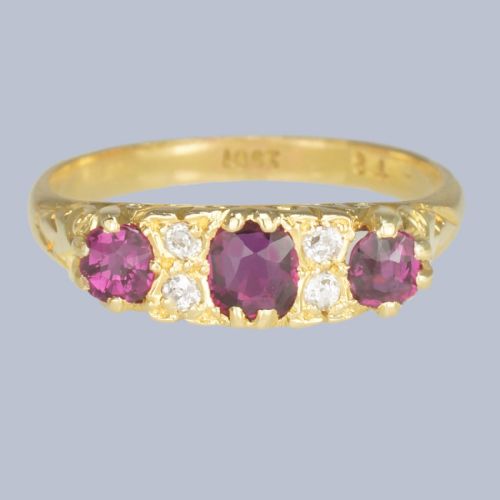
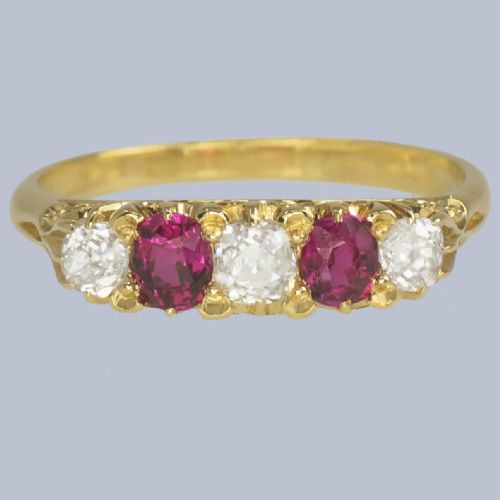
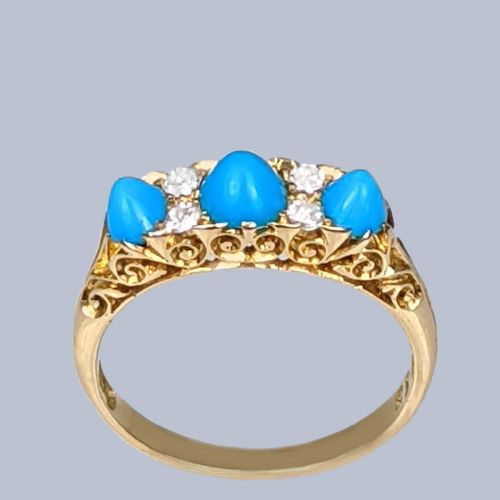
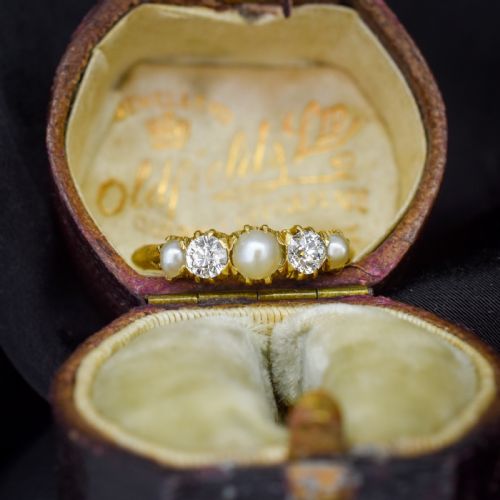
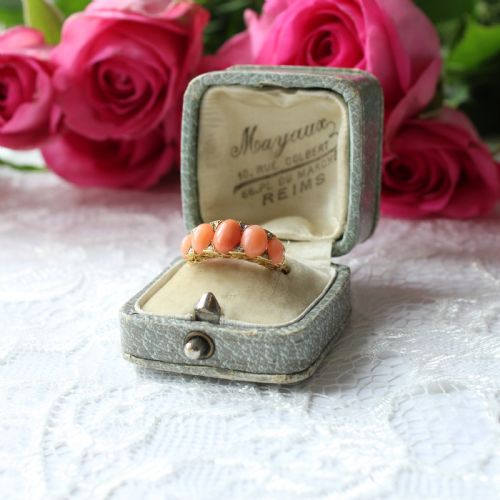
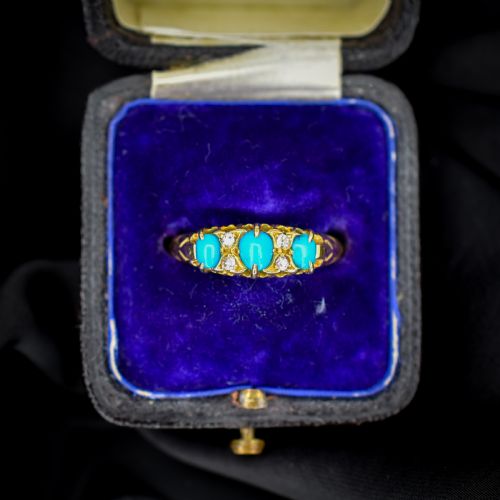
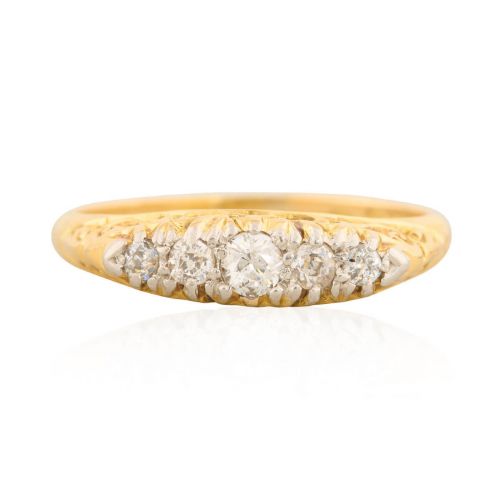
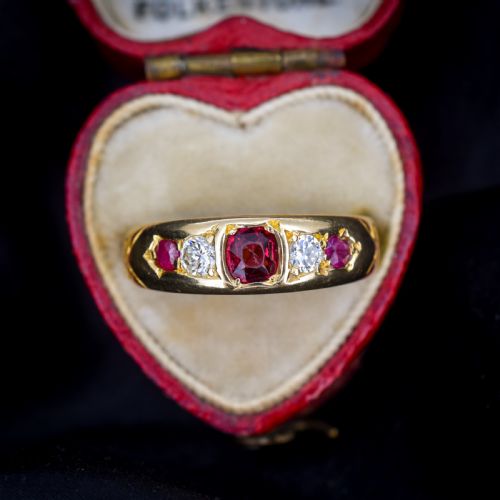
The selections span traditional five stone settings and gypsy mountings alongside multi-gem combinations featuring ruby, sapphire, opal, turquoise, and pearl. Such diversity reflects the shifting jewellers' work of the late nineteenth century and the early decades of the twentieth.
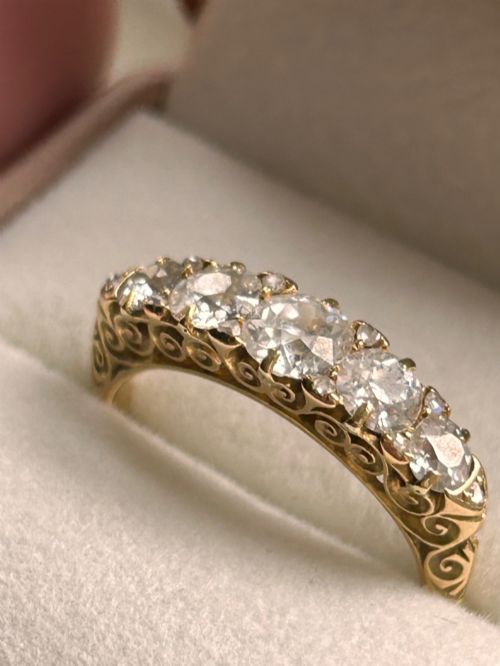
Buyers encountering this selection will find structural integrity paired with hand-finished metalwork, where carved shoulders and scroll motifs frame the central diamonds and coloured gems.
Materials and Construction
Goldsmiths of the era relied heavily on 18ct yellow gold, casting or forging sturdy bands capable of securing stones without modern mass-production aids. Gemstones such as old mine cut and old European cut diamonds were set by hand into claw, starburst, or flush gypsy mountings.
Coloured stones including rubies, sapphires, opals, and turquoise were integrated alongside diamonds using channel or claw techniques, often accented with hand-carved scrollwork and engraved shoulders directly onto the solid gold shank.
Many a Victorian wearer chose a turquoise ring to ward off evil eye, unaware their descendants would type search phrases into glowing rectangles.
Distinctions in Quality
Quality rests upon the crispness of the hand-carved details along the gold band and the proportional harmony of the mounted stones. Superior examples display minimal wear to the high-relief shoulders and secure, well-matched gemstone pairings.
The depth and clarity of the original hallmarks stamped into the 18ct gold further elevate a piece, indicating clear assay origins and precise period craftsmanship.
The Victorian Carved Diamond Band Glossary
- Old Cut
- A diamond faceting style common before the standardisation of the modern brilliant cut, typically featuring a smaller table, higher crown, and open culet. These stones catch candlelight with a distinctive, softer glow.
- Gypsy Setting
- A ring style where the gemstone is flush-mounted directly into a thick, tapered metal band. This technique creates a smooth, continuous surface popular in the late nineteenth century.
- Boat Ring
- A ring configuration featuring a curved, navette-like setting that arches across the finger. This profile often houses a central stone flanked by smaller gems.
- Trilogy Ring
- A three-stone ring design representing the past, present, and future. These pieces frequently pair diamonds with rubies or sapphires in 18ct gold.
- Half Hoop
- A ring setting where stones span the upper arc of the band in a continuous row. They are typically secured with shared claws or channel settings.
Victorian Carved Diamond Band: Frequently Asked Questions
How do I care for my ring?
Clean these pieces gently with warm water, mild soap, and a soft brush to remove everyday oils. Avoid harsh ultrasonic cleaners, particularly when the ring includes softer stones like opals, turquoise, or pearls.
Store your jewellery in a fabric-lined box away from harder items to prevent scratching the 18ct gold and the facets of the old cut diamonds.
Can these rings be resized?
Most solid 18ct gold bands can be adjusted by a skilled jeweller who understands antique settings. The feasibility depends on the extent of the carved shoulders and whether stones extend too far down the shank.
Consult a specialist who works with period pieces to ensure hallmarks and structural integrity remain undisturbed during the alteration process.
What defines an old cut diamond?
Old cut diamonds, including old mine and old European cuts, were shaped largely by hand during the Victorian and Edwardian eras. They feature smaller tables and deeper pavilions compared to modern brilliant cuts.
These diamonds display a characteristic chunky facet pattern that produces broad flashes of light rather than pinfire brilliance.
How are these rings hallmarked?
British pieces from the nineteenth and early twentieth centuries often bear clear maker's marks, standard purity marks for 18ct gold, and assay office symbols like the anchor for Birmingham or the three crowns for Chester. Date letters frequently help pinpoint the exact year of creation.
Faded marks can occur due to decades of wear and resizing, which remains common in antique jewellery of this age.